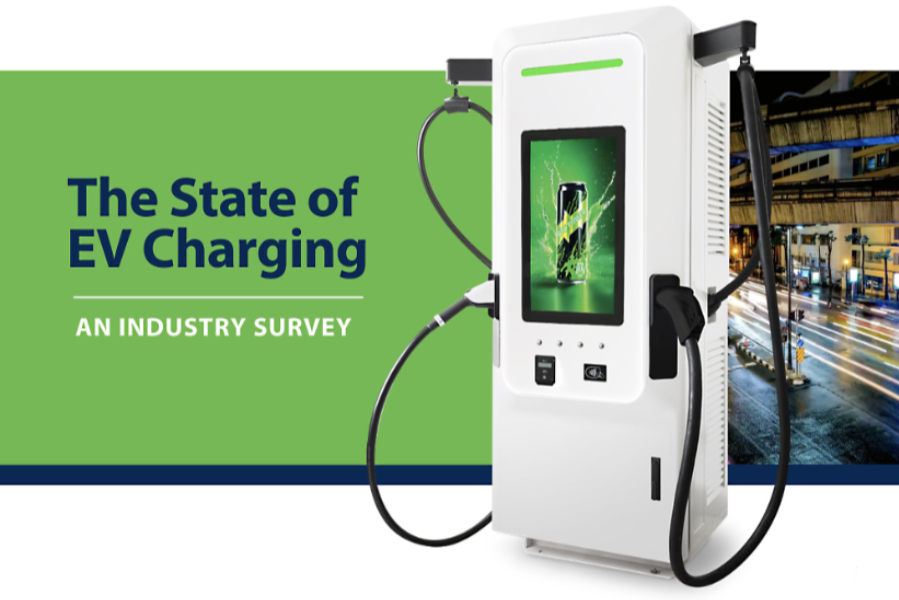
Commercial EV charging has grown from being a ‘nice to have’ to an operational necessity for many US firms, according to a survey of commercial decision-makers by BTC Power.
BTC Power surveyed more than 200 leaders across sectors such as retail, fleet management, hospitality, corporate campuses and housing for its The State of EV Charging report, and found that 94% consider EV charging to be ‘essential’ to how they operate and compete.
In addition, a similarly high percentage (92%) reported either a ‘significant’ or ‘moderate’ positive impact from their charging programmes.
Almost all respondents (99%) said that they believe EV charging represents a competitive advantage for their business, while 97% plan to increase their investment in this area, including 66% who are set to increase spending.
Operational performance
As the survey suggests, the EV charging industry is now entering a new phase, in which operational performance has become a greater priority than installation costs.
“Performance and reliability now outrank cost as the primary reasons charging network operators change vendors,” commented SJ Oh, chief revenue officer, BTC Power. “That tells us the EV charging market has matured beyond a lowest-price mindset.
“Decision-makers have experienced installations that failed to meet expectations, and they now recognise that the true cost of unreliable hardware – including downtime, maintenance, lost revenue, and poor driver experiences – far exceeds any upfront savings. As the industry continues to scale, performance, reliability, and long-term value will separate the market leaders from those left behind.”
Investment decisions
BTC Power’s survey also examined the factors influencing investment in EV charging infrastructure, with 90% of respondents saying that they are confident that public policy will continue to support the sector, despite recent federal funding uncertainty.
Three fifths (61%) of respondents said that federal tax credits, NEVI funding, and utility incentives have influenced their investment plans, while 58% cited state-level incentives.
Environmental sustainability also remains an important driver of adoption, cited by 46% of respondents, with customer demand earning a similar percentage. Revenue generation was considered a lower motivating factor (36%), as was fleet electrification (32%).
“A few years ago, sustainability was the reason companies started looking at EV charging. Now it is one of several reasons they cannot stop,” Oh said. “Among corporate campuses specifically, 55% cited ESG progress as their top realised benefit from EV charging programs, the highest single-category score across all facility types in the survey.”
Headquartered in California, BTC Power is one of the largest manufacturers of electric vehicle charging systems in North America, and has deployed more than 25,000 charging systems around the world. Read more here.