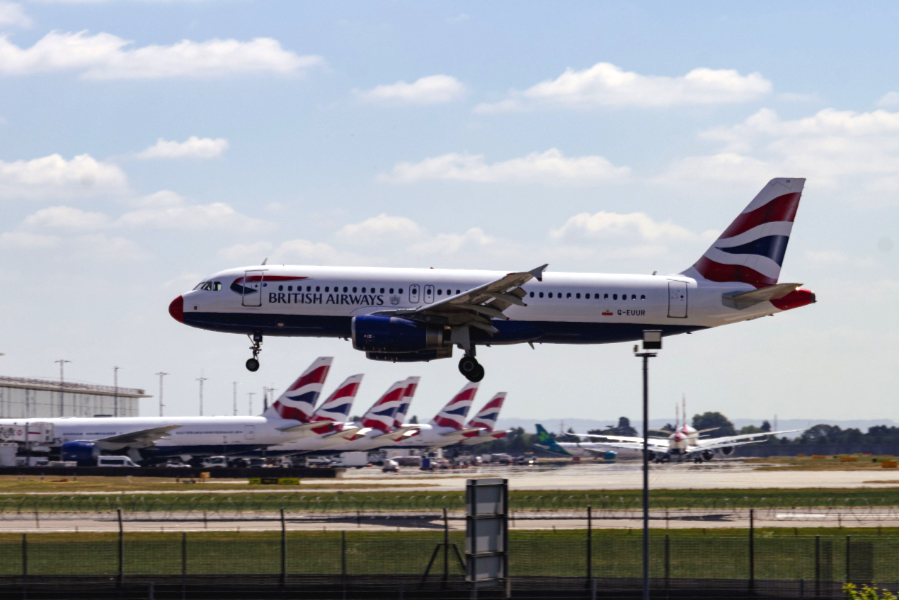
The UK’s Climate Change Committee (CCC) has said there is ‘no credible pathway’ for the expansion of Heathrow Airport that is consistent with the country’s climate commitments.
In a brief requested by the UK government, the independent statutory body said that the only way that Heathrow’s expansion could be consistent with the UK’s carbon budgets and net zero targets is if stringent new policies requiring the aviation sector to achieve net zero by 2050 are implemented.
This could involve a combination of direct emissions reductions and the purchase of engineered carbon removals, it noted.
‘No credible plan’
“Emissions from flying are projected to rise, even without Heathrow expansion, and the UK does not currently have a credible plan to bring them down,” commented Nigel Topping, chair of the Climate Change Committee. “That poses a serious challenge to our climate commitments.
“Our advice today is clear – Heathrow expansion is not currently compatible with the UK’s Net Zero target. Government needs to ensure that the aviation industry takes responsibility for the emissions it creates and bears the costs of decarbonisation. Those conditions do not exist today.”
The CCC was also asked to provide advice on the draft Heathrow Expansion National Policy Statement (HENPS), with the body adding that the climate test contained in the draft needs to be ‘strengthened’ to comply with broader net zero goals.
As it noted, emissions from aviation have ‘more than doubled’ since 1990, at the same time that emissions across the broader UK economy have halved.
Read more: Planned expansions at European airports ‘incompatible’ with national climate limits
‘Net zero aviation pathway’
The CCC’s proposed net zero aviation pathway is based around a ‘polluter pays’ principle. According to the pathway, engineered removals would account for 36% of emissions reductions in 2050, while lower demand growth and improvements in aircraft efficiency would each contribute 24% and 20%, respectively. Sustainable aviation fuel (SAF) would provide a further 20% of the reductions.
“This summer’s extreme weather has brought the impacts of climate change into sharp focus,” Topping added. “Every tonne of greenhouse gas emissions makes those impacts worse. That’s why it’s so important the right policies are put in place now to fully address aviation emissions.”
Heathrow Airport is currently responsible for around half of the UK aviation industry’s emissions, the CCC said. Read more here.