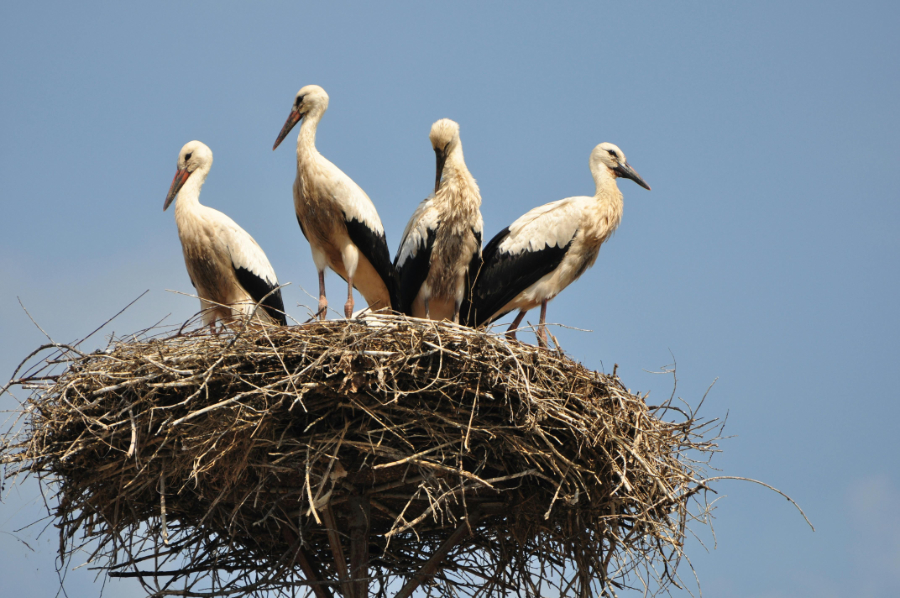
Discarded plastic materials used by birds to build their nests can be deadly for hatchlings, with many chicks dying after becoming entangled in synthetic fibres, a new study by the University of East Anglia has found.
The study, which was published in the Ecological Indicators journal, examined the prevalence of human-derived materials in stork nests across Portugal over a four-year period.
It found that such materials were present in 91% of nests, with soft plastics like bags present in 65% of nests, while synthetic ropes, the main cause of entanglement, appeared in 42%.
Baler twine, a slow degrading polypropylene rope, was involved in 63% of entanglements, and was largely present in colonies surrounded by agricultural areas.
‘Urgent need’
“Our findings offer new insights into the extent of nestling deaths caused by entanglement, and highlights the urgent need to remove and replace hazardous materials such as polypropylene baler twine from both agricultural use and the environment, given its harmful impacts on nestlings,” commented Ursula Heinze, a postgraduate researcher in the School of Environmental Sciences at UEA.
“This study suggests that the threat posed by human-derived materials to terrestrial birds may be far more severe than previously recognised.”
The research team, which also included researchers from the University of Montpellier and University of Lisbon, found that white stork chicks in nests that featured a high number of ropes were more likely to become entangled and had lower survival rates.
‘Significant risks’
“This is a serious issue,” added co-author Prof Aldina Franco, also from UEA. “These chicks get entangled in synthetic ropes when they are very young and the ropes slowly strangle their limbs as they grow, mostly legs and feet, leading to necrosis and amputations – they suffer a horrible death.
“Our main goal has been to identify the nesting materials that may pose significant risks to terrestrial bird species and pinpoint their origins, in order to develop effective strategies to mitigate these risks to wildlife.”
You can find the full study, A death trap in the nest: anthropogenic nest materials cause high mortality in a terrestrial bird, here.