The International Air Transport Association (IATA) has said in a new report that the ‘slow pace’ of technology deployment is the key obstacle to scaling up sustainable aviation fuel (SAF), rather than a shortage of feedstock.
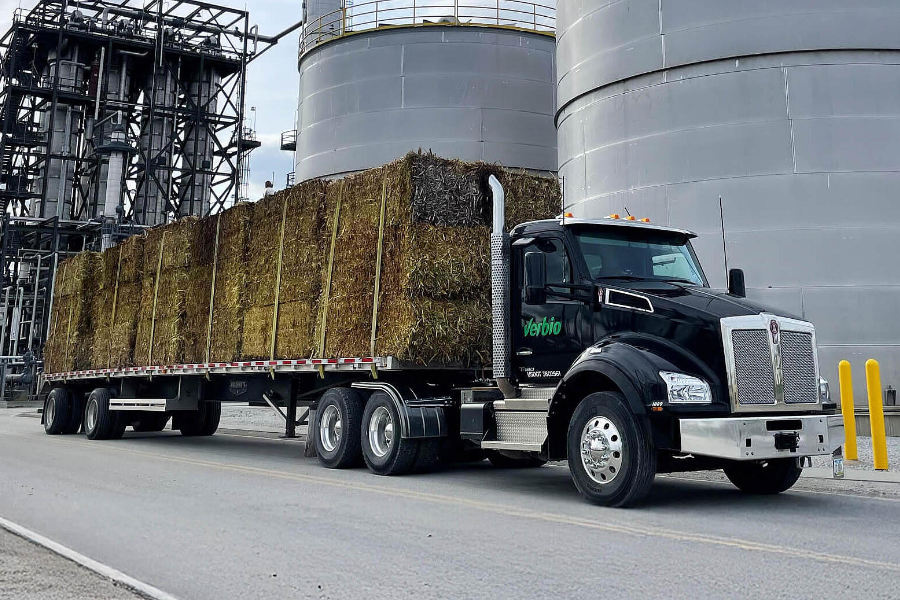
In a study produced alongside Worley Consulting, Global Feedstock Assessment for SAF Production – Outlook to 2050, the IATA determined that sufficient SAF feedstock exists to achieve net zero emissions by 2050, without requiring changes in land use.
The slow rollout of production technology to take advantage of this feedstock is the main barrier to scaling up supply, however, with HEFA technology, which converts used cooking oil into SAF, currently the only available production type.
Other technologies
While HEFA will continue to play a role in the future SAF production matrix, other technologies will accelerate the aviation industry’s road to net zero, including biomass, which has the potential to produce more than 300 Mt of bio-SAF annually by 2050.
‘This potential could be expanded by unlocking additional feedstocks or through efficiency gains and technology improvements over intervening decades,’ the report noted.
Elsewhere, power-to-liquid (PtL) fuels, which will require large-scale access to renewable energy, hydrogen and carbon capture infrastructure, will be needed to reach 500 Mt of SAF production annually by 2050.
The report calls for action on a number of fronts, including strengthening feedstock supply chains, improving conversion efficiencies, scaling up new production methods, and aligning government and private-sector investment. On a regional basis, North America, Brazil, Europe, India, China and ASEAN have been identified as ‘key drivers’ of global SAF output.
‘Major acceleration’
“We now have unequivocal evidence that if SAF production is prioritised then feedstock availability is not a barrier in the industry’s path to decarbonisation,” commented Willie Walsh, IATA’s director general.
“There is enough potential feedstock from sustainable sources to reach net zero carbon emissions in 2050. However, this will only be accomplished with a major acceleration of the SAF industry’s growth. We need shovels in the ground now.” Read more here and here.