New legal analysis carried out by leading environmental law barristers has determined that countries must include non-CO2 emissions from aviation in their national climate plans, under the terms of the Paris Agreement.
The legal advice was published by Estelle Dehon KC and Lois Lane of Cornerstone Barristers, and commissioned by Transport & Environment (T&E) and Opportunity Green.
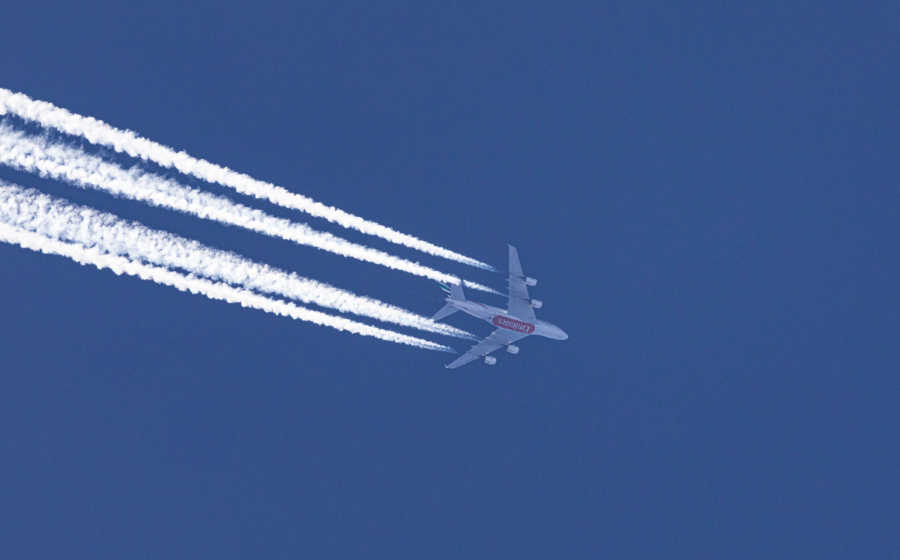
According to the analysis, the omission of these aviation emissions – commonly known as ‘contrails’ – could amount to a breach of countries’ climate obligations. Recent studies have shown that contrails may have an impact equal to or greater than the sector’s CO2 emissions.
‘From paper to action’
“Scientists have been warning about the warming caused by contrails for 25 years,” commented Diane Vitry, aviation director at T&E.
“Now legal advice shows countries must act to reduce them. It’s time to move from paper to action and include the full climate impact of aviation in national climate plans or they will be failing in their commitments signed only ten years ago in Paris.”
Overall, the aviation sector accounts for around 2% to 3% of annual global CO2 emissions.
While contrails are estimated to cause between 1% and 2% of global warming, the effect is limited to a small number of international flights – fewer than 3% of global flights account for 80% of contrail-related warming.
According to T&E, aviation has been barely mentioned in the Nationally Determined Contributions (NDCs) submitted to date, with all countries required to submit NDCs before COP30 in Brazil.
The EU is set to submit its NDC – on behalf of all member states – this month, meaning there is an ‘opportunity for the EU to lead by example and reiterate its climate ambition by submitting an ambitious NDC that includes contrails’, T&E noted.
‘Must do more’
“The International Court of Justice rules that all countries must do more to prevent the severe consequences that every increment of warming has on our planet,” added Carly Hicks, chief strategy and impact officer at Opportunity Green.
“This advice confirms that including the impact of airplane contrails must be part of this effort. Aviation has an emissions problem that cannot continue to be ignored. This means including all aviation emissions – both CO2 and non-CO2 – in countries’ climate plans, in compliance with international law.” Read more here.
Read more: Experts call for actions to address global warming effects of contrails