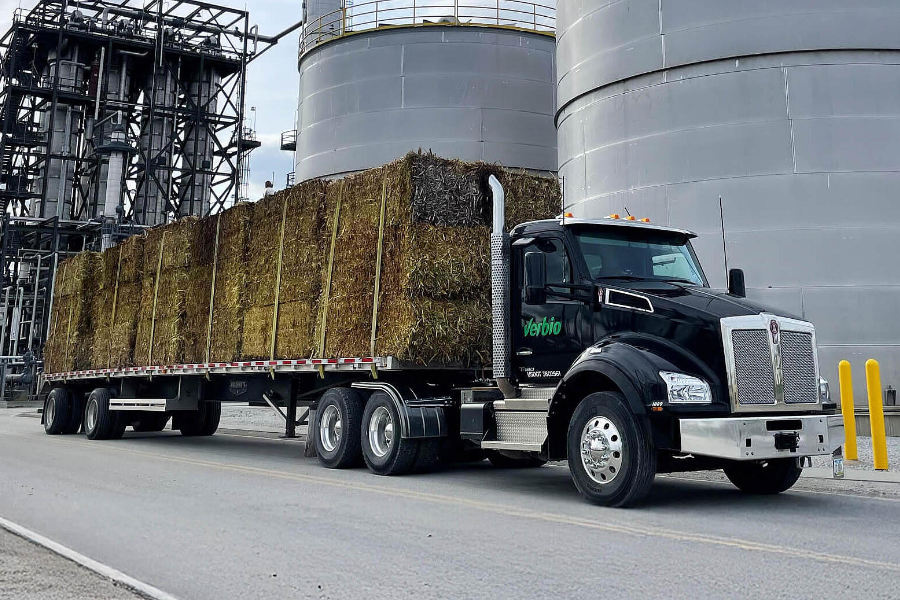
Bioenergy firm Verbio has reported a 18.5% increase in revenue in its 2025/26 financial year, to €1.87 billion, up from €1.58 billion.
EBITDA soared to €193.9 million, from €14.2 million a year earlier, it noted, amid growing demand for bioethanol and biomethane, as well as higher selling prices across its product portfolio.
The Leipzig, Germany-based firm also cited the normalisation of the GHG quota market, improved market spreads in bioethanol and higher capacity utilisation at its North American production plants as key growth drivers during the year.
Verbio reported EBIT of €128.2 million, compared with a loss of €118.2 million in 2024/25, with net income rising to €63.9 million from a loss of €137.9 million. Operating cash flow was up from €13.9 million to €164.6 million, while the group also saw a notable decrease in its net financial debt, from €164 million to €91.5 million.
‘Significantly better’
“Verbio’s position today is significantly better than it was twelve months ago,” commented Claus Sauter, chief executive of Verbio.
“We have decreased our debt levels, improved the efficiency of our production plants and benefited from changes to the regulatory framework conditions. Our aim remains to be among the best in our markets. That is why we will continue to work with a high degree of discipline and consistently further strengthen our competitiveness.”
Future expectations
Looking ahead, Verbio said that it expects EBITDA of between €210 million and €250 million in its 2026/27 financial year, primarily due to higher North American production, increased biomethane output and additional GHG quota earnings.
It is planning further investment in biogas – and in time, biomethane – production at its South Bend facility in Indiana, in the US, while it is also in the process of commissioning an ethenolysis plant in Bitterfeld, Germany, with production expected to begin in the next few weeks.
‘The positive trend in earnings, as well as lower capital expenditure compared with the previous year, is expected to contribute to a further significant reduction in net financial debt,’ Verbio said in a statement. ‘After more than a decade of political reticence, biomass is experiencing a renaissance. It is seen as part of the solution to energy security, price stability and climate change mitigation. This benefits the bioeconomy markets.’ Read more here.