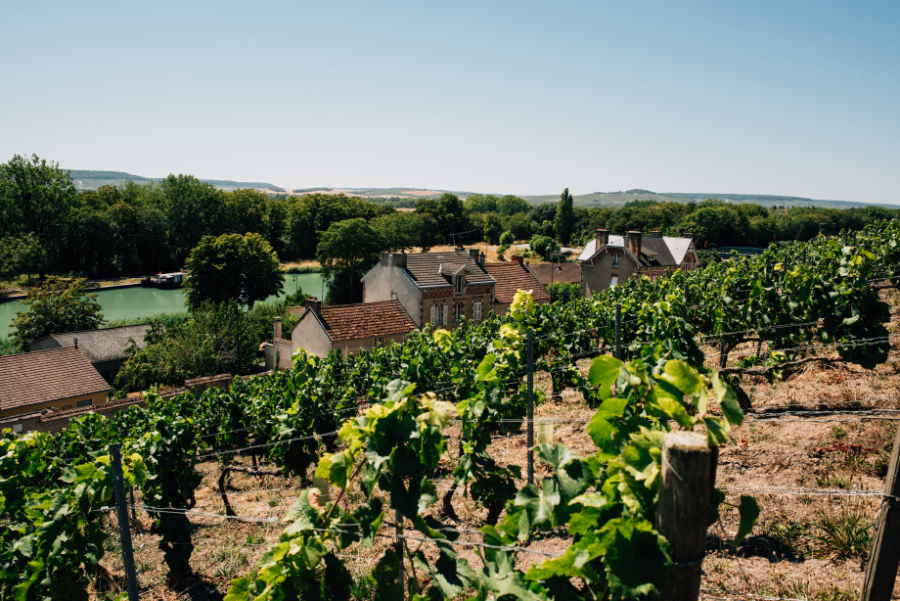
French vineyards are set to report lower yields this year, following a growing season marked by wildfires, extreme heat and drought, however this doesn’t mean that the 2026 vintage will necessarily increase in value, according to wine investment specialist Berghaus & Cie.
It cited recent data from France‘s Ministry of Agriculture, which is forecasting wine production of around 34 million hectolitres this year. This would represent a 6% decline from 2025 and a 17% fall compared with the average production of the previous five years.
This presents an ‘interesting dilemma’ for wine investors, Berghaus & Cie noted, with smaller harvests impacting individual vintages while exacerbating the shortage of sought-after premium wines.
‘Availability and quality’
However, a smaller harvest does not automatically mean that a particular vintage will be more valuable, with the value of top wines influenced by a combination of both availability and quality. In other words, scarcity by itself is not necessarily sufficient to make a wine attractive to investors.
‘For investors, a smaller harvest doesn’t automatically mean rising prices,’ Berghaus & Cie commented. ‘With fine wine, it’s not just the number of bottles available in a given vintage that matters. Their quality is equally crucial. If grapes are affected by extreme heat, water shortages, or smoke, the reduced quantity can lead to a decline in quality.
‘The situation can be different if a renowned producer manages to create a high-quality wine despite challenging conditions. In that case, a small production volume might meet continued strong international demand. This combination can be particularly attractive for the investment market.’
Future shortages
Were this summer’s challenging growing conditions to continue next year – or become a new normal – future shortages would likely increase interest in older vintages from established producers, Berghaus & Cie added, however, here too, producer reputation, ratings, market liquidity and international demand are influencing factors.
The company also suggested that climate-related risks could increase geographical diversification among wine investors, with more interest in regions such as Tuscany, Piedmont, Napa Valley and Ribera del Duero along with established favourites such as Bordeaux, Burgundy and Champagne.
‘The inherent limitations of this asset class remain a defining characteristic,’ Berghaus & Cie added. ‘A specific vintage of wine cannot be reproduced. Forest fires, heat waves, and droughts can further alter the available supply.
‘Therefore, it is all the more important for investors not to rely solely on well-known wineries or regions, but rather to evaluate each vintage based on quality, demand, and entry price. In this way, fine wine can continue to serve as a long-term component of a more diversified portfolio.’ Read more here.