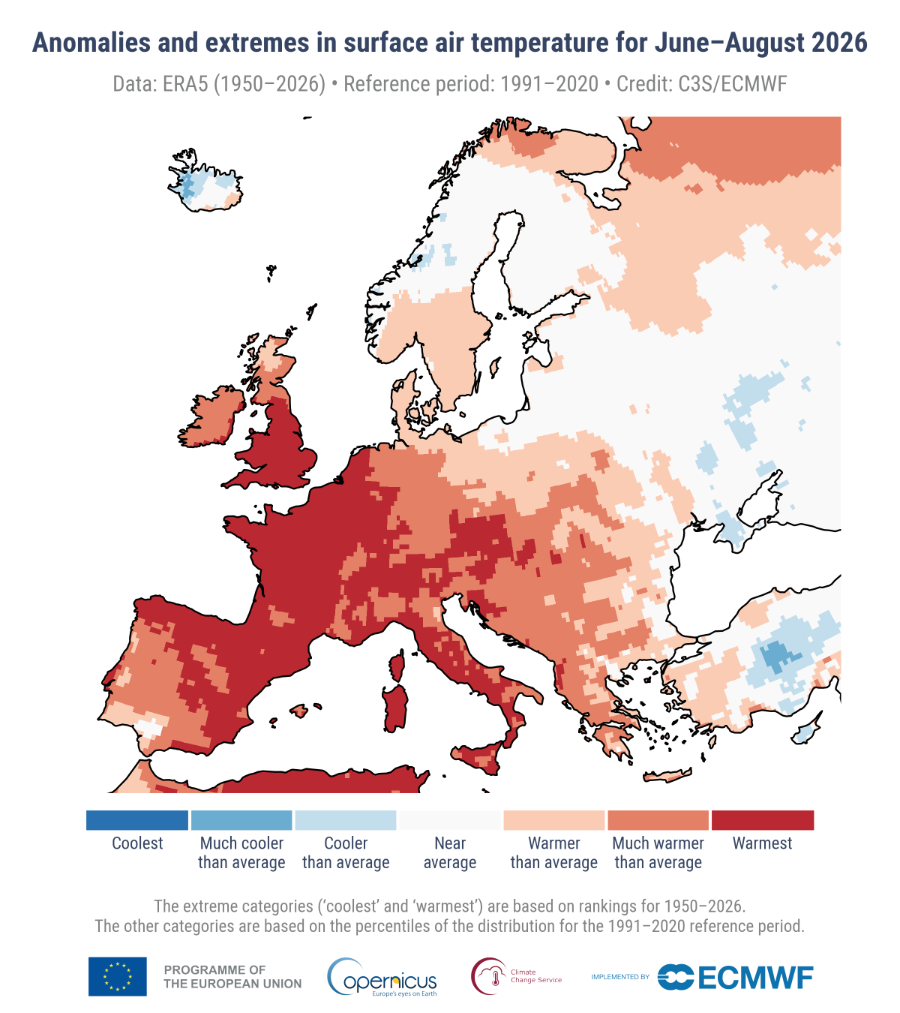
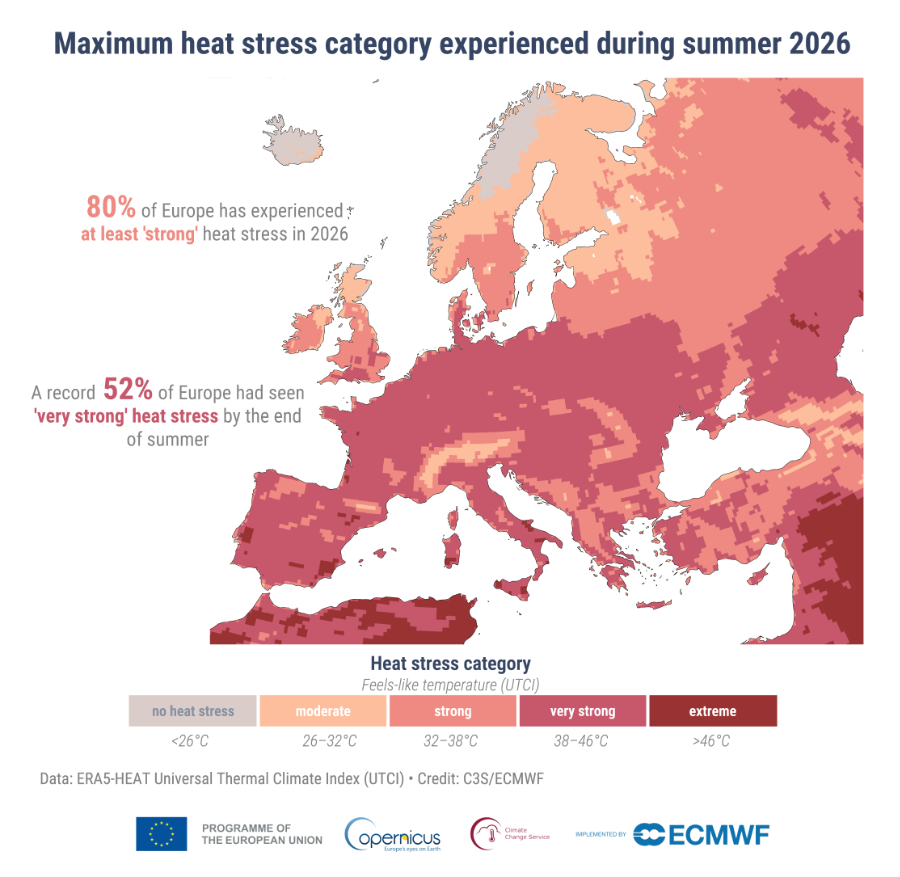
Europe reported its third warmest summer on record in 2026, with more than half (52%) of the continent experiencing ‘very strong’ heat stress at some point, according to new data from the Copernicus Climate Change Service (C3S).
‘Very strong’ heat stress corresponds to feels-like temperatures of 38ºC or more, and raises the prospect of severe health risks, including heatstroke, Copernicus noted.
Western Europe recorded its warmest summer on record, with an average summer temperature of 21.7°C. This was 2.5°C above the 1991–2020 average and exceeded the previous record set in 2003. This year saw three fifths of Western Europe experience 17 days of temperatures above 30°C, compared with 11 such days in 2003 and seven in 2025.
Record-breaking daily temperatures were also seen in May and September, extending the period of warmth beyond the traditional summer months.
‘Compounded climate extremes’
“Europe experienced a summer of compounded climate extremes in 2026,” commented Samantha Burgess, strategic lead for climate at ECMWF.
“Record heat stress, widespread dry conditions, exceptionally low river flows, and unusually warm seas occurred together across large parts of the continent. The consequences extended far beyond temperature records, affecting water availability, energy systems, transport, ecosystems and human health. As the climate continues to warm, events like these underscore the importance of building resilience to increasingly interconnected climate risks.”
River levels
Prolonged dry conditions across Europe also led to summer river flows falling to their lowest levels since records began in 1992, Copernicus noted. Major European rivers including the Rhine, Danube, Po, Loire, Rhône and Seine experienced record or near-record low flows during July and August.
‘This led to severe disruption for multiple industries, including cargo transport impacting supply chains, while causing mounting pressure on irrigation, nuclear reactor cooling, hydropower generation and freshwater availability, highlighting the close link between climate change and pertinent geopolitical challenges such as energy security,’ Copernicus said.
Finally, Europe’s seas were also ‘exceptionally warm’ during the 2026 summer, with record or near-record sea-surface temperatures recorded along much of the Atlantic coast, as well as in the western and central Mediterranean. Read more here.