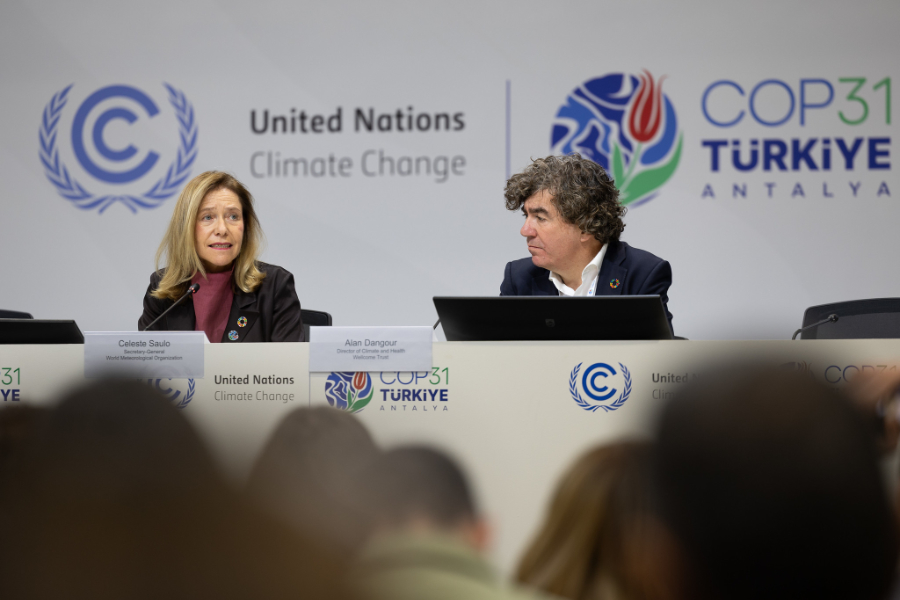
The intensifying El Niño will offer a valuable opportunity to gauge how well the world responds to the global climate crisis in the medium- to long-term, Celeste Saulo, secretary-general of the World Meteorological Organization (WMO) has told a press conference at COP31.
“This El Niño could be a good opportunity to showcase how we collectively face these risks, which increase as extreme weather events become more frequent and severe,” Saulo commented during a press conference to launch the WMO‘s latest State of the Climate Update report.
“For me, it will be a good example of where we’re doing well and what we can do better.”
Lingering effects
According to the WMO, this year’s El Niño is likely to intensify heatwaves, tropical cyclones and heavy rainfall, with consequences for communities, agriculture and food security, the effects of which will stretch into next year.
“We know that El Niño is likely to have its greatest impact on global temperatures in the year after it develops,” Saulo added. “That’s why 2024 was the warmest year on record, and why we should prepare for another potentially record-breaking year in 2027.
“Indeed, this 2026–2027 El Niño is off the charts. It’s different from any El Niño we have monitored.”
Health impact
El Niño is also likely to intensify health concerns, particularly the spread of tropical and water-borne diseases, Dr. Alan Dangour, director of climate and health at the Wellcome Trust, told the press conference.
“Cholera is a real concern,” he said. “If we have floods that damage water and sanitation systems, leading to the spread of untreated and contaminated water, the risks of cholera are very real. We saw that two or three years ago in Malawi, following Cyclone Freddy, which resulted in a major cholera outbreak.
“Cholera is a devastating disease, particularly among young children, and the risks are very real. I think El Niño will unfortunately show us next year what we’re facing. We will see unprecedented weather and extreme weather events, along with the associated health impacts.”
Key takeaways
According to the WMO’s report, 2026 is set to be one of the four warmest years on record, after global average surface temperatures between January and September were approximately 1.47°C above pre-industrial average.
It added that the past 12 years have individually been the warmest on record, with 2023 to 2026 expected to rank as the four warmest years.
Global mean sea level reached a record high in 2026, while sea-surface temperatures also recorded monthly highs. Elsewhere, glaciers lost more than 400 gigatonnes of ice in 2025, equivalent to approximately 1mm of sea-level rise.
“We have entered a new age of climate extremes,” UN secretary general António Guterres said in his introduction to the report. Read more here. [Photo: © UN Climate Change – Kiara Worth]