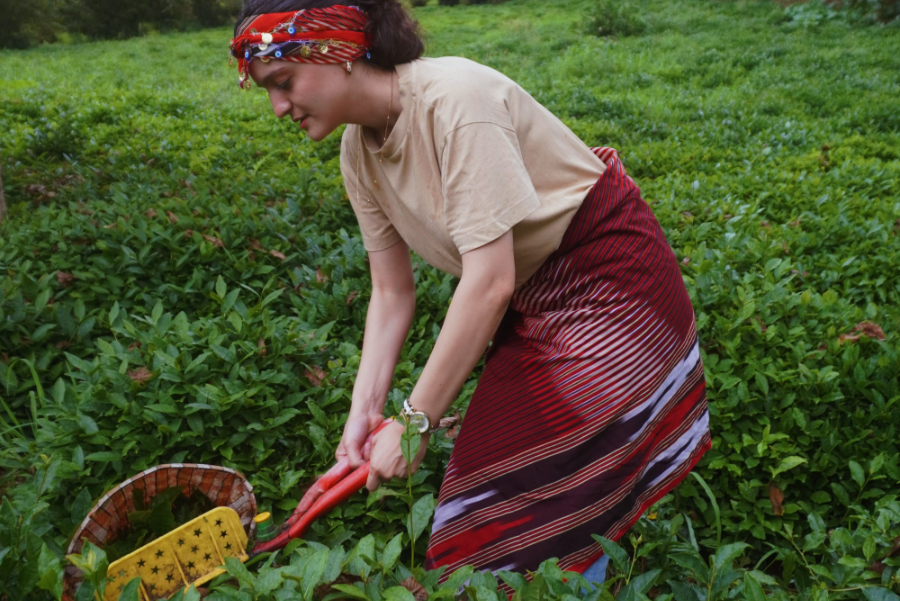
Climate finance is failing to reach rural women at a sufficient scale to help them adapt to climate change, a new report from the International Fund for Agricultural Development (IFAD) and Türkiye‘s Ministry of Agriculture and Forestry has suggested.
The report, The Unfunded Half – Financing Rural Women’s Resilience: From the Bond Market to the Farm, which was launched at COP31, found that while women make up around four in ten farm workers around the world, they have less access to land and agricultural inputs, and earn 82 cents for every dollar earned by men in farm wage work.
‘Investing in resilience’
“Investing in rural women is investing in the productivity, food security and resilience of entire economies. Yet, unequal access to finance, assets and services limits their opportunities and leaves them disproportionately exposed to climate and economic shocks,” commented Alvaro Lario, president of IFAD.
“Financial instruments such as adaptation bonds, matching grants, guarantees and insurance must be designed so that rural women can access capital, invest in climate resilience and protect their assets when shocks occur.”
According to the report, four fifths (80%) of international public climate finance for agrifood systems takes gender equality into account to some degree, however just 3% – equivalent to $855 million annually – has gender equality as its main objective.
‘The investable half’
The report describes women as ‘the investable half’, adding that they are reliable borrowers who can help their farms and families adapt when given access to finance.
“Women constitute the backbone of agriculture in Türkiye,” added İbrahim Yumaklı, minister of agriculture and forestry of the Republic of Türkiye. “When climate shocks occur, it is women’s resilience that determines the ability of rural communities to withstand them.
“Finance, insurance and support must reach women producers before shocks occur, not only in their aftermath. It is therefore imperative that we utilise the full suite of financing instruments available to us.”
At COP31, IFAD announced the launch of a $70 million rural climate adaptation bond. The private placement brings institutional capital onto the organisation’s AA+ balance sheet, with the proceeds supporting lending under its gender targets.
“When women’s economic empowerment is the main objective of climate finance, investments can be structured around barriers that disproportionately affect women farmers,” Lario added. Read more here.