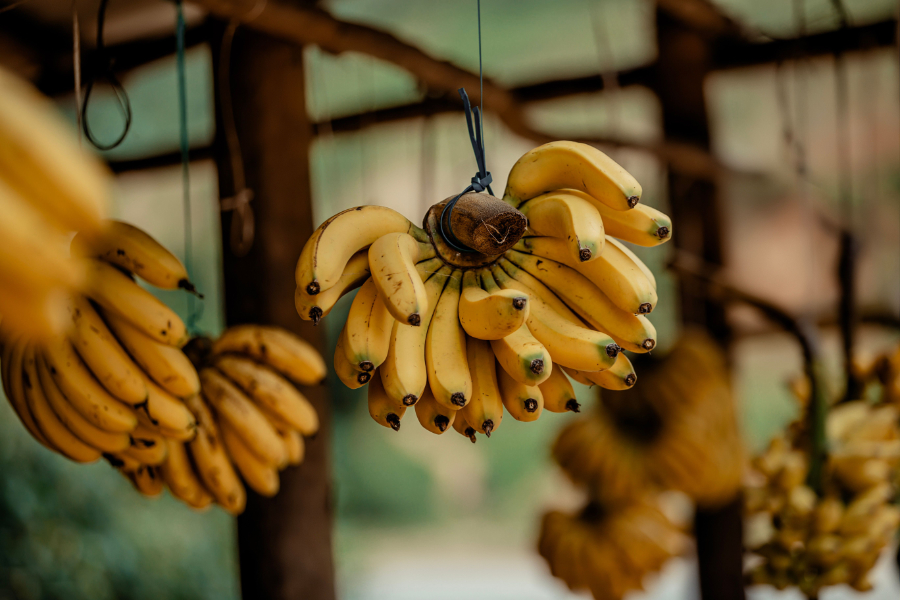
Climate change, El Niño, rising production costs and unfair trading practices are putting pressure on the resilience of the banana sector, potentially threatening supplies to the UK and Europe, the Fairtrade Foundation has said in a new report.
The foundation’s report, Bananas: An Endangered Staple, which included independent analysis by 3Keel, found that banana growers are having to navigate a perfect storm of climate impacts, downward pressure on prices, and unfair trading practices.
Financial risks are increasingly being transferred to growers, the report found, leaving them with less capacity to invest in irrigation, disease prevention and other climate adaptation measures, as well as putting their livelihoods at risk.
In addition, while costs associated with fertiliser, fuel and labour have increased, supermarket banana prices have remained largely unchanged for close to 40 years, with individual bananas costing as little as £0.15 in UK shops.
Supporting livelihoods
According to the report, between 10 million and 12 million people worldwide depend on bananas for their livelihoods. Some 93% of bananas imported into the UK come from regions of Latin America and West Africa that have been subjected to climate-related production impacts.
For example, during the 2023–24 El Niño event, banana productivity among producers fell by 22% in Ecuador, 13% in the Dominican Republic and 6% in Peru.
‘Extreme climate shocks’
“The people growing our bananas are facing extreme climate shocks which are predicted to be further exacerbated by the current Super El Niño, rising production costs and persistent unfair trading practices, leaving many unable to earn enough to sustain their farms,” commented Eleanor Harrison, Fairtrade Foundation CEO.
Research by the Fairtrade Foundation has suggested that two thirds (67%) of UK adults would be ‘willing to pay a little more’ for bananas if it helped farmers tackle climate change and disease.
The report also called on the UK government to introduce a Human Rights and Environmental Due Diligence (HREDD) law to address unfair trading practices across supply chains.
“The UK’s banana supply depends on the people growing our bananas having the resources they need to adapt to climate change, and to invest in their future,” Harrison added. “Fair prices, climate resilience and decent work go hand in hand. That means ending unfair trading practices and introducing a new responsible business law that holds companies accountable for what happens in their supply chains.
“Businesses should always play their part by paying fairer prices and building long-term partnerships that give the people growing our bananas the certainty they need to thrive.” Read more here.