A new study published in Discover Environment has suggested that the expansion of circular economy activities can play a key role in reducing the relationship between economic growth and carbon emissions.
The study analysed data from 20 European countries over a 25-year period – from 1998 to 2023 – to assess how circular economy performance, renewable energy consumption, energy intensity and globalisation influence the relationship between GDP growth and carbon dioxide emissions.
As the researchers found, circular economy activity is associated with stronger decoupling of carbon emissions from economic growth – with an estimated coefficient of -0.23 in the short term and -0.35 in the long term – indicating a ‘stronger long-run association between circular economy and decoupling’, they noted.
In addition, the study also found that renewable energy consumption and globalisation were also associated with stronger decoupling, however an increase in energy efficiency had the opposite effect, ‘strengthening the relationship’ between economic growth and emissions.
Municipal waste
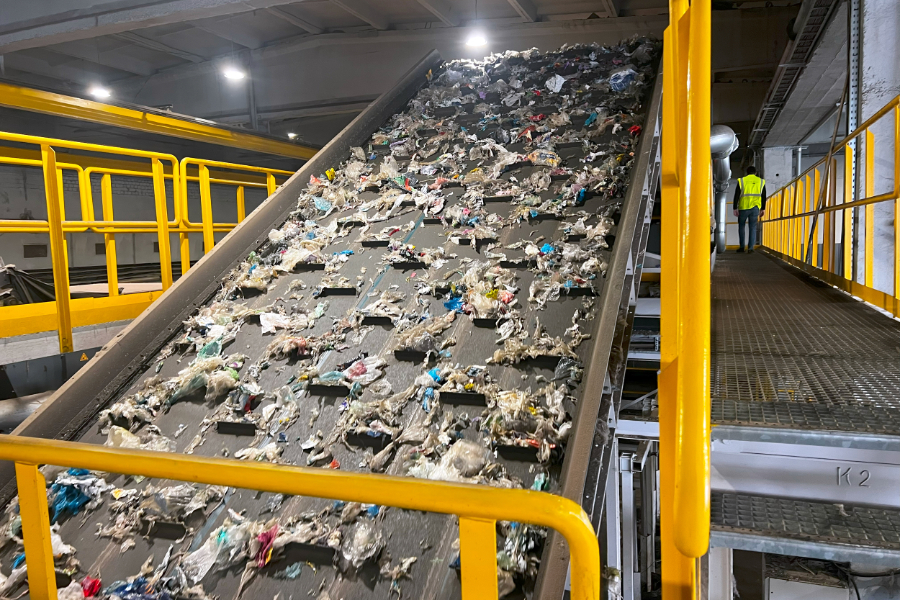
The study used municipal waste recycling as its measure of circular economy performance – with the authors acknowledging that that this represents only one dimension of circularity.
‘Although the circular economy encompasses broader activities such as reuse, remanufacturing, eco-design, and waste prevention, a comprehensive and consistently available indicator covering all these dimensions is not available for all sampled countries over the study period,’ they said. ‘Therefore, the municipal waste recycling rate is employed as a transparent and internationally comparable proxy capturing the resource-recovery dimension of circularity.’
Germany boasts the highest average municipal waste recycling rate in Europe, at 62.78%, followed by Ireland (55.32%) and Belgium (53.60%), the study found. At the other end of the scale, Portugal (10.08%) and Austria (12.24%) boasted the lowest rates.
Further investment
The authors concluded the study by calling for greater expansion of circular economy policies, adding that said policies should be better integrated with energy and climate strategies rather than implemented independently.
‘Investments should be made to establish the required infrastructure for recycling and remanufacturing of resources and policies should be formulated which motivate the producers to increase recycling and remanufacturing operations,’ they said.
The full report, Exploring the role of circular economy in decoupling carbon emissions from economic growth in European countries, by Muhammad Sajid, Noman Rasheed, Dilawar Khan and Róbert Magda, can be found here.