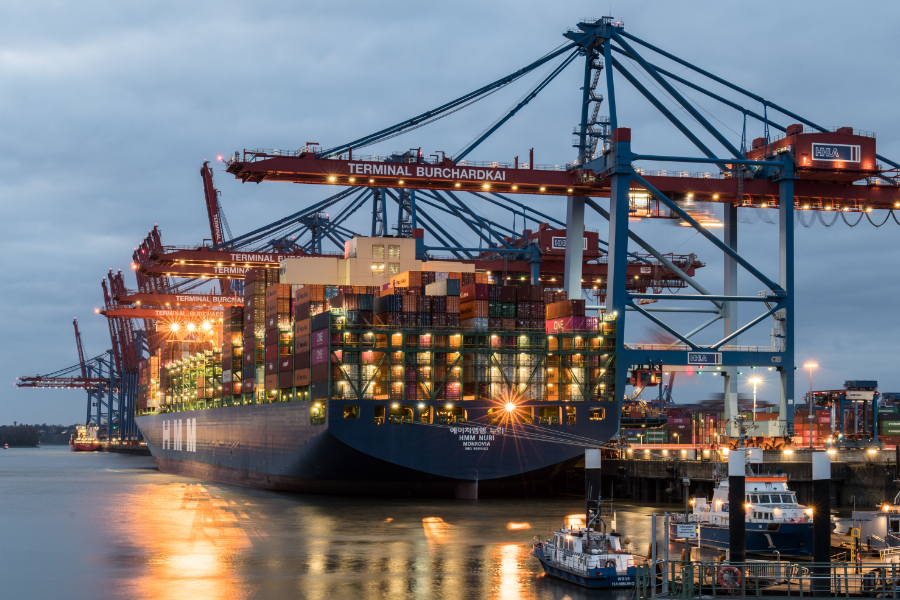
Commercial ships docked in European ports generate an estimated €2.5 billion a year in health and environmental costs, as a result of port pollution, new research from Transport & Environment (T&E) has suggested.
Its study examined emissions from commercial vessels that run diesel generators when berthed to power onboard systems, rather than ‘plugging in’ to the local electricity grid.
According to T&E, a single ship emits, on average, as much toxic sulphur at port in a year as 19,300 cars, with people living close to commercial harbours facing higher higher risks of cardiovascular and respiratory disease.
Its analysis of Europe’s 100 largest ports identified Rotterdam as having the highest estimated annual pollution-related costs, at €350 millio, followed by Antwerp (€220 million), Marseille (€120 million), Hamburg (€120 million), and Genoa (€110 million).
Alternative Fuels Infrastructure Regulation
T&E is calling for changes to the EU’s Alternative Fuels Infrastructure Regulation (AFIR), which currently requires certain large vessels, including container ships, ferries and cruise ships, to connect to shore-side electricity. However, other commercial vessels, such as oil and gas tankers, bulk carriers, car carriers and cargo vessels do not have to adhere to this regulation.
Removing this loophole – in other words, making the requirement mandatory for all berthed commercial vessels – could save Europe €1.56 billion in health and climate costs, the group said.
Port communities
“Port communities are paying the price for ships running their engines 24/7 at port,” commented Eloi Nordé, shipping policy officer at T&E.
“Fossil fuels only seem cheap because companies offload health and climate costs onto the public. Fortunately, the solution already exists. Plugging ships into shoreside electric power would save society billions and make port cities far healthier to live in.”
T&E also noted that the current lack of clear timelines for extending shore-power requirements to all vessels means that ports are disincentivised from making long-term investments in green infrastructure.
The EU is due to review AFIR at the end of this year, with T&E urging policymakers to expand shore power requirements to all ships, batteries, and boilers, backed by national port electrification roadmaps, before 2032.
Its call was supported by a joint letter to the European Commission from the Clean Port Cities coalition, which includes industry, civil society, maritime and energy stakeholders such as DFDS and Green Transition Denmark. Read more here and here.