With so much happening in the world of corporate sustainability, SustainabilityOnline has introduced The Sustainability Brief – a regular round-up of some of the top stories making headlines around the world.
In other words, we scour the world for the most important sustainability news, so you don’t have to. Please also check out our homepage for today’s top stories. If you have a news story you’d like to send us, you can contact us here.
Countries call for increased finance and technical assistance to implement climate plans at COP31
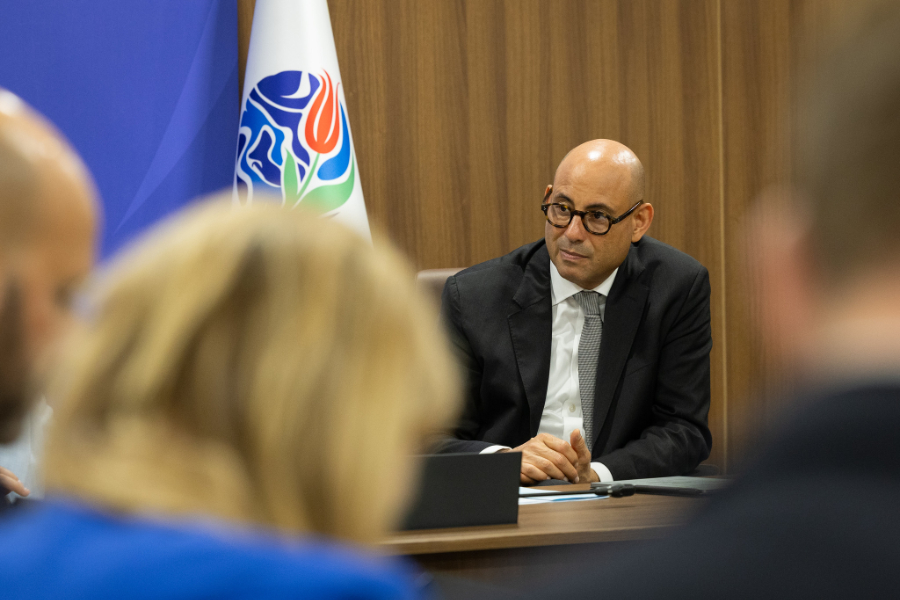
Ministers and government representatives at COP31 have called for increased access to climate finance, technical assistance and international cooperation to help developing countries implement their Nationally Determined Contributions (NDCs). During a session entitled Catalyzing Support for NDCs, representatives from Uganda, Panama, Cameroon and Saint Kitts and Nevis highlighted barriers including limited institutional capacity, funding and coordination between government departments. “We cannot design a one-size-fits-all approach and expect it to be implemented in all developing countries. What we require are targeted, hands-on and country-defined solutions,” said Uganda’s Minister of State for Environment, Beatrice Anywar Atim.
Moody’s expects global sustainable bond issuance to reach multi-year high in 2026
Global sustainable bond issuance reached $271 billion in the third quarter of 2026, an 11% increase year on year, according to Moody’s. Issuance during the first nine months totalled $878 billion, up 8% compared with the same period in 2025. Green bond issuance increased by 29% to $188 billion, while social bonds rose 47% to $43 billion. Europe accounted for $142 billion of third-quarter issuance, representing more than half of the global total and a 50% annual increase.
Ireland launches roadmap for transition away from fossil fuels
Ireland has launched its national Roadmap on Transitioning Away from Fossil Fuels, setting out its approach to accelerating the shift towards clean energy and reducing dependence on fossil fuels. Launching the roadmap at COP31, Ireland’s Minister for Climate, Energy and the Environment Darragh O’Brien described it as both a statement of ambition and an acknowledgement of the challenges Ireland faces in meeting its climate and energy targets. “The transition is not simply about reducing emissions. It is about energy sovereignty, strategic autonomy, economic resilience and competitiveness,” he said. The roadmap’s launch also comes ahead of the Second International Conference on Transitioning Away from Fossil Fuels, which Ireland and Tuvalu will co-host in 2027.
Indonesia’s 2026 wildfires generate third-highest carbon emissions since 2003, Copernicus reports
Indonesia’s wildfires had generated almost 200 million tonnes of carbon emissions by 15 November 2026, according to the Copernicus Atmosphere Monitoring Service (CAMS). Strong El Niño conditions, high temperatures and low rainfall contributed to extensive fires across Indonesia and Papua New Guinea. More than 88,000 square kilometres have burned in Indonesia, with smoke affecting air quality in Singapore, Malaysia and the Philippines. “Although Indonesia’s overall emissions remain below the exceptional levels of 2015, one thing that stands out this year is the persistence of the fires and the substantial differences between provinces,” commented Mark Parrington, CAMS senior scientist.
Fyffes advances packaging innovations to reduce plastic use across fruit supply chains
Fyffes is developing a range of packaging solutions to reduce plastic consumption and increase recycled content across its banana and pineapple supply chains. One new banana packing system uses 46% less plastic per container, equivalent to approximately 16 kg of plastic saved. The company is also introducing polypack packaging containing recycled plastic and a plastic-free paper banding system for banana clusters. Further solutions under development include compostable cluster bags, plastic-free pineapple labels and compostable paper banana tags. “Our approach is to look systematically across our packaging portfolio at where we can use less material, remove plastic where it is unnecessary, increase recycled content and explore credible alternatives,” commented Ricardo Castro, product innovation manager at Fyffes.
Guardian Media Group reports 52% reduction in emissions against 2020 baseline
Guardian Media Group has reported an 8% reduction in greenhouse gas emissions during 2025/26, bringing emissions 52% below its 2020 baseline. The company remains on track to meet its target of reducing emissions by 67% by 2030. Emissions associated with print activities fell by 14% year on year, while print operations accounted for just under 60% of total emissions, compared with 73% in 2020. The report also addresses the group’s wider environmental impacts across its value chain.
Mars launches $22.4 million programme to support 26,500 Indian farming families
Mars has launched Shubh Samriddhi, a $22.4 million initiative to strengthen livelihoods and agricultural resilience among 26,500 farming families in Uttar Pradesh, India. Building on its Shubh Mint programme, the initiative extends support beyond mint production to rotational crops including potatoes, mustard and rice. Its objectives include supporting 400 women’s self-help groups towards financial sustainability and establishing 100 women-led enterprises. Mars is contributing $18.6 million, including $5.6 million from the Mars Impact Fund, alongside funding from the German government, Callisons and Norex Flavours.
Deloitte Switzerland reports 36% reduction in greenhouse gas emissions since 2019
Deloitte Switzerland has reported gross greenhouse gas emissions of 8,419 tonnes of CO₂-equivalent for financial year 2026, a 17% reduction compared with the previous year and 36% below its 2019 baseline. Scope 1 and 2 emissions were 87% below the baseline, while Scope 3 emissions, which accounted for 99% of the total, declined by 35%. The firm said part of the reduction reflects revised emissions factors and improved measurement rather than lower activity. “Our clients need to respond to rapidly changing business conditions with clear decisions, turn strategy into action and generate value from AI,” commented Reto Savoia, CEO.
Germany contributes €15 million to Brazilian fund supporting Indigenous land protection
Germany has pledged €15 million to Brazil’s Vítuke programme, a financial mechanism designed to support the protection and sustainable management of Indigenous territories. The contribution, provided by Germany’s Federal Ministry for Economic Cooperation and Development through KfW, brings total funding raised by the programme to $65 million. Developed by Brazil’s Ministry of Indigenous Peoples and FUNBIO, in partnership with FUNAI and Indigenous organisations, Vítuke could support conservation and management activities across more than 100 million hectares, benefiting over 250,000 people. Funding will support territorial protection, environmental restoration, biodiversity conservation and climate resilience.
Kerry and World Food Programme launch three-year initiative to improve food safety and reduce waste
Kerry and the United Nations’ World Food Programme (WFP) have announced a three-year initiative to improve food safety and quality across WFP’s distribution network, marking 10 years of partnership between the organisations. Kerry will provide expertise in food protection and preservation to help maintain the quality and shelf life of food supplies and reduce waste, initially focusing on supply chains in the Middle East and Africa. Previous joint programmes include Project Leche in Honduras and Project Amata in Burundi, which supported local dairy production and school nutrition. “It is a privilege for the teams at Kerry to share their knowledge and expertise with WFP on topics that can positively impact so many lives,” said Dr Alexandra Boelrijk, vice president for research and innovation in food protection, Kerry.