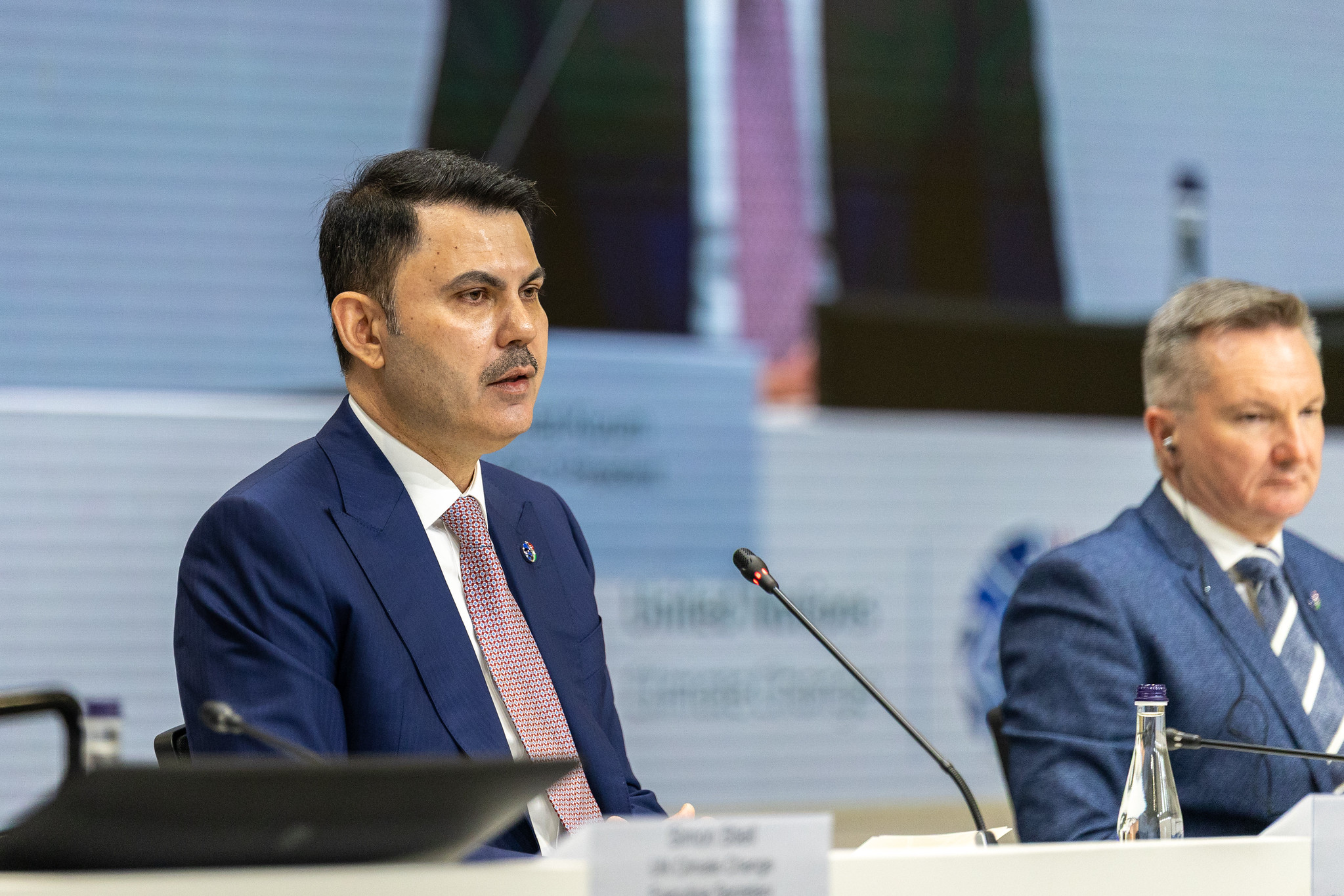
COP31 president Murat Kurum has said that this year’s conference will be remembered as the “moment we flicked the switch” on the age of electricity.
Kurum was commenting following the official unveiling of the Global Electrification Pledge at COP31, which seeks to increase electricity’s share of final energy consumption to 35% by 2035, up from 23% today – the so-called ’35×35 target’.
‘Clear goal’
“We need the 35×35 target because until now electrification has not been underpinned by a clear global goal,” he said. “This year’s energy crisis has shocked us out of our complacency and demonstrated the inherent vulnerability of dependence on energy imports.
“Electrifying the global economy is now essential to boot energy security, cut emissions, and drive economic growth. The COP31 presidency is determined to chart a path forward and use the annual UN summit to build momentum.”
The 35% target is based on analysis by the International Energy Agency (IEA) and the International Renewable Energy Agency (IRENA) on what is required to keep global warming on a pathway consistent with limiting temperature increases to 1.5°C above pre-industrial levels.
To support the target, the COP31 presidency is establishing an Electrification Forum with the European Union, which will be backed by a Global Electrification Tracking Mechanism to monitor progress, overseen by the IEA.
Elsewhere, IRENA plans to support the initiative through its Enabling Distribution Grids for Electrification (D-GRIDS) programme, while the Utilities for Net Zero Alliance (UNEZA) also announced that it was increasing its annual investment commitment for grids, renewable energy and storage from $148 billion to $156 billion.
In addition, more than 180 companies, including Volvo, Uber, IKEA and Siemens, which represent more than $1.69 trillion in annual revenue, have backed faster electrification through the We Mean Business Coalition.
‘Broad support’
“At COP31, we are seeking broad support for faster electrification, matched by practical delivery pathways,” added Chris Bowen, COP31 president of negotiations. “When electrification is backed by clean power, stronger grids and storage, it can improve energy access, strengthen energy security and cut emissions across households, transport and industry.
“The global clean energy transition is well underway and the task at COP31 is to accelerate it. Ambition matters, but it must be backed by investment, infrastructure and implementation.”
The COP31 presidency is also establishing the Electrify Now Finance Coalition, bringing together governments, development banks and private finance to support electrification in emerging and developing economies. The World Bank and African Development Bank will serve as its inaugural co-chairs in 2027.
A separate Global Green Freight Corridors Initiative is being launched with the International Transport Forum to support the development of greener and more resilient freight routes. Read more here. [Photo: ©UN Climate Change – Kubilay Ciftci]