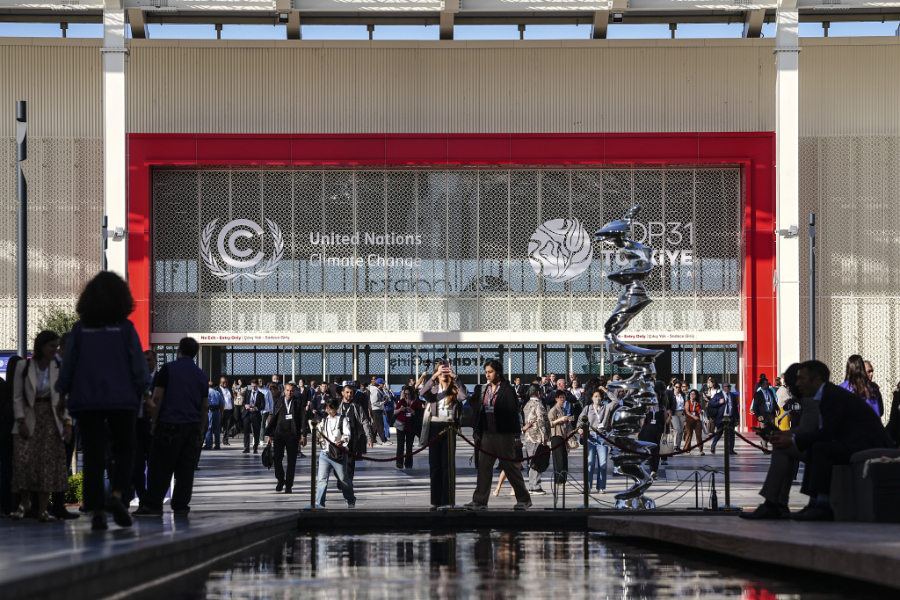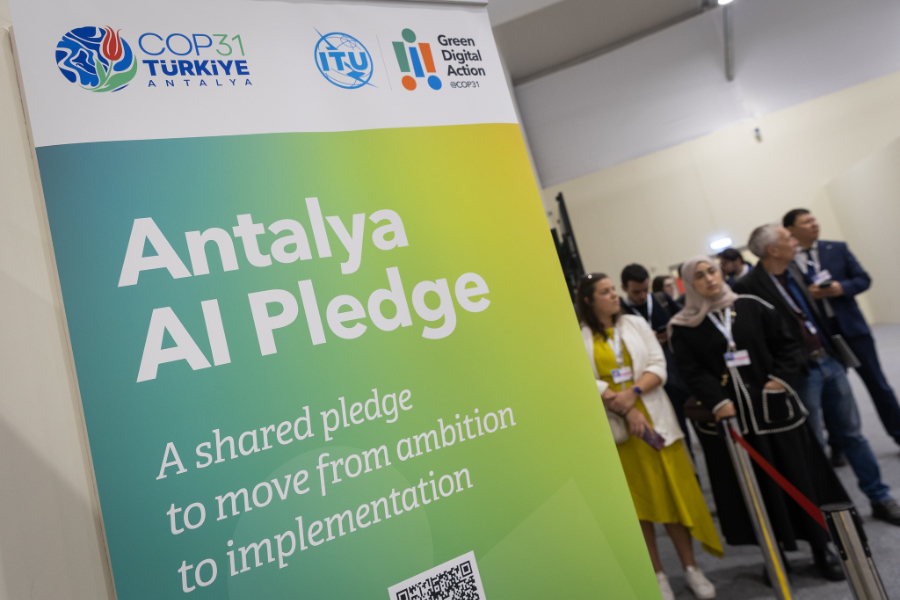
A new voluntary framework, the Antalya Artificial Intelligence Pledge, has been launched at COP31, which encourages governments, businesses and organisations to establish ‘concrete commitments on how they will make AI part of the climate solution’.
The pledge, which was launched at a High-Level Green Digital Action Roundtable, sets out actions across four areas: powering and developing AI infrastructure and hardware in a sustainable manner; designing, managing or procuring AI responsibly across its lifecycle; supporting assessment and reporting of AI systems’ environmental impacts; and strengthening financial support and technical infrastructure for AI for climate action, particularly in developing countries.
‘Double-edged sword’
Commenting during the roundtable, UN Climate Change executive secretary Simon Stiell described AI and other frontier technologies as a “double-edged sword. The task ahead is to blunt their dangerous edges, sharpen their catalytic ones, and put these technologies responsibly to work.”
Signatories to the pledge are also encouraged to commit to energy and environmental disclosure, invest in low-emission energy for AI infrastructure and data centres, develop resource-efficient AI infrastructure, and support AI-enabled climate solutions that can drive practical implementation.
Early supporters of the pledge include governments, academia, civil society and the private sector.
Finding a balance
“AI’s benefits must outweigh its growing costs,” Stiell added. “And those benefits must reach every country. […] AI companies’ licence to operate is already on thin ice, right across political spectrums in many countries. And under that thin ice lie some potentially very deep regulatory waters, as political landscapes shift.
“So, CEOs and boards need to step-up, and align business and investment plans with the world’s agreed climate goals.”
The roundtable also saw the presentation of the 2026 UN Climate Change AI for Climate Action Award, which was won by Tanzanian entrepreneur Upendo Ernest Lyimo for the development of CLIMAID, an AI-powered platform combining climate data, satellite observations and local information to support climate risk assessment and adaptation planning.
“That is how AI earns public trust, and takes it to places as a climate solution,” Stiell noted. Read more here. [Photo: ©UN Climate Change – Kiara Worth]