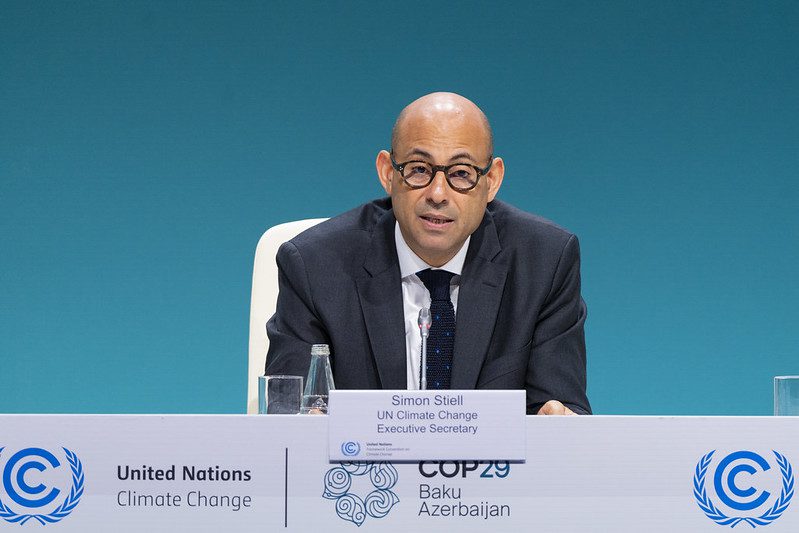
National Adaptation Plans (NAPs) should be seen as critical frameworks for preparing communities and economies for climate impacts, Simon Stiell, UN Climate Change Executive Secretary, has told a High-Level Dialogue during COP29 in Baku.
“National Adaptation Plans are more necessary than ever. They are truly vital,” he commented. “This year, we saw how every bit of preparation – every policy, every plan – is the difference between life and death for millions of people around the world. Prudence demands we plan for the worst.”
At the same time, the development and implementation of NAPs remain challenging, particularly for Least Developed Countries (LDCs) and Small Island Developing States (SIDS), he added. These nations face significant limitations in funding and technical capacity.
Financial requirements
The financial requirements for adaptation are increasing, with annual costs projected to reach $340 billion by 2030 and $565 billion by 2050. These figures reflect the growing need for investments to mitigate risks and address climate-related losses.
“It’s easy to become slightly anaesthetised by all these numbers, especially at this finance-focused COP,” Stiell added. “But let’s never allow ourselves to forget: these figures are the difference between safety and life-wrecking disasters for billions of people.”
Adaptation investments
Stiell emphasised that adaptation investments “at the right scale and pace” not only address risks but also offer economic benefits by reducing future losses and enhancing resilience.
He called for streamlined access to funding and changes in the global financial system to support adaptation efforts, urging multilateral development banks, private sector entities, philanthropic organisations, and bilateral donors to collaborate and address these financing gaps.
“We can no longer rely on small streams of finance,” as he put it. “We need torrents of funding. They need to be easier to access, especially for the most vulnerable countries that often face the biggest barriers.”
“We must explore innovative financing mechanisms, and provide the technical assistance countries need to formulate their NAPs.”
NAPs 3.0 initiative
With this in mind, the NAPs 3.0 initiative was recently launched to promote innovative adaptation financing and provide technical support to LDCs and SIDS. This initiative aims to help nations meet the 2025 deadline for submitting NAPs, which is essential for improving preparedness and resilience.
Stiell concluded by affirming the UNFCCC’s commitment to support nations in implementing NAPs, encouraging collaborative efforts to address funding and capacity challenges.
“This is not just a timeline – it is a lifeline,” he said. “More than that – it’s a fast-track to the stronger economies and societies that all countries want and deserve. And that is in every nation’s interest, in these turbulent times.” Read more here. [Photo: UN Climate Change]