A tax on seven of the world’s biggest oil firms could grow the UN Fund for Responding to Loss and Damage by more than 2,000%, Greenpeace International and Stamp Out Poverty have suggested.
At COP29, the two organisations called for a long term tax on fossil fuel extraction, with year-on-year increases, combined with taxes on excess profits and other levies, to directly address the cost of extreme weather events.
Climate Damages Tax
They have called for the implementation of a Climate Damages Tax (CDT) which would impose an initial levy of $5 per tonne of CO₂-equivalent emissions linked to oil and gas extraction, increasing annually by the same amount plus inflation.
Extreme weather events, including heatwaves in India, hurricanes in the Americas, and floods in East Africa, collectively caused $64.6 billion in damages this year alone.
Greenpeace and Stamp Out Poverty’s analysis suggests CDT implemented across OECD countries could raise $900 billion by 2030, according to the report, providing critical funding for climate adaptation, mitigation, and transition efforts.
‘Make polluters pay’
“While oil and gas giants keep raking in grotesque levels of profit from exploiting resources, the damages resulting from the industry’s operations are disproportionately borne by people who did not cause the crisis,” commented David Hillman, director of Stamp Out Poverty.
“A climate damages tax – along with other levies on fossil fuels and high-emitting sectors – will make polluters pay for the cost of climate impacts, as well as supporting workers and affected communities in the transition to clean energy, jobs, and transport.”
The call to make climate polluters pay following the conclusion of two weeks of protests that delivered to offices of TotalEnergies, Eni, Equinor and OMV containers of broken toys, furniture, appliances, and other remnants of personal and communal tragedy, shipped from flood- and storm-affected areas around the world by the Greenpeace network.
“Our analysis lays bare the scale of the challenge posed by climate loss and damage and the urgent need for innovative solutions to raise the funds to meet it,” added Abdoulaye Diallo, co-head of Greenpeace International’s Stop Drilling Start Paying campaign. “We call on governments worldwide to adopt the Climate Damages Tax and other mechanisms to extract revenue from the oil and gas industry.”
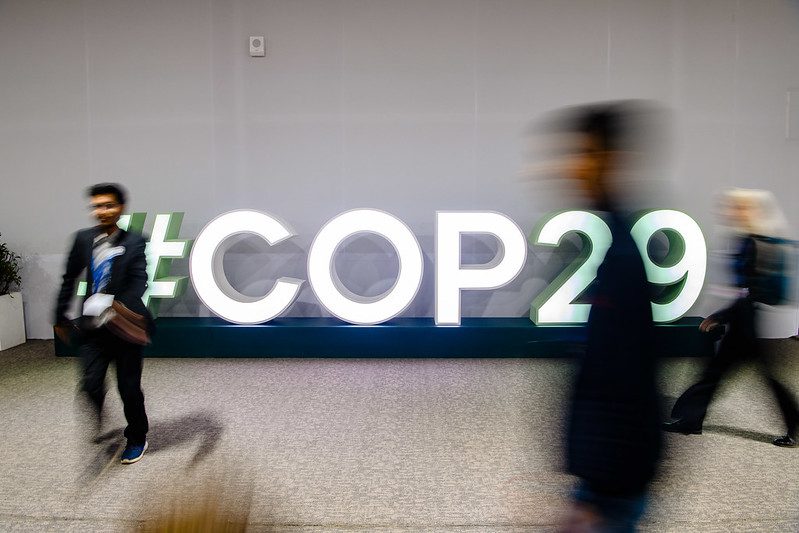
The Loss and Damage Fund, recently renamed the Fund for Responding to Loss and Damage (FRLD), was announced at COP27 in Egypt to help developing countries compensate for impacts of natural disasters caused by climate change. Read more here. [Photo: UN Climate Change]