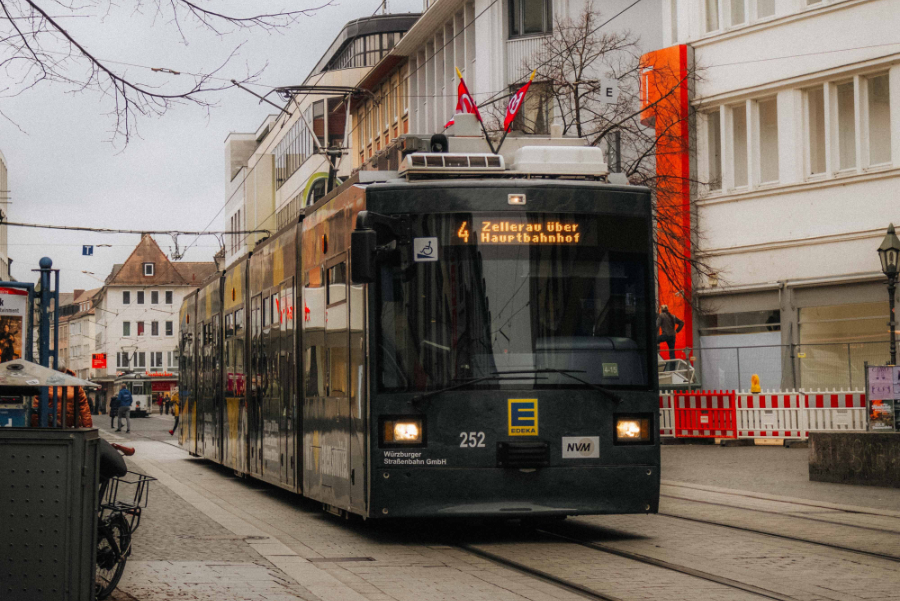
A new study by the University of Hertfordshire has suggested that new towns and settlements in the UK will fall short of delivering ‘thriving, sustainable communities’ unless high-quality public transport is prioritised.
The study, entitled Better places: new settlements with transport that works, examined case studies from Freiburg, Germany (pictured), and Cambridge and Harlow in the UK, and concluded that public transport, walking and cycling networks need to be planned and funded before homes are built.
The UK government is currently preparing its response to last year’s New Towns Task Force report, and is committed to delivering 1.5 million new homes, many of which will form a ‘new generation’ of towns.
Car dependence
“Our report notes that much of the UK’s recent housing development has been of low density, with limited or no shops and community services, limited public transport and, sometimes, no pavements,” commented Stephen Joseph, co-author of the report. “This leads to car dependence with on and off-street parking issues and wider impacts on people’s health and independence.
“It has been shown in the UK that we can build at higher density with less car use, but high-quality public transport must be in place from the beginning and fully integrated with the masterplanning of the developments. Germany solves this by using land value uplift and public funding to cover temporary transport subsidies for mass transit developments, but these funding routes are not really available in the UK at present.”
As the authors noted, housing density is significantly higher – between 90 and 135 dwellings per hectare – in Freiburg than it is in the UK, however the city’s development around a series of public transport ‘spines’ ensures a more sustainable transport network, with less reliance on cars.
Cambridge, meanwhile, also boasts examples of investment in new rail stations and guided buses, however authorities have encountered difficulties in delivering these – for example, the guided bus route has not been fully integrated into the Northstowe development.
In addition, transport and planning are also managed by different authorities in both Cambridge and Harlow, creating a more fragmented system than in Freiburg.
Simpler governance
“Our visits – both to Freiburg and to Cambridge and Harlow in the UK – show that it is possible to deliver new housing without relying on and providing for high levels of car use,” the authors note.
“Simpler governance, clear planning systems, new funding and financing regimes (including devolved funding for public transport so that it can be provided in the early years), stronger master plans and design codes and opportunities for community and resident involvement along the way will all help deliver the vision in the New Towns Task Force report.”