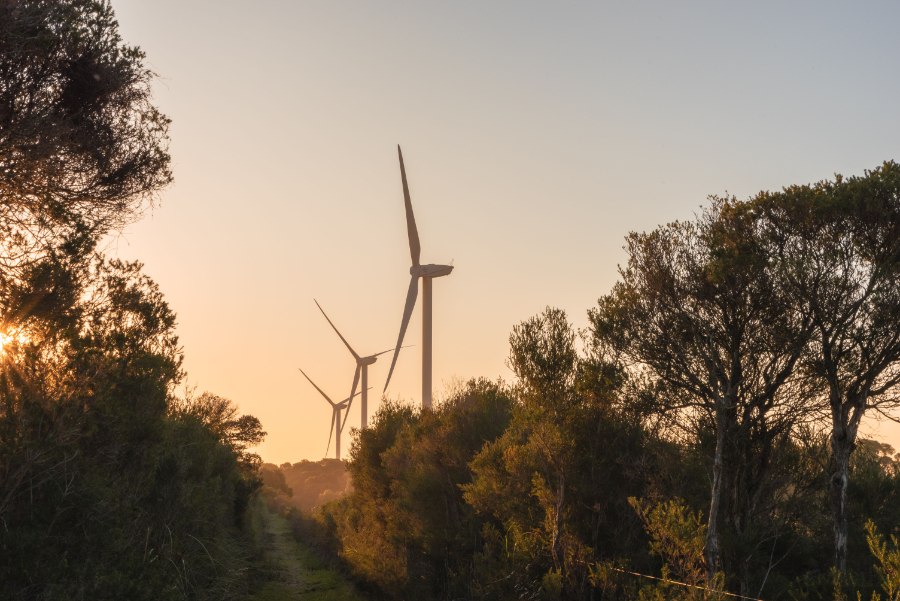
Offshore wind in Europe is moving into a ‘supremacy phase’, as governments shift from action to execution, a new report from GlobalData has said.
According to GlobalData’s report, Europe Renewable Energy Policy Handbook 2026, offshore wind is increasingly being treated as ‘strategic infrastructure’, as governments across the continent view it as one of the ‘few scalable, utility‑grade renewables capable of delivering very large annual increments of low‑carbon electricity‘.
It noted that auction systems are increasingly being redesigned to balance cost control with project delivery, despite permission constraints, supply-chain pressures and grid integration challenges.
‘Genuinely buildable’
“Governments are increasingly designing auctions to balance cost discipline with deliverability adapting contract structures, redefining risk allocation for grid links, and tightening pre‑qualification rules so awarded projects are genuinely buildable,” commented Attaurrahman Ojindaram Saibasan, power analyst at GlobalData.
“The key differentiator is no longer only who offers the lowest price, but who can deliver at scale under permitting limits, supply‑chain constraints, and increasingly complex grid integration.”
As it noted, European governments are increasingly turning to two-way Contracts for Difference (CfDs), as well as other revenue-stabilisation mechanisms, to reduce volatility while maintaining price discipline.
Recent examples underline how these trends are playing out. In Germany, a 2025 auction for two centrally prepared North Sea sites, with a combined capacity of 2.5GW, received no bids, with the outcome linked to a lack of revenue stabilisation mechanisms, unresolved permitting risks and differences between project and grid-readiness schedules.
Elsewhere, France launched a tender of about 10GW in mid-2026, split equally between fixed-bottom and floating offshore wind across its maritime areas. The UK’s latest CfD round awarded more than 8GW of fixed-bottom offshore wind and floating projects, with lower strike prices for fixed-bottom developments.
Floating offshore wind
As well as fixed-bottom offshore wind – which GlobalData says remains the ‘workhorse’ of the sector – floating offshore wind is moving from pilots to commercial reality. A number of European governments are preparing tenders and adapting support mechanisms to account for the higher costs and technology risks associated with floating offshore wind.
“This shift is strategically significant: it expands the viable geography for offshore wind in parts of the Atlantic and Mediterranean, and it supports new industrial ecosystems around floating foundations, mooring systems, dynamic cables, specialised ports, and new O&M models,” Saibasan added.
“For investors, floating wind signals both higher near‑term risk and potentially larger long‑term addressable markets, especially as learning curves and industrialization reduce costs over time.” Read more here.
![UNEP executive director Inger Andersen has said that while achievements were made at the United Nations Convention to Combat Desertification (UNCCD) COP 17 in Ulaanbaatar, Mongolia over the past couple of weeks, it 'remains clear [that] progress is still needed to tackle drought, finance and implementation of already agreed goals'.](https://sustainabilityonline.net/wp-content/uploads/2026/08/55467590120_42b5dc7feb_k.jpg)