Myths and misconceptions about electric vehicles continue to represent the biggest barrier to EV adoption, a new study by the Global EV Alliance (GEVA) has found.
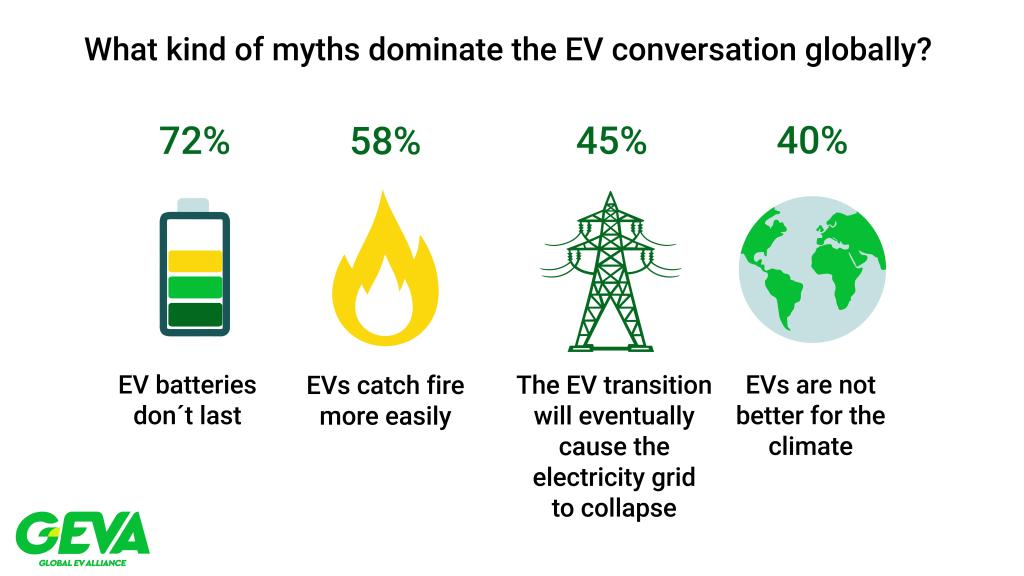
According to GEVA’s Global EV Driver Survey, which drew on responses from more than 29,500 EV drivers across 34 countries, the biggest myths associated with electric vehicles are that EV batteries do not last (72%), and that EVs catch fire more easily (58%).
Some 45% of respondents also cited the myth that the EV transition will eventually cause the electricity grid to collapse, while two fifths (40%) cited the myth that EVs are ‘not actually better for the climate’.
‘Outdated information’
“The EV transition is not just an infrastructure or affordability challenge,” commented Ellen Hiep, who sits on GEVA’s steering committee. “It is also an information challenge. Outdated information and misconceptions continue to influence decisions long after the technology has moved on.”
Some 74% of respondents said that myths about EVs represented the biggest barrier to adoption, ahead of purchase price (49%) and access to charging in apartment buildings (47%).
Battery lifespan
Elsewhere, around two-thirds of respondents (65%) said that they either ‘disagree’ or ‘strongly disagree’ with the statement ‘I am concerned about the lifespan of my battery‘, while just 18% either ‘agree’ or ‘strongly agree’.
“It is understandable that people compare EV batteries with phone batteries that need replacing after two or three years. But most EV drivers have a very different experience with their car batteries,” Hiep added. “Most EV drivers know from experience that modern EVs come with long battery warranties of eight years, and that most batteries will outlast the car.”
The Global EV Alliance (GEVA) is a non-profit network of 71 EV associations across 41 countries. Read more here.
Read more: Battery electric vehicles displacing 1.2 million barrels of oil per day, says T&E