
‘Clear disconnect’ between sustainability strategy and execution, says KPMG
A new report by KPMG has found that there is a ‘clear disconnect between strategy and execution’ on sustainability investments at many businesses.

A business news platform with a sustainable focus. Featuring the latest sustainability news and ESG insight, viewed through a business lens.
Environmental, Social and Governance (ESG) is a framework used to assess how organisations manage their environmental impact, social responsibilities and corporate governance. ESG has become a key part of corporate strategy, investment decision-making and business risk management, helping organisations identify sustainability-related risks and opportunities while improving transparency, accountability and long-term value creation.
SustainabilityOnline reports on the latest developments in ESG, including sustainability reporting, corporate governance, climate change, social impact, responsible business, sustainable finance and evolving regulation. We explore how organisations are embedding ESG into business strategy, responding to regulatory change, improving environmental and social performance, strengthening governance and enhancing transparency through reporting frameworks such as the Corporate Sustainability Reporting Directive (CSRD). We also examine developments in ESG investing, climate disclosure, biodiversity, supply chain sustainability, decarbonisation and corporate resilience.
Related topics: ESG, environmental, social and governance, corporate sustainability, sustainability reporting, CSRD, ESG reporting, corporate governance, climate change, biodiversity, sustainable finance, ESG investing, climate disclosure, supply chain sustainability, decarbonisation, social impact, responsible business, business resilience and sustainability strategy.
A new report by KPMG has found that there is a ‘clear disconnect between strategy and execution’ on sustainability investments at many businesses.
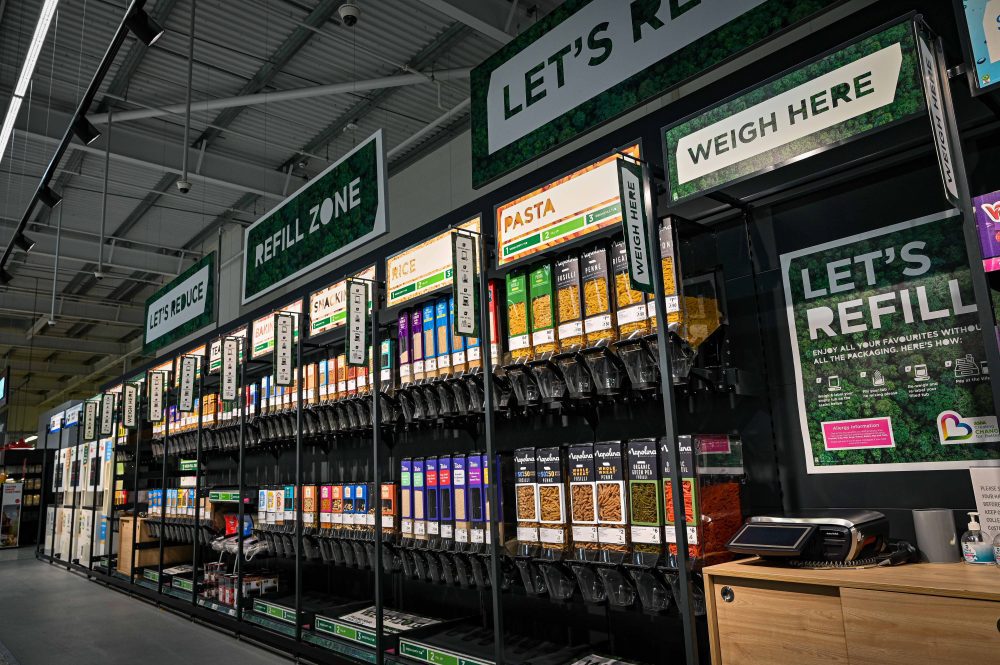
Retailer Asda has revealed its inaugural external evaluation of its ESG strategy conducted by Sustainable Fitch.

About 86% of procurement directors in the US and Canada play a vital role in influencing sustainability decisions within their companies.

A recent backlash against ESG investment in the United States, driven by conservative politicians and lobby groups, appears to have no effect.

The percentage of top level firms in the US that have integrated climate-related metrics into their executive compensation plans has more than doubled over the past two years.

Businesses are increasingly utilising artificial intelligence in order to get a broader picture of their performance metrics, and the area of sustainability is no exception.

Environmental considerations are ‘weighing heavily’ in the environmental, social, and governance (ESG) discussions at major firms, GlobalData has said, as…

More than six in ten businesses around the world (62%) has said that storms, floods and wildfires are likely to have a material impact on their environmental initiatives, a study by Honeywell has found.

Just 13% of company executives in the US say that sustainability is ‘deeply embedded’ into their firm’s cultural DNA, with the majority in the ‘early to middle’ stages of developing a sustainability culture, a study has found.

In an ever-shifting business landscape, adaptability isn’t just a trait—it’s a competitive advantage. Companies that embrace change, learn from challenges, and pivot when necessary are the ones that not only survive but also thrive in uncertain environments.