Volkswagen AG’s Dr Daniel-Sascha Roth on the role of technology in streamlining reporting
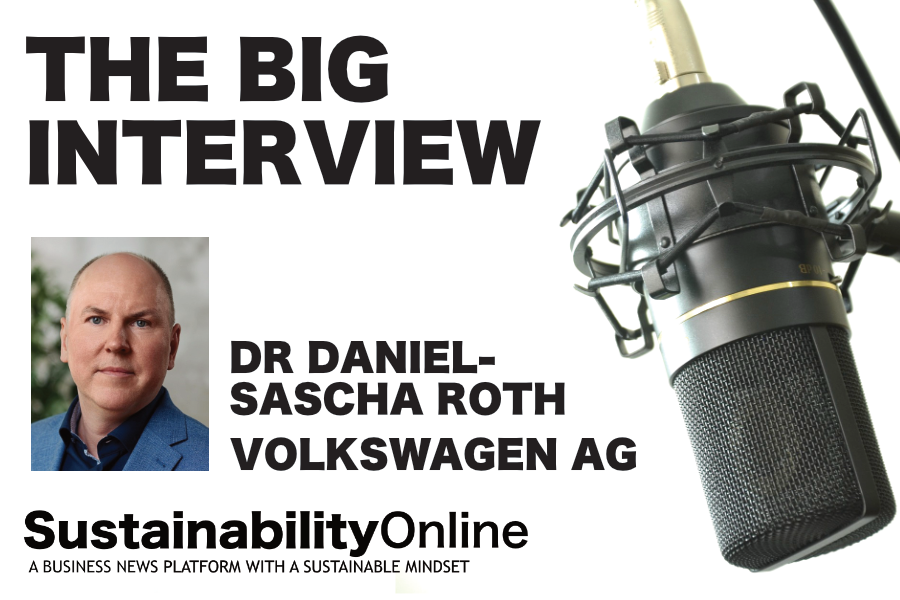
Daniel-Sascha Roth, Head of ESG – Sustainability Management at Volkswagen, talks to SustainabilityOnline about the role of technology in streamlining reporting.

Dr Daniel-Sascha Roth has spent more than two decades with Volkswagen AG, holding a myriad of sustainability and environmental positions before taking on his current role of Head of ESG – Sustainability Management, in August 2018.

Volkswagen’s sustainability strategy is built around its regenerate+ programme, with the automotive firm targeting net carbon neutrality by 2050, as well as carbon-neutral production and 40% circular material use by 2040. It has also pledged increased investment in responsible supply chains, biodiversity, health and safety, workforce development and sustainable finance.

At the recent Reuters Events Sustainability Data & Reporting Europe conference in London, Roth took part in a discussion panel on how AI can support regulatory interpretation and compliance by analysing changing sustainability requirements, aligning obligations with company data, automating compliance checks and improving reporting efficiency while maintaining oversight. SustainabilityOnline caught up with him at that event.

The role of AI

We began by discussing the role AI is playing in simplifying regulatory interpretation and supporting compliance. As Roth explained, Volkswagen is assessing AI use cases across the “whole spectrum” of sustainability management processes, including strategy, stakeholder engagement, reporting, ratings, information management and regulatory compliance.

“AI is very good at increasing speed, managing complexity and dealing with ambiguity,” he says. “If I think back to the first wave of CSRD reporting, when the ESRS went live and we had to prepare our first CSRD report, you can imagine how time-consuming and resource-intensive it was.

“It was a complex situation from a management perspective, although it helped that we had started our sustainability reporting journey back in 2005. We already had that experience. We didn’t need the CSRD to wake us up.

“But, of course, when you have to adapt to new criteria, it creates a huge amount of work. Our initial experience has shown that AI can really help by increasing speed and relieving some of that pressure.”

As he notes, AI can reduce manual effort by mapping reporting requirements, identifying overlaps between ESG ratings and reporting standards, and allowing employees to focus on more than repetitive compliance tasks.

“As a manager, I want people within my team to be motivated – and make better use of their time,” Roth adds. “This is where AI can come into play.”

Strengthening resilience

Through regenerate+, Volkswagen aims to create value from sustainability – rather than focusing solely on regulatory compliance, it is seeking to use sustainability to strengthen resilience and build stakeholder trust.

“That creates trust across capital markets, especially if you ‘walk the talk’,” says Roth. “These are areas where can you go beyond tick-the-box compliance exercises and really create something meaningful.”

This is supported by a governance structure that balances group coordination with brand autonomy when it comes to sustainability reporting. A central ESG team oversees group-wide reporting requirements, while individual brands within the group have their own dedicated sustainability functions.

“Within our company, you have people like me working at group level, coordinating processes such as reporting, ratings, green finance, strategy – you name it,” says Roth. “Then, at brand level, whether it’s Porsche, Audi or our other brands, we have dedicated sustainability managers performing similar roles, although their focus varies depending on factors such as capital market exposure, company size, business model and customer portfolio.

“These colleagues form part of a wider network and sit on the committees that coordinate key developments and make important decisions. It’s a model that operates smoothly, and it has to, because each brand has its own responsibilities, market and identity.

“At the same time, the brands benefit from shared guidelines that we develop and harmonise across the group to make the overall system more efficient.”

The evolution of reporting

Roth has seen sustainability evolve from a specialist activity into a key strategic pillar of the company’s business over his 23 years with the company. Having worked on the group’s first sustainability report in 2005, he has witnessed the evolution of reporting methodologies, materiality assessments, data collection, and performance indicators, including the emergence and mainstream adoption of Scope 3 reporting.

“We were one of the first companies, around 14 years ago, to publish our Scope 3 greenhouse gas emissions intensity,” he says. “I have very vivid memories of the discussions around getting the numbers right – how much could be calculated, how much had to be estimated, particularly when it came to supply chain emissions. It has been really interesting to see how this has evolved.

“Today, we have our decarbonisation index/KPI, embedded in the remuneration system for the board of management. Of course, we clearly benefited from putting those foundations in place at an early stage, because it takes time to refine the methodology and work through the challenges involved.”

As to the future evolution of the sustainability reporting landscape, Roth says that a key challenge is making reports more useful for their target audience. While reporting standards exist, he notes that businesses still produce significantly different reports in terms of structure, material topics, data points and presentation, limiting comparability. At Volkswagen AG, this led to the creation of an ESG Factbook, published alongside its sustainability report, to help capital markets locate relevant information more easily.

“I often wonder if the target audience is really getting what they want,” says Roth. “Where do I find the raw material report? Where is the climate association review located? Where can I find the PAI scorecard? We put that overview in our Factbook to make it easier for the reader.

“I think in the future, technology can help better connect the reader and the information they are looking for – perhaps through some kind of automated, tailor-made reporting outcome. Because as a shareholder, you need that sort of orientation.”

Learn more about Volkswagen AG’s sustainability commitments here.

Discover more from Sustainability Online

Subscribe now to keep reading and get access to the full archive.

Continue reading