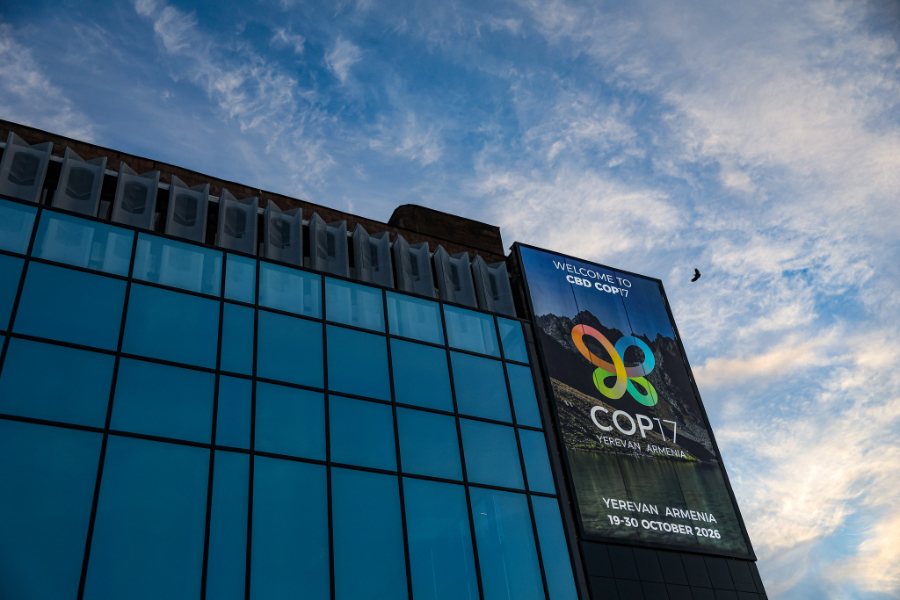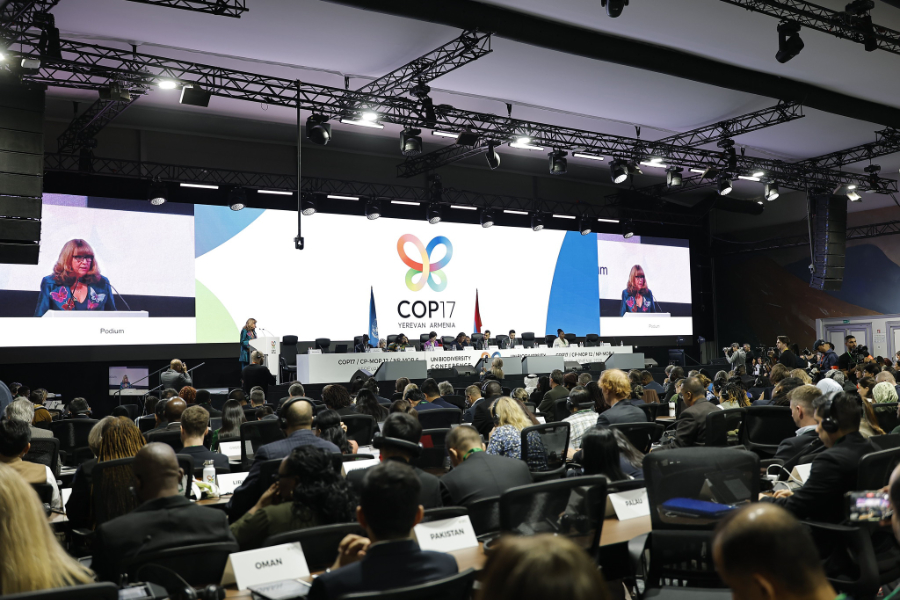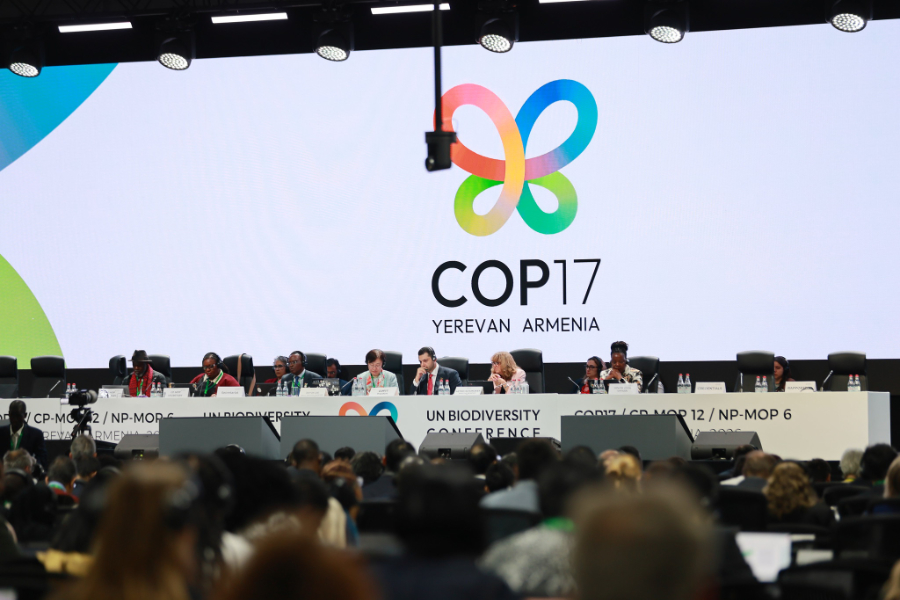
The UN Biodiversity Conference (COP17) has come to a close in Armenia, with countries agreeing to the ‘Yerevan Pathway’ – a roadmap to accelerate efforts to protect nature and invest in biodiversity.
The Yerevan Pathway sets out priorities for the period between now and 2030 to deliver the 23 targets of the Kunming-Montreal Global Biodiversity Framework (KMGBF).
Among its key focus areas is a call for governments to address subsidies that harm nature, as well as increased financial, scientific and technical support for developing countries. Elsewhere, the pathway calls for national budgets and wider economic decisions to be aligned with the KMGBF, alongside stronger monitoring and reporting.
According to the UN‘s Convention on Biological Diversity (CBD), the world is currently ‘off-track’ to meet the KMGBF’s 23 targets, with the Yerevan Pathway setting out a ‘shared response’ to this shortfall.
‘Bridging differences’
“Over these two weeks we have demonstrated that differences can be bridged, commitments can become decisions and cooperation can deliver,” commented COP17 president Hambardzum Matevosyan.
“With the adoption of the Yerevan Pathway, we demonstrate our collective determination to respond to one of the most urgent challenges of our time. It sets out priorities for collective action, from implementing national plans and mobilising financial resources to strengthening science, monitoring and the participation of all sectors of society.”
During COP17, countries adopted almost 50 decisions covering issues including protected areas and forests, wildlife management, invasive alien species, marine and coastal biodiversity, and synthetic biology. The conference also identified areas in which financing gaps, harmful incentives, limited access to technology, data and knowledge, and insufficient engagement are preventing implementation.
Around $2 billion in new biodiversity funding was pledged at COP17, including $560 million through the latest replenishment of the Global Environment Facility, $500 million through the Species Recovery Alliance, and $330 million through the Value Nature Fund. Other initiatives announced included a biodiversity bond and investment incubator launched by the Asian Development Bank.
‘Acceleration and alignment’
“The next four years must bring acceleration and alignment with what we agreed when we adopted the Kunming-Montreal Global Biodiversity Framework,” said Astrid Schomaker, executive secretary of the Convention on Biological Diversity.
“We know what needs to change. We cannot protect nature while continuing to finance its destruction. Resources must reach the countries and communities that need them. And biodiversity must become part of everyday economic decisions. Ultimately, the test is not what governments agreed in Yerevan, but what they change when they return home.”
“The world has already agreed a global plan to safeguard nature,” added Inger Andersen, executive director of the UNEP. “This COP was about accelerating implementation of the Kunming-Montreal Global Biodiversity Framework, and turning those targets into decisive, real-world action. ”In Yerevan, we saw environmental multilateralism prevail once again. Countries came together, found the spirit of compromise and allowed us to agree important decisions that will support real progress for people and for planet.”
The next Conference of Parties to the Convention on Biological Diversity (COP18) will be held in Ecuador in two years’ time. Read more here.