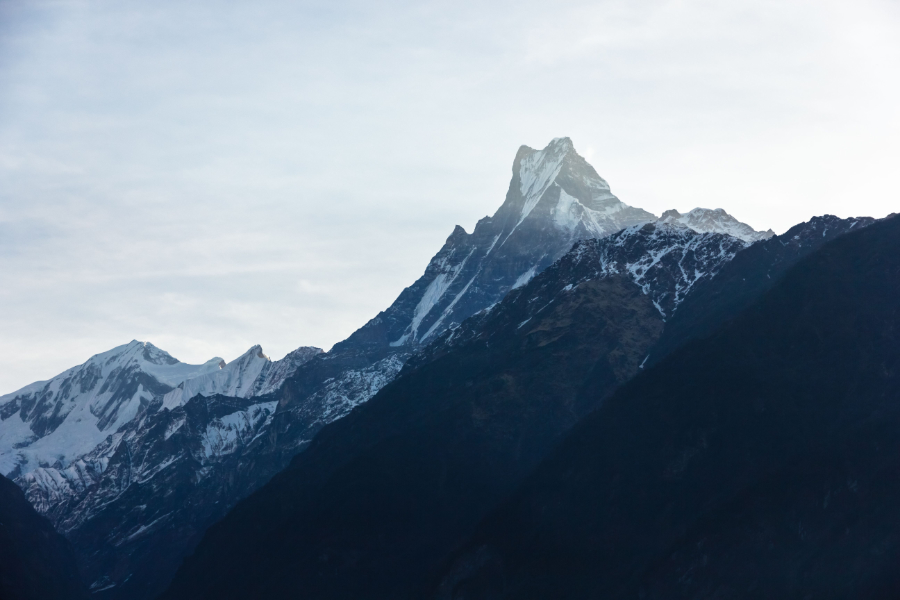
The catastrophic flood disaster that occurred along the Nepal–China border in August was exacerbated by global warming in the Himalayas, new analysis from World Weather Attribution (WWA) has found.
The disaster, which has resulted in more than 1,300 confirmed deaths, and over 5,000 people reported missing, began on 26 August with the collapse of rock wall and glacier ice from Langtang-Lirung mountain, which then morphed into a flash flood, travelling at close to 200 kilometres per hour and wreaking devastation in its path.
Initial reports suggested that the event was caused by an earthquake, however later analysis of the seismic activity in the region found that the collapse of the rock wall and glacier ice was the initial trigger.
‘Destabilising factor’
As World Weather Attribution (WWA) noted, the event cannot be attributed directly to climate change, given the underlying geological conditions in the area, however global warming and permafrost degradation was a ‘destabilising factor acting on a pre-existing geological predisposition’.
As they noted, increased temperatures led to a loss of ice bonding and increased meltwater, which can increase water pressure within areas of geological weakness. In addition, glaciers in the area have been thinning at a rate of more than half a metre each year – the rate of recession of the Langtang-Lirung glacier has increased from around 0.5% annually over the preceding two centuries to between 1% and 2.3% annually since 2010.
‘We have not assessed whether this specific rock-ice avalanche would have occurred in the absence of human-induced climate change,’ WWA noted. ‘Such a direct attribution requires additional evidence linking atmospheric conditions to subsurface temperatures, fracture-water pressures and the mechanical evolution of the slope.
‘However, rapidly rising temperatures at a rate beyond the global mean as a result of fossil fuel emissions increase the likelihood and severity of such hazards in the Himalayas.’

Adaptation capacity
WWA called for strengthened observation methods, hazard monitoring, risk communication and data and knowledge sharing to ensure the region is prepared for potential further cascades in the region, however it added that evens of this magnitude can often exceed adaptation capacity.
‘Minimising future risk requires a rapid transition away from fossil fuel use and delivering on climate finance commitments for adaptation,’ it said. ‘This is particularly important in the Himalayas and other high mountains, where glacier decline and permafrost degradation are expected to continue even without further warming, meaning that some of the impacts of past warming have yet to fully emerge.’ Read more here.