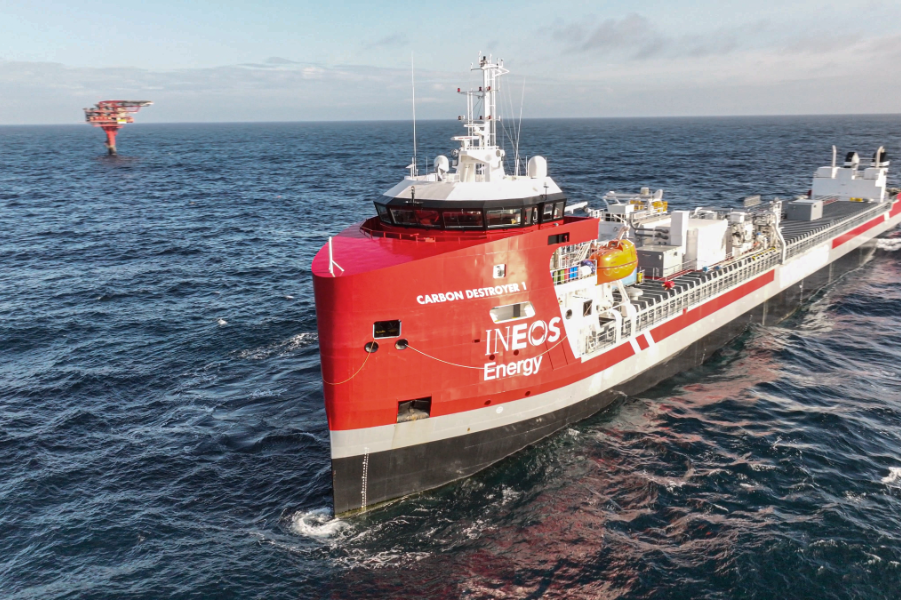
The Northern Lights carbon capture and storage (CCS) project has successfully stored its first CO₂ volumes into the Aurora reservoir, located 2,600 meters below the seabed of the Norwegian North Sea.
Northern Lights, which is a joint venture between Equinor, TotalEnergies, and Shell, said in a statement that the initial CO₂ volumes were transported via the project’s 100-kilometre pipeline and safely stored in the reservoir.
‘An exciting milestone’
“We have reached an exciting milestone,” commented Tim Heijn, managing director of Northern Lights. “We have now injected and stored the very first CO₂ safely in the reservoir. Our ships, facilities and wells are now in operation.”
Over the remainder of this year, the project will continue to transport and store CO₂ from Norwegian industries, with additional volumes from Denmark and the Netherlands set to follow in 2026, marking the commencement of cross-border CO₂ storage in Europe.
Expanded capacity
In March of this year, Northern Lights made the final investment decision to expand its transport and storage capacity from 1.5 million tonnes of CO₂ per year to at least 5 million tonnes, following the signing of a long-term commercial agreement with Stockholm Exergi. The expansion is also being supported by a grant from the EU’s Connecting Europe Facility for Energy (CEF Energy).
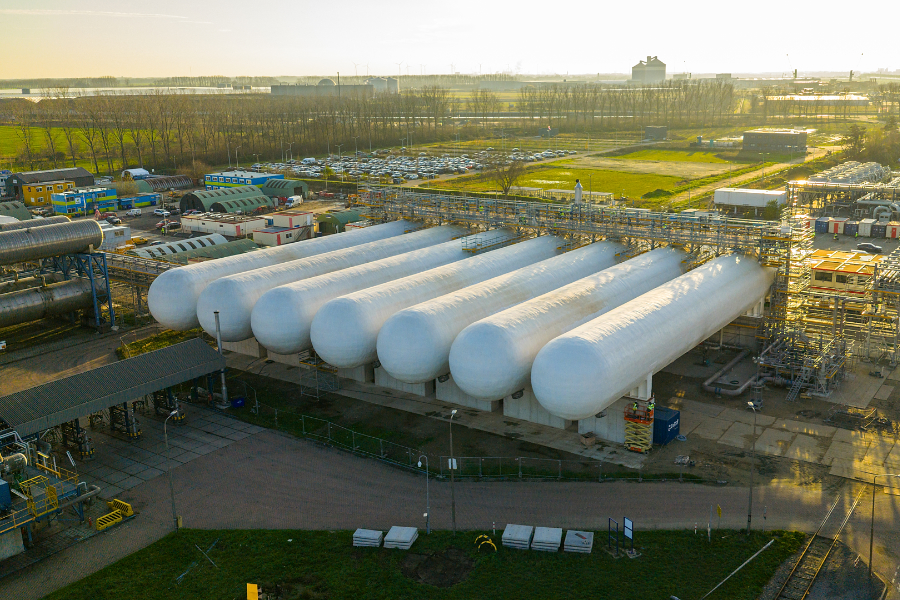
The expansion will leverage existing infrastructure, and include additional onshore storage tanks, pumps, a new jetty, and injection wells, as well as more CO₂ transport ships to enable an increased injection rate and volume.
“We are excited to continue building additional capacity following the positive investment decision for the second phase,” Heijn added.
Northern Lights is central to Norway’s Longship project, a government-backed CCS initiative. As part of its first phase, it will transport and store CO₂ from Heidelberg Materials’ cement plant in Brevik and Hafslund Celsio’s waste-to-energy facility in Oslo, followed by commercial agreements with Yara (Netherlands), Ørsted (Denmark), and Stockholm Exergi (Sweden). Read more here.