While most enterprises maintain visibility over their direct, Tier-1 suppliers, the majority of modern supply chain disruptions originate deeper in the network, at Tier-2 or Tier-3 levels.
As supply networks expand and chains become more complex, these gaps in visibility – often driven by reliance on manual reconciliation and fragmented procurement systems – become more apparent, particularly during periods of inflationary pressure and geopolitical tensions.
With siloed systems, data is often distributed across multiple platforms, meaning that supply chain actors struggle to consolidate information when disruptions occur. This limits the ability of organisations to respond quickly and determine how risks may propagate through supplier networks, potentially leading to interruptions in production and increased costs.
In addition, structural barriers, including mismatched data models and inconsistent levels of granularity, prevent sustainability data from influencing planning systems and scenario analysis.
Embracing digital
To improve visibility, companies are adopting digital tools that map supplier relationships across multiple tiers. Enterprise knowledge graphs, for example, enable companies to digitally map N-tier dependencies and seamlessly ingest third-party data (e.g., weather, commodity prices, news feeds) to sense risks before they materialise.
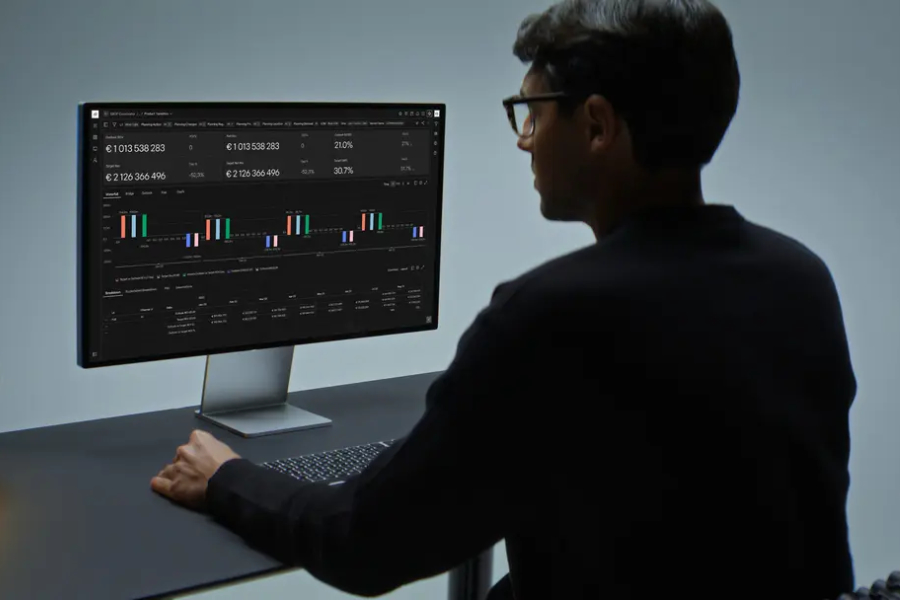
o9 Solutions (o9solutions.com) provides AI-driven supply chain planning software designed to improve decision-making and reduce inefficiencies across enterprise operations. The platform uses a unified data model to connect planning processes across time horizons, enabling consistent data use and integration of structured and unstructured inputs.
By linking suppliers, locations and materials, organisations can better identify where vulnerabilities exist and monitor signals that may indicate emerging risks – moving from reactive to proactive risk management.
For example, shifts in commodity markets or changes in regional conditions can be connected to specific suppliers, enabling earlier, targeted intervention.
Unified knowledge
Collaboration across the supply chain also plays an important role in managing multi-tier risk. Collaborative ‘war rooms’, where OEMs, contract manufacturers, and logistics providers can jointly run mitigation scenarios, enable participants to share data and respond more acutely to changes in supply chain conditions.
o9 Solutions’ platform incorporates supplier data across multiple tiers to address upstream risks and supports scenario planning to test supply and demand changes. It also includes execution tools such as order management and production scheduling, to synchronise decisions across multiple functions in real time.
“Platforms like o9 ensure that all planning activities converge and operate within a single, unified knowledge graph. This holistic approach ensures that the impact of any action or change is immediately propagated and visible across the entire organisation,” says Kristin Tracy, Director of Product Management for o9 Solutions’ Supply Planning suite.
“This design guarantees that a decision made by a production planner is immediately transparent to distribution and material planners who rely on those plans, as well as to commercial and financial teams tracking specific initiatives. The synchronisation of these decisions, driven by a unified knowledge graph, is a powerful catalyst for driving significant efficiencies across the entire enterprise, eliminating delays and fostering a culture of proactive collaboration.”
Building resilience
Building resilience requires a combination of improved data integration and coordinated processes. As supply chains become more interconnected, understanding dependencies beyond an organisations’ immediate supplier base is necessary to manage risk effectively.
“As supply chains continue to rapidly evolve in complexity, the need for advanced, adaptable planning capabilities becomes paramount,” Tracy adds. “Companies must transcend generic approaches and invest in solutions that offer a unified data model, right-size decision-making, and the flexibility to model unique industry and company-specific requirements.
“Platforms like o9 Solutions demonstrate how robust architecture, designed by industry experts, can effectively support diverse manufacturing and distribution models. This ensures that businesses can not only maintain a competitive edge but also confidently scale and optimise their operations within an ever-changing global economy.”
Organisations equipped with the tools to achieve multi-tier visibility and strengthen collaboration are better positioned to maintain continuity amid supply chain disruptions. o9 Solutions provides the capabilities needed to help businesses not only survive, but thrive, in challenging conditions.
Learn more at o9solutions.com or read o9 Solutions’ white paper on supply chain master planning at o9solutions.com/solutions/supply-chain-planning.