The role of business in achieving the UN’s Sustainable Development Goals (SDGs) has “never been more important,” Sanda Ojiambo, CEO and executive director of the UN Global Compact has told the 2026 SDG Business Forum.
The forum, which took place in New York on 14 July, welcomed business leaders, policymakers, UN officials and civil society representatives from around the world to discuss areas of collaboration between the public and private sectors to accelerate the SDGs.
‘Fundamental to competitiveness’
“Around the world, companies are demonstrating that sustainability is not only good for people and the planet, it is fundamental to competitiveness, resilience and long-term value creation,” Ojambo said at the event.
“The challenge now is to scale what works through stronger partnerships, enabling policy environments and greater accountability so that together we can accelerate progress towards the 2030 Agenda.”
The 2026 SDG Business Forum was held alongside the UN High-level Political Forum on Sustainable Development (HLPF), and co-convened by the UN Department of Economic and Social Affairs (UN DESA), the UN Global Compact and the International Organisation of Employers (IOE), with the UN Industrial Development Organization (UNIDO) serving as co-organiser.
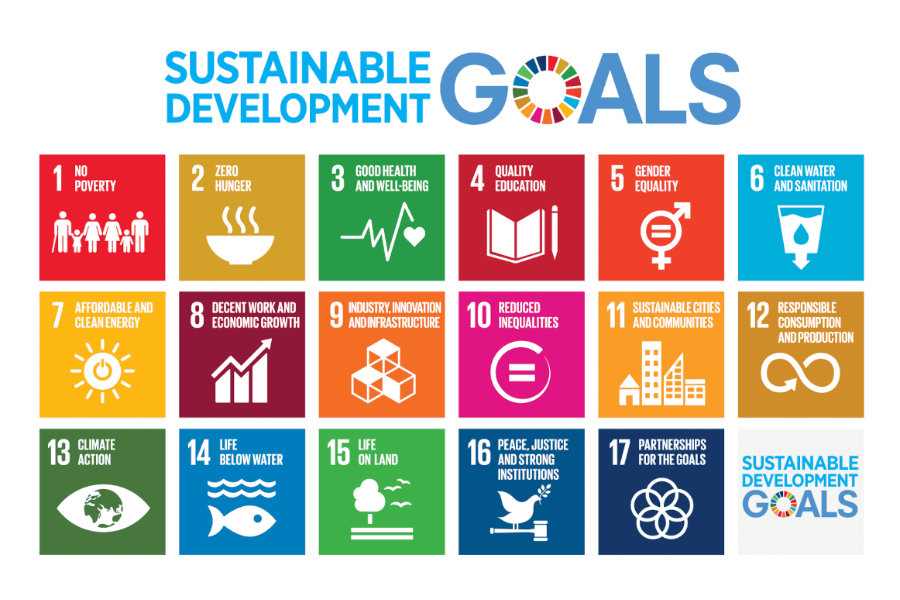
Among the main topics discussed at the forum, which was subtitled ‘Business and the Real Economy: Delivering Sustainable Development in a Changing Global Context’ were SDG 9 (Industry, Innovation and Infrastructure) and SDG 17 (Partnerships for the Goals), along with the recent HLPF review of SDGs covering clean water and sanitation, affordable and clean energy, and sustainable cities and communities.
Role of cooperation
Throughout the event, participants highlighted the role that cooperation between governments, businesses and international institutions can play in achieving the SDGs, highlighting the need to mobilise investment, strengthen industrial development, build resilient infrastructure and accelerate innovation.
One session examined how businesses can contribute to the future of industrialisation as industries adapt to rapid technological change, artificial intelligence, evolving global supply chains and the transition to cleaner energy systems.
Another discussion, meanwhile, explored how UN Global Compact Country Networks are working with governments to implement Action 55(c) of the Pact for the Future by supporting national sustainable development priorities and strengthening private sector accountability.
The forum also marked the launch of the UN Global Compact’s new Action 55(c) Insights Brief, developed on behalf of the UN Secretary-General. According to UN Global Compact, the publication outlines practical recommendations for strengthening private sector engagement and accountability in implementing UN frameworks and advancing the SDGs. Read more here.