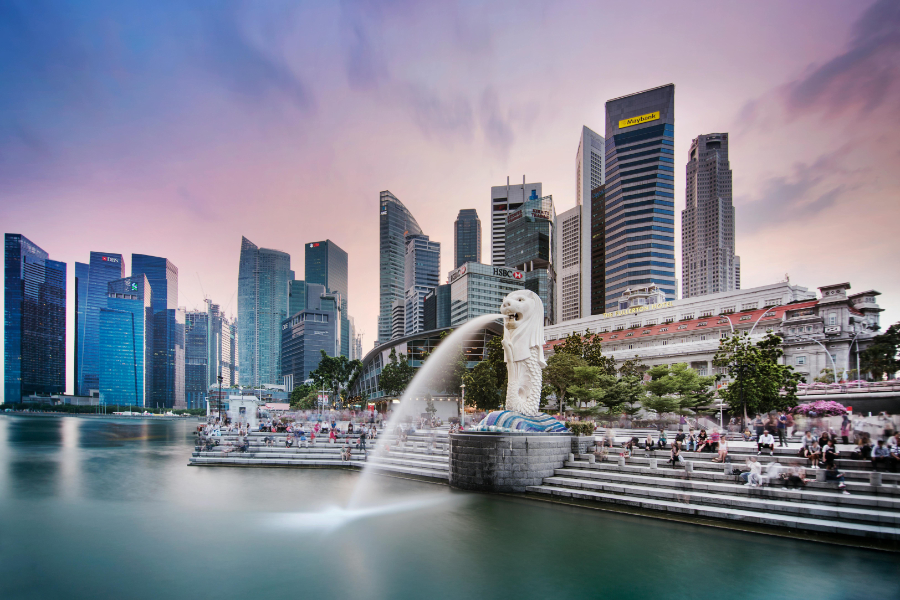
Singapore is poised to import just 15% of its electricity generation from low-carbon sources by 2035, around half the government’s target, according to a new report by Wood Mackenzie.
According to the report, Green Electrons Are Waiting to Cross the Border to Singapore: 2026 Update, Singapore’s low-carbon electricity import pipeline is currently ‘stuck’, with the country’s Energy Market Authority (EMA) having approved 9.25 GW of import capacity across six regional corridors.
None of the projects approved by the EMA have reached financial close or begun construction, however, meaning the country is set to be reliant on natural gas – from which it sources 95% of its electricity – for some time.
‘Central pillar’
Singapore has said that the importing of 6 GW of low-carbon electricity, which would meet around one third of projected demand, is a ‘central pillar’ of its decarbonisation strategy.
“The most significant challenges for EMA lie in export permit frameworks, project bankability, cross-border transmission financing, and the lack of a complete market mechanism that allows Singapore buyers to claim the carbon value of imported electricity,” commented Wei Han Tan, research analyst – Southeast Asia power and renewables research at Wood Mackenzie.
According to Wood Mackenzie, Malaysia has emerged as the most credible route for near-term deliveries, with an existing high-voltage interconnection between Malaysia and Singapore providing up to 1 GW of bidirectional capacity, avoiding some of the supply constraints affecting new subsea cables.
While Indonesia represents 37% of the approved pipeline, progress has largely stalled due to uncertainty over export permits, local-content requirements and financing. Indonesia’s electricity regulations, specifically Clause 37, require export permits to be renewed every five years and allow quotas to be revoked if domestic supply is at risk.
Elsewhere, Vietnam, Cambodia and Australia account for 43% of the approved pipeline, but are ‘not on a near-term radar’, according to Wood Mackenzie.
Corridor challenges
As Wood Mackenzie noted, successful projects will need to conform to specific guidelines established by Singapore’s government, while price remains a ‘key challenge’ for each corridor.
“The projects that get built will be those that can secure an Importer License EMA, demonstrate their ability to deliver firm power at an annual load factor of at least 60% and offer a price that offtakers are willing to commit long term,” Wei Han added. “No project in the pipeline has cleared all three hurdles yet.” Read more here.