Just under two fifths of chief executive officers (39.1%) are taking responsibility for sustainability actions at their businesses, a new study by SAP has found.
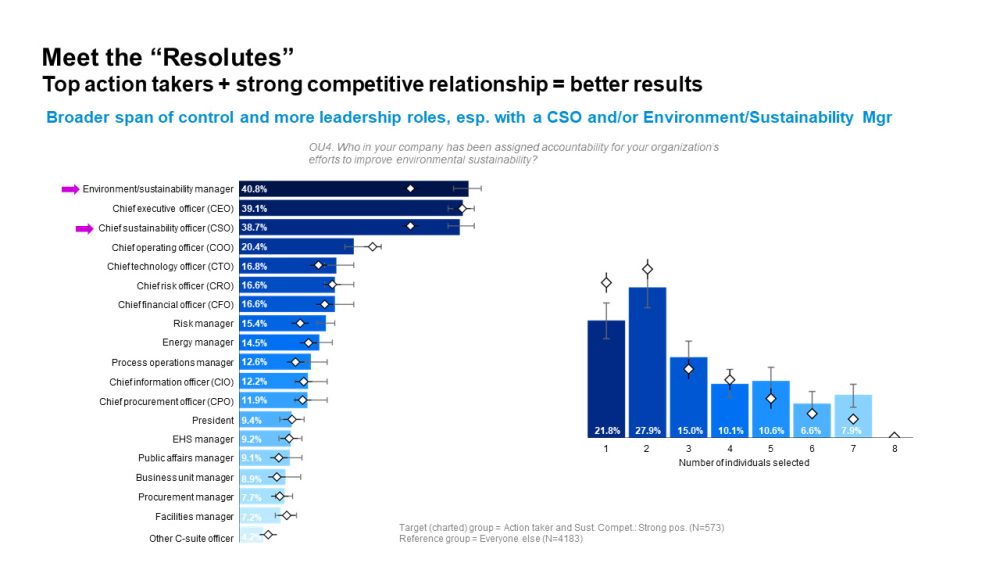
SAP asked businesses to identify who within their firms ‘has been assigned accountability for your organisations efforts to improve environmental sustainability’, with a wide variety of roles cited by firms.
Taking the top position are environment/sustainability managers (40.8%), followed by chief executives, and then chief sustainability officers (38.7%).
Other corporate roles cited include chief operating officers (20.4%), chief technology officers (16.8%), chief financial officers (16.6%), risk managers (15.4%) and energy managers (14.5%).
Just over a fifth of firms (21.8%) said that they had one individual tasked with overseeing sustainability efforts, while 27.9% answered that two individuals were involved, and 15.0% answered three.
Read More: Corporate boards facing ‘knowledge gaps’ when it comes to sustainability
A business strategy
“We see in the research how many companies are shifting to view sustainability no longer as a regulatory compliance tactic, but becoming more of a strategy to actually build business value,” commented Sarah Dziuk, SAP Insights Head of Research, said.
The ‘Wave 3 sustainability study’ includes results from 4,750 respondents across 21 nations and 29 industries. Some 85% of responses came from ‘mid-market’ businesses (under $1 billion annual turnover) and 15% from ‘large’ enterprises (over US$1 billion turnover per year).
Strategic pillar
The top 25% of businesses, who indicated the most significant influence from sustainability on their operations, approach it as a strategic pillar comparable to other aspects like IT, SAP’s study found.
With this in mind, said firms exhibit increased reliance on metrics for decision-making, heightened investment, greater satisfaction with data, and increased confidence in achieving returns on investment within a one-to-three year timeframe, SAP said.
This, in turn, has resulted in favourable business outcomes such as growth, enhanced profitability, improved efficiency, higher quality products and services, and reduced costs.
Read More: 8 themes to watch out for at COP28