
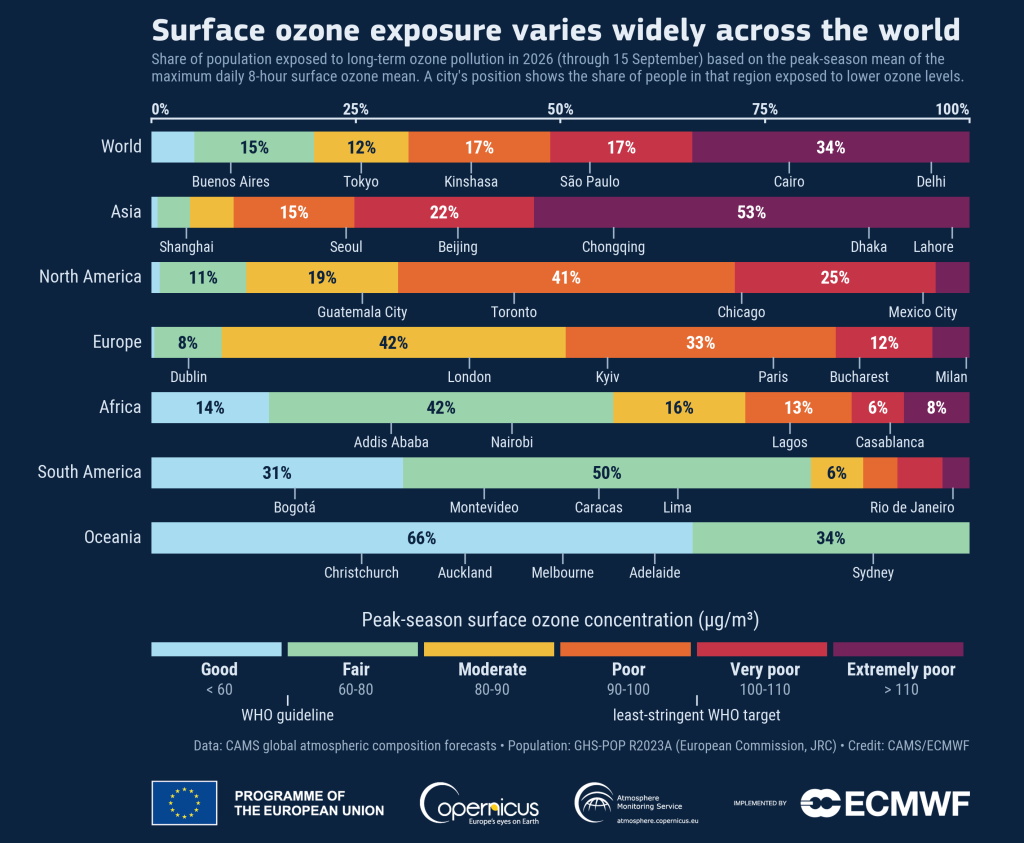
Close to 40% of the global population has been exposed to ‘dangerous levels’ of ground-level ozone at some stage this year, according to new analysis from the Copernicus Atmosphere Monitoring Service (CAMS).
CAMS’ latest Atmosphere Watch report examined global air quality during the first eight months of 2026, utilising millions of observations from satellite, ground-based networks, aircraft and other sources. Using this data, it compiled a ‘global snapshot’ of transboundary air pollution, focusing on ozone, wildfire smoke and desert dust.
According to the data, just 5% of the world’s population has been exposed to ‘good’ levels of ozone, according to WHO guidelines, with the increase in ground-level ozone impacting human health, ecosystems and crop yields.
Regional impact
Asia was the most impacted region by ozone pollution globally, with 60% of the population exposed to ‘extremely poor’ ozone levels during the first eight months of this year. This rises to 90% if ‘poor’ and ‘very poor’ levels are included.
In Europe, meanwhile, 50% of the population experienced ‘poor’, ‘very poor’ or ‘extremely poor’ ozone exposure, with elevated levels experienced during the summer months due to repeated heatwaves and wildfires. In North America, more than two-thirds of the population experienced ‘poor’, ‘very poor’ or ‘extremely poor’ ozone levels, again linked to wildfires in Canada and the western US.
Oceania had the lowest ozone exposure among the regions assessed, with all of its population experiencing ‘good’ or ‘fair’ ozone levels.
‘A stark reminder’
“Ozone pollution is a stark reminder of how interconnected our atmosphere, climate, health, and livelihoods really are, with pollution and our changing climate impacting the chemistry of the air we breathe, determining the health of our ecosystems, and even governing our ability to grow food,” commented Laurence Rouil, CAMS director.
“At the same time, air pollution does not respect national borders – wildfire smoke, biomass burning emissions, and Saharan dust plumes can travel thousands of miles to affect communities far from where they originated. This all underlines the urgent need for global-level, evidence-led action on air quality, delivering in lockstep with action on climate.” Read more here.