SustainabilityOnline recently published its inaugural ‘Ambition Into Action’ report, featuring interviews with senior leaders about how they are turning sustainability vision into business reality at the mid-point of the decade.
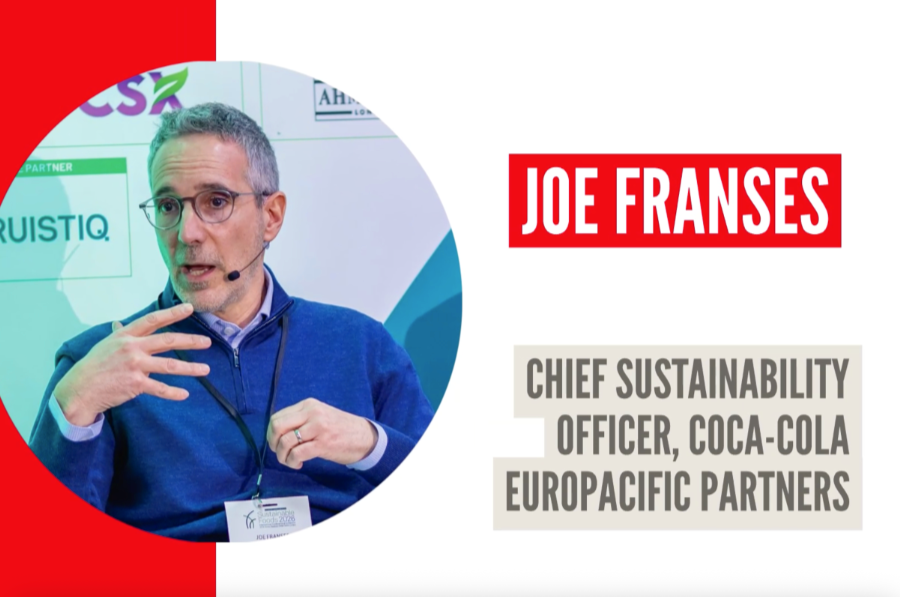
Joe Franses is Chief Sustainability Officer at Coca-Cola Europacific Partners, where he has held various leadership roles in sustainability and corporate responsibility since joining the business in 2005. He leads the company’s sustainability strategy, stakeholder engagement, ESG disclosure, climate action, sustainable packaging initiatives, and water stewardship.
How has Coca-Cola Europacific Partners moved from ‘ambition to action’ in terms of turning sustainability into a core value driver – in other words, how have you made sustainability ‘good for business’?
At CCEP, sustainability is core to how we create long-term value. This is Forward, our sustainability action plan, is fully integrated into our business strategy. That means every decision we make considers both financial and environmental impact.
We’ve set clear, science-based targets: net zero by 2040 and a 30% absolute GHG reduction by 2030 (vs. 2019), validated by the Science Based Targets initiative. We are also introducing an internal carbon price to hardwire climate impact into investment decisions.
And we’re backing innovation through CCEP Ventures, our investment arm. We’ve invested in technologies to tackle hard-to-recycle plastics, convert captured CO₂ into raw materials and decarbonise our sugar supply.
These investments are helping us to accelerate delivery of our sustainability goals as well as future-proof our supply chain and reduce long-term costs. Ultimately, sustainability drives efficiency, resilience and supports business growth. It helps us manage risk, meet consumer expectations, and unlocks new opportunities.
We’re now at the mid point of the decade. What do you see as the single biggest barrier for businesses in moving from ambition to measurable action – and how can it be overcome?
Over 90% of our GHG emissions sit within our supply chain, which means that one of the hardest challenges is reducing Scope 3 emissions. We have a high level of ambition, and encourage our suppliers to adopt the same approach, but it takes time because we’re trying to work across many different sectors, including suppliers of packaging, ingredients and cold drinks equipment.
The solution is collaboration. We’re asking suppliers to set science-based targets and switch to 100% renewable electricity, and we’re supporting them through initiatives like our sustainability-linked supply chain finance programme with Rabobank, which rewards improved ESG performance.
Innovation is also key, and we’re trialling new technology and processes with our suppliers to drive progress. But businesses can’t do this alone. We need clear policy frameworks and infrastructure to accelerate progress.
What role can (and should) leadership play in ensuring sustainability commitments actually deliver results, rather than remaining aspirational? And how can you ensure buy-in from all stakeholders?
It is about setting the tone and embedding sustainability into the day-to-day of how we do business. At CCEP, our Board of Directors and senior leaders have made sustainability a strategic priority. We link it to financial performance, and we hold ourselves accountable with transparent reporting and external accreditation and validation.
Stakeholder buy-in comes from making sustainability practical and valuable. For suppliers, that means incentives and support. For customers and consumers it means delivering tangible solutions like 100% rPET bottles and reuse options. For employees, it’s about making sustainability part of our culture and ensuring that employees can learn about our actions. That’s why we have developed a dedicated Sustainability Academy, making accessible learning modules on climate, packaging and water available to all employees.
We must also be honest about the challenges we are facing and the barriers we face. At CCEP, we have made considerable progress, but we also know we have a long way to go. We also have clear roadmaps on what we need to achieve – deep decarbonisation, innovation, and collaboration across our value chain.
Learn more about Coca-Cola Europacific Partners’ sustainability commitments at www.cocacolaep.com/sustainability/