Achieving net zero emissions targets by 2050 will require an investment of around $78 trillion, a new study by Wood Mackenzie has found.
Wood Mackenzie’s Energy Transition Outlook report analyses four different pathways for the energy and natural resources sector – a base case (2.5-degrees), country pledges scenario (2-degrees), net zero 2050 scenario (1.5-degrees) and delayed transition scenario (3-degrees).
The $78 trillion of cumulative investment would be required to bolster power supply, grid infrastructure, emerging technologies and upstream investments, in order to meet the goals of the Paris Agreement, it noted, particularly given increased energy demand and the emergence of new sectors such as data centres.
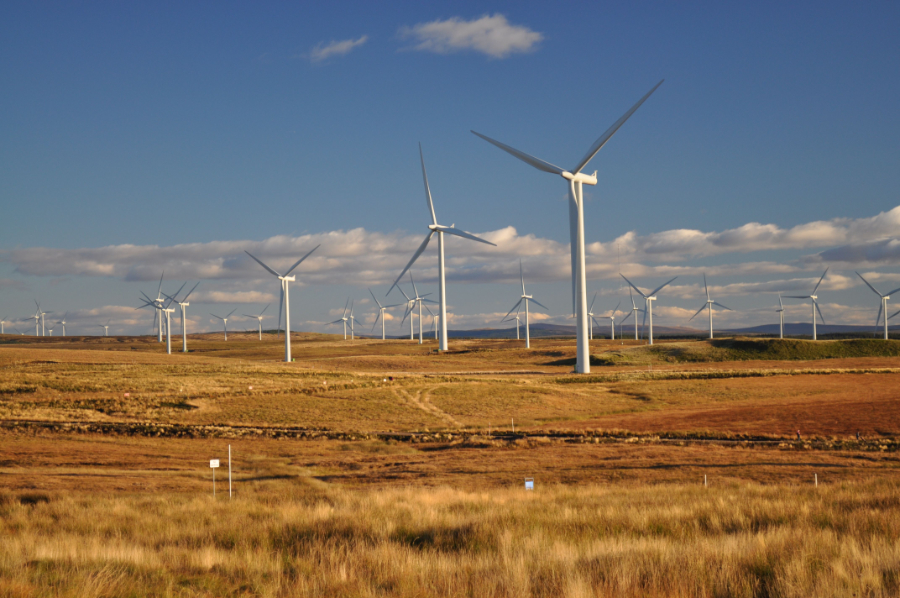
Renewable energy will play an important role, with Wood Mackenzie’s ‘base case’ scenario anticipating that renewables capacity will grow two-fold between now and the end of the decade, short of the global pledge made at COP28 to triple renewables by 2030.
At the same time, oil and gas are likely to continue to play a role in the global energy system up to 2050, although investment in carbon capture and low-carbon hydrogen and derivatives will also see notable investment.
Global challenges
“A string of shocks to global markets threaten to derail the progress in a decade pivotal to the energy transition, commented Prakash Sharma, vice president, head of scenarios and technologies for Wood Mackenzie. “From the unresolved war between Russia and Ukraine to an escalated conflict in the Middle East, as well as rising populism in Europe and global trade tensions with China, the energy transition is in a precarious place and 2030 emissions reduction targets are slipping out of hand.”
Sharma added that despite these challenges, achieving net zero by 2050 is still a possibility, provided concrete, decisive action is taken now.
“Failure to do so risks putting even a 2°C goal out of reach, potentially increasing warming to 2.5 °C – 3°C trajectory,” Sharma noted. “We are under no illusion as to how challenging the net zero transition will be, given the fact that fossil fuels are widely available, cost-competitive and deeply embedded in today’s complex energy system.”
Electrification and renewables
Electrification is likely to have a positive effect on emissions in the medium term, as the displacement of fossil fuels with more energy efficient electricity leading to global emissions peaking by 2027, and falling by 35% in the period to 2050, Wood Mackenzie noted.
Elsewhere, noting that the share of solar and wind in global power supply increased from 4.5% in 2015 to 17% in 2024, Wood Mackenzie added that strong renewables growth is a ‘certainty’ in the coming years.
Renewables’ share of the global power grid is set to rise from 41% today to 58% by 2030, and as much as 90% by 2050, depending on various scenarios.
“Any number of challenges – from the supply chain, critical minerals supply, permitting and power grid expansion – could dampen aspirations for renewables capacity,” Sharma added.
Elsewhere, fossil fuel capacity is likely to plateau in the coming years and then begin to decline in the 2040s, Wood Mackenzie noted, while nuclear capacity will double in the base case scenario (or triple in the net zero scenario) by 2050. Read more here.