European ports have been slow to invest in the shoreside electric infrastructure required to cut air pollution and emissions in line with the requirements of the EU Green Deal, according to a study by Transport & Environment (T&E).
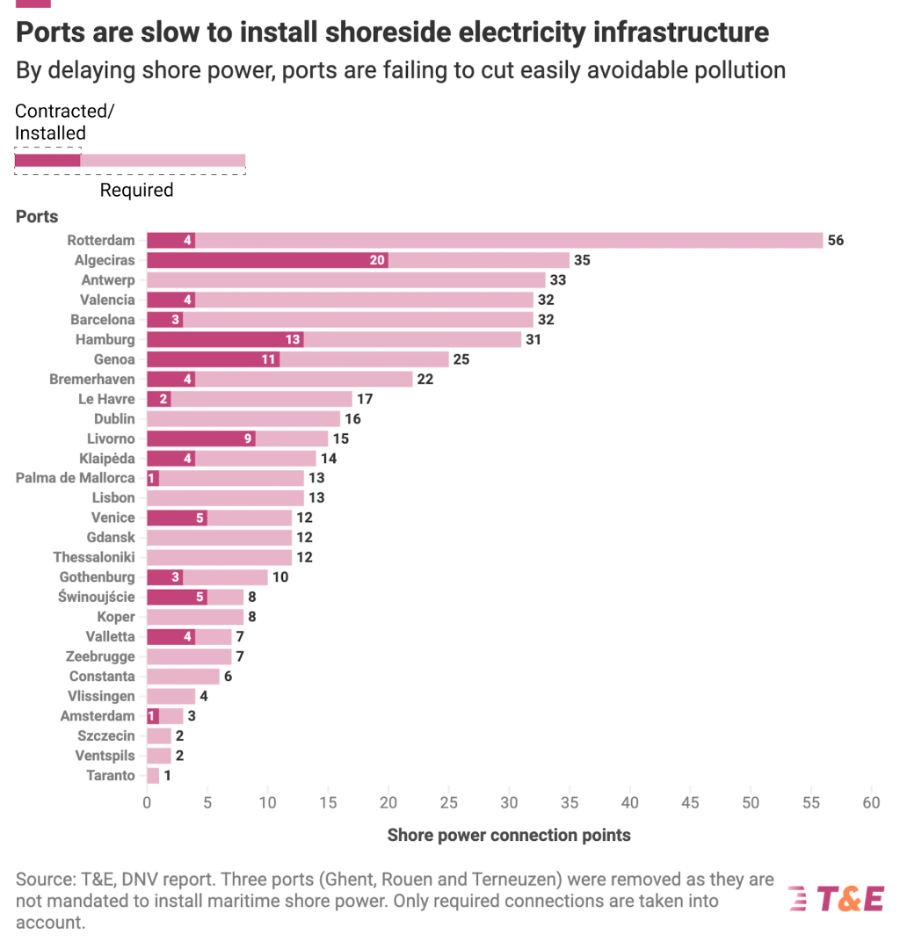
According to T&E, just four of Europe’s biggest ports have invested in at least half of the required shoreside electric infrastructure, while overall, just 20% of the required infrastructure has been installed or commissioned.
This means that most container ships, cruise ships, ferries and other docked vessels continue to run on fossil fuels while docked, with more than 6% of the EU maritime CO2 emissions coming from ships running on fossil fuels at ports.
Onshore power supply
Under the terms of the EU Green Deal, EU ports are required to provide shore-side electricity to ships, via onshore power supply (OPS) connections, by 2030.
Ports including Antwerp, Dublin, Gdansk, and Lisbon have, to date, not made any notable investments in plug-in technology, while others like Rotterdam, Valencia, and Le Havre also rank poorly.
Other ports, such as Algeciras, Hamburg, Livorno, Świnoujście, and Valletta have made the most progress, having installed or contracted more than half of the required OPS installations.
‘Unnecessary pollution’
“Ports are failing local residents and passengers by allowing unnecessary pollution from idling ships,” commented Inesa Ulichina, shipping policy officer at T&E. “Electric plug-in technology is available and would reduce shipping’s impact on local air pollution and the climate overnight. For shipping segments that spend a lot of time at ports like cruise ships, plugging in would be a gamechanger.”
T&E’s study also found that cruise ships produce more than six times the port-side emissions of container ships. Carnival’s cruise ship Azura emitted 22,800 tonnes of CO₂ in European ports in 2023 alone, it noted – emissions that could have been avoided if sufficient OPS facilities were available.
T&E is calling on the EU to ‘bring forward shore power requirements for cruise ships to 2028, ensure ports can earn clean energy credits when ships plug in, dedicate more EU funding for port electrification, and expand the rules to cover all polluting ships, not just the largest passenger and container ships’, it noted. Read more here.
Read more: Emissions at global ports continuing to rise despite sustainability investments