The first full-scale facility for the permanent storage of CO₂ in the European Union has been officially opened in Denmark.
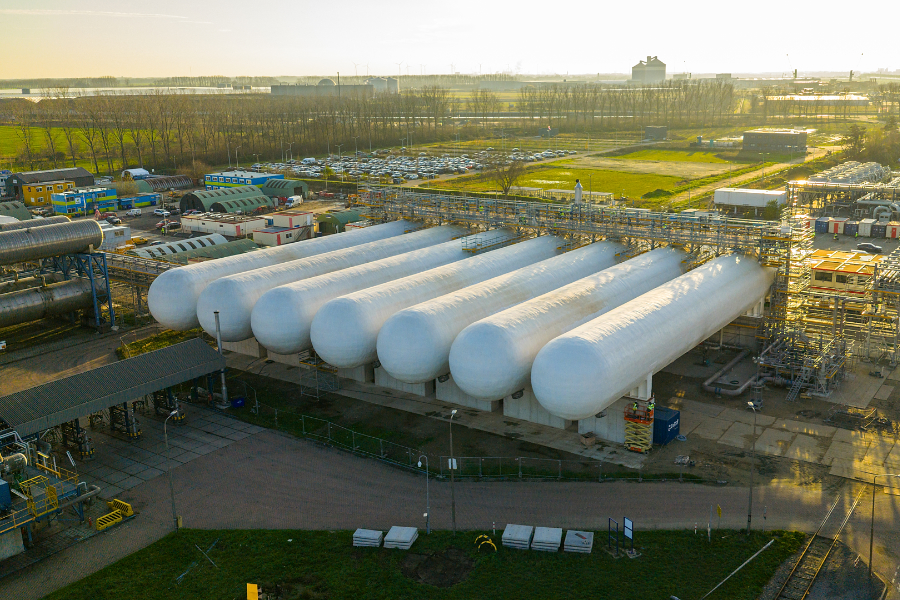
The Greensand facility, which is led by INEOS Energy in partnership with Harbour Energy and the Danish North Sea Fund (Nordsøfonden), was opened by King Frederik X of Denmark at a ceremony at the Port of Esbjerg.
The facility will initially be able to store up to 400,000 tonnes of CO₂ a year, scaling towards a potential of between 4 million and 8 million tonnes of annual storage at full capacity.
‘Remain competitive’
“Europe will not achieve net zero by closing factories and exporting its jobs,” commented Sir Jim Ratcliffe, chairman of INEOS. “We need solutions that allow industry to remain competitive while reducing emissions. Greensand proves it can be done.
“This is not a pilot project, a concept or a political ambition. It is a fully operational carbon storage business. The technology works. The storage is ready. The challenge now is creating the right conditions for carbon capture to grow quickly at scale across Europe.”
CCS value chain
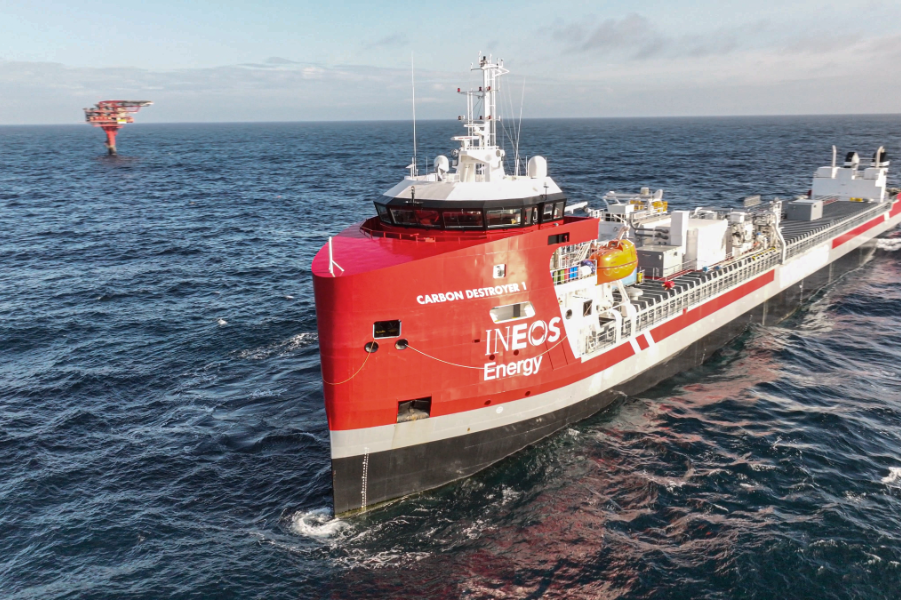
Greensand forms part of a complex carbon capture and storage (CCS) value chain. In its first commercial phase, CO₂ will primarily come from Danish biomethane plants, with the captured gas liquefied and transported by truck to a dedicated CO₂ terminal at the Port of Esbjerg before being shipped to the Nini West reservoir, a depleted oil field located approximately 250 kilometres offshore and around 1,800 metres beneath the seabed.
According to INEOS, the opening of the facility comes at a ‘critical moment’ for European industry, as it seeks to decarbonise during a period of rising global tensions.
At the same time, the European Union has set a target of capturing and storing 50 million tonnes of CO₂ annually by 2030, rising to between 250 million and 280 million tonnes by 2040.
‘A practical reality’
“Today marks an important milestone for Europe. With the launch, here in Esbjerg, of the first fully operational site for offshore carbon storage in the European Union, we prove that carbon storage is a practical reality,” added Dan Jørgensen, European Commissioner for Energy and Housing.
“We show that we can move from demonstration to deployment. We set out a path for European industries: to continue their transition to a low-carbon future, while maintaining production, investments, and employment in our continent. And we open a new front in the existential fight against climate change.”
The integrity of Greensand’s Nini reservoir in the North Sea has been tested by the Geological Survey of Denmark and Greenland (GEUS), while the project has also received safety approval from independent verifier DNV.
INEOS said the next challenge for the project – and others like it – will be around developing the regulatory, infrastructure and investment conditions needed to allow industrial emitters to capture CO₂ at scale and connect to storage infrastructure. Read more here. [Photo by INEOS Energy]