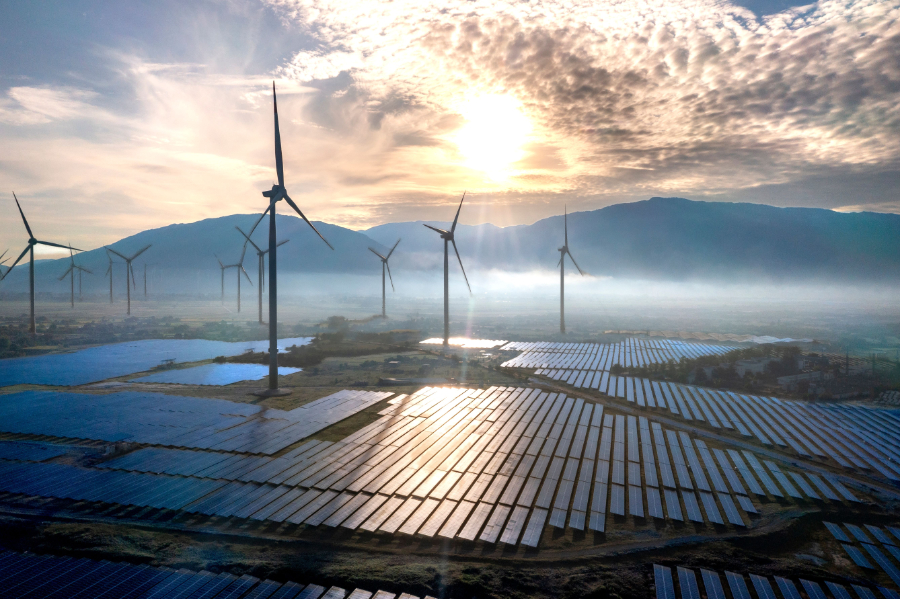
Global emissions rose by 410 million tonnes, or 1.1%, in 2023, compared to 490 million tonnes the previous year, the International Energy Agency (IEA) has said, with the slowdown in growth attributable to the continued expansion of renewable and nuclear energy.
According to the IEA, without clean energy technologies, the global increase in CO2 emissions over the last five years would have been three times larger.
Global emissions are now at a record level of 37.4 billion tonnes.
A shortfall in hydropower energy due to extreme droughts in China, the US and other economies, was responsible for 40% of the increase in emissions last year, with affected countries turning to fossil fuels to address the shortfall.
A 50-year low
So called ‘advanced economies’ reported a record fall in CO2 emissions last year, even as their GDP grew, the IEA added, with emissions dropping to a 50-year low, and coal usage falling back to levels not seen since the early 1900s.
The decrease in emissions in advanced economies resulted from a mix of factors, the IEA said – increased use of renewables, switching from coal to gas, improvements in energy efficiency, and reduced industrial production.
Last year marked the first time that low-emissions sources such as renewables and nuclear accounted for at least half of electricity generation in advanced economies. In addition, from 2019 to 2023, growth in clean energy was twice as large as that of fossil fuels.
Read more: Oil and gas industry faces ‘moment of truth’ on clean energy: IEA
Clean energy transition
“The clean energy transition has undergone a series of stress tests in the last five years – and it has demonstrated its resilience,” said IEA Executive Director Fatih Birol. “A pandemic, an energy crisis and geopolitical instability all had the potential to derail efforts to build cleaner and more secure energy systems. Instead, we’ve seen the opposite in many economies.
“The clean energy transition is continuing apace and reining in emissions – even with global energy demand growing more strongly in 2023 than in 2022. The commitments made by nearly 200 countries at COP28 in Dubai in December show what the world needs to do to put emissions on a downward trajectory. Most importantly, we need far greater efforts to enable emerging and developing economies to ramp up clean energy investment.”
The findings accompany the inaugural edition of a new series called the Clean Energy Market Monitor. This series offers timely tracking of clean energy deployment across a specific set of technologies and discusses the broader implications for global energy markets.
We just released 2️⃣ new important reports — showing the major growth of clean energy limited the rise of global carbon dioxide emissions in 2023.
— International Energy Agency (@IEA) March 1, 2024
Explore the analysis 👇
CO2 Emissions in 2023: https://t.co/EIfXge1HPq
Clean Energy Market Monitor: https://t.co/K368lPGThh pic.twitter.com/zktrRFAkGZ
Looking for information about why sustainability is important in business? Make www.sustainabilityonline.net your first choice.