Ireland ‘kicking the can down the road’ on emissions reduction, says climatologist

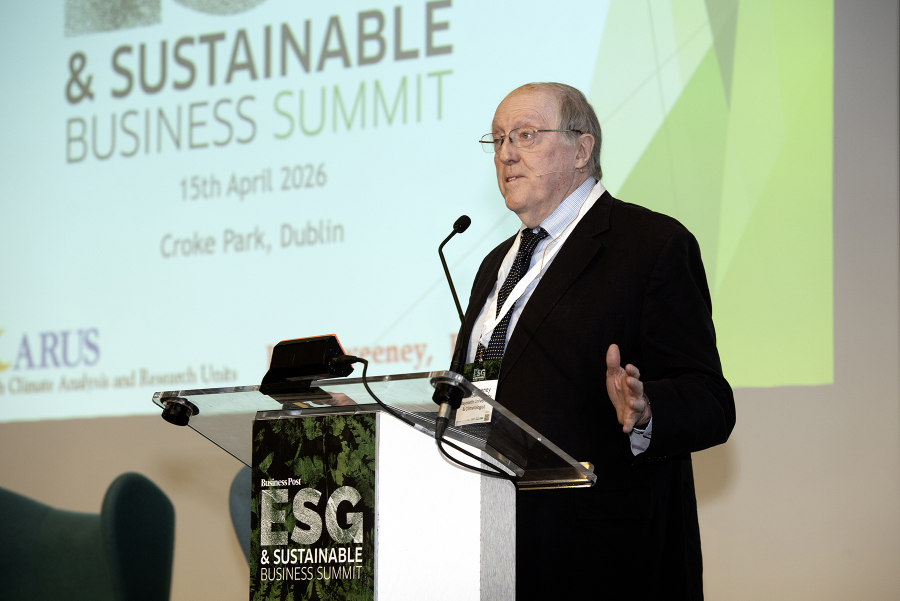
While Ireland is making progress on emissions reduction, this falls far short of the reductions achieved elsewhere in Europe, Professor John Sweeney of Maynooth University has told the Business Post ESG & Sustainable Business Summit.

While Ireland is making progress on emissions reduction, this falls far short of the reductions achieved elsewhere in Europe, Professor John Sweeney of Maynooth University has told the Business Post ESG & Sustainable Business Summit in Dublin.

As Sweeney, a noted climatologist and climate change expert, told the summit, Ireland remains significantly off-track when it comes to delivering meaningful emissions reductions, adding that the weakening of EU sustainability directives, particularly around due diligence and reporting, have slowed momentum.

“We have legal obligations to reduce our emissions by 51% on our 2018 values, and that, of course, is something that is uppermost in the minds of our decision-makers, one would hope,” Sweeney told the summit. “It does look as if we’re going to come close to reaching the first of those carbon budgets when the results will be announced in a couple of weeks’ time. […] But if you look at what we’re expected to do from 2026 to 2030 – that’s a very, very difficult task indeed.”

Policy impact

According to Sweeney, much of the progress made to date has resulted from re-evaluations of baseline data, suggesting that the “policy impact on climate emissions has been much, much less than claimed”.

Structural issues, such as reliance on imported electricity and the rapid growth of data centres – which account for 22% of all electricity consumed in Ireland – present challenges, he noted, as does the agricultural sector, with Ireland emitting between five and seven times more methane than other European countries on a per capita basis.

Fossil fuel subsidies

In addition, Ireland continues to subsidise fossil fuels by billions of euro annually, undermining its own climate objectives.

“The CSO tell us that Ireland has been subsidising fossil fuels to the tune of €4.67 billion per year […] and last week, as a result of the protests, we added a further €750 million of fuel subsidies to that total,” Sweeney commented.

As he noted, delays in making difficult decisions on emissions reduction will ultimately become more costly, and potentially more disruptive to Irish society, “We’re doing something which is very akin to kicking the can down the road, and kicking the can down the road is something that will come back to bite us in the short term,”

Discover more from Sustainability Online

Subscribe now to keep reading and get access to the full archive.

Continue reading