Tesco has said that it has achieved a 68% reduction in Scope 1 and 2 emissions against a 2015/16 baseline, surpassing its previous 2025 target of a 60% reduction.
The retailer made the announcement in its 2026 Sustainability Report, in which it also reported that 99% of its private-label packaging by weight is recyclable in the UK, while healthy food now accounts for around two thirds (65%) of total sales in the UK and Ireland, up from 58% in 2019.
Sustainable food system
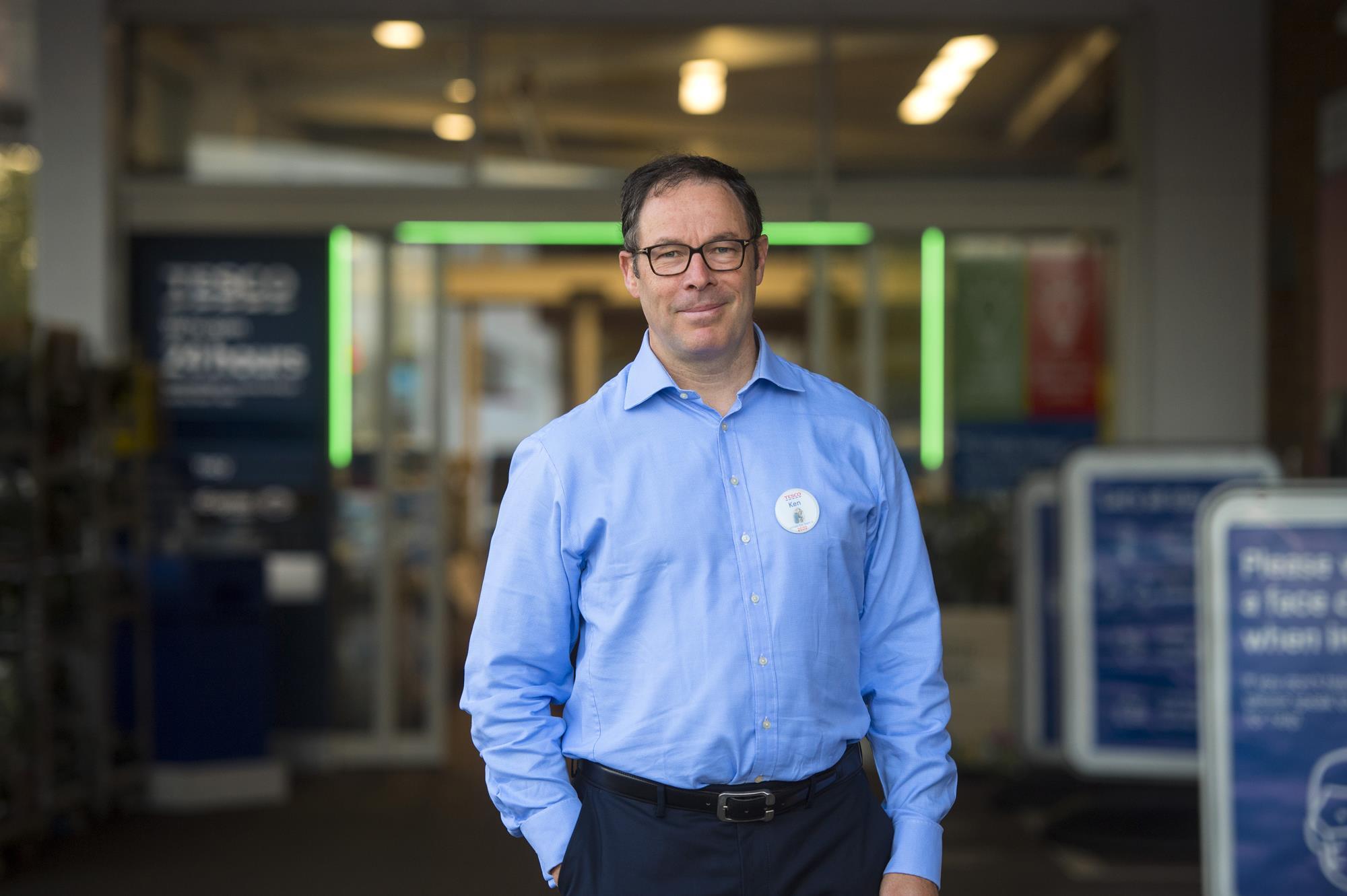
“As the UK’s leading food retailer, serving our customers, communities and planet a little better every day, we depend on a resilient and sustainable food system,” Tesco chief executive Ken Murphy (pictured) commented. “Without it, our suppliers and farmers can’t grow the food needed to feed the nation.
“Ongoing global uncertainty has shown us this work isn’t just the right thing to do; it’s a business imperative. We remain as committed as ever to accelerating sustainable change and achieving net zero to build a stronger, more resilient food system for people and planet.”
In the report, the retailer announced a ‘refresh’ of its sustainability strategy, retiring 14 commitments that concluded in December 2025 and have been embedded into policy.
These include commitments requiring all shell and ingredient eggs sold in the UK and Ireland to be cage-free, and produce sourcing in the UK to be aligned with LEAF Marque certification.
New commitments
As Murphy commented, the retailer is “sharpening its focus” with the introduction of six new and updated commitments, in areas such as sustainable farming, decarbonisation, healthier diets, circularity and packaging reform.
“These six commitments focus on the areas where we can have the greatest impact and accelerate change by leading and convening the food industry,” he noted. “We are placing greater emphasis on the systemic shifts most needed – sustainable farming, decarbonisation, healthier diets, circularity and packaging reform – while maintaining strong governance over our ongoing commitments.”
However, the retailer acknowledged that not all of its 2025 goals were met – as an example, it fell short of its target to increase plant-based meat alternative sales by 300% by 2025, citing market decline and changes to consumer preferences. Read more here.