The packaging industry in Europe needs to act fast to ensure it is compliant with the new EU Deforestation Regulation (EUDR), with the regulation set to come into force at the end of this year, GlobalData has said.
The EUDR aims to accelerate global efforts to combat deforestation, in line with the 2015 Paris Agreement and the European Green Deal.
“Arguably, the EUDR is one of the EU’s most consequential and wide reaching sustainability actions, as the impact will not just be limited to EU-based companies,” commented Siddarth Sehgal, consultant and packaging analyst consumer custom solutions at GlobalData. “Non-EU-based firms exporting to the EU or with operations inside the EU will also need to comply with these regulations.
“Therefore, any company, regardless of its location, that trades in the specified commodities and wants to do business in the EU will need to comply with the EUDR.”
Commodities in the spotlight
While a number of commodities are being targeted by the EUDR, including cattle, cocoa, coffee, palm oil, rubber, soya, and wood as well as some of their derived products, such as paper/paperboard, leather, chocolate, tyres, and furniture, the packaging industry, which is highly dependent on forest products, is likely to be in the spotlight as the 30 December 2024 deadline for compliance comes into focus.
To comply with the EUDR, companies must conduct mandatory due diligence reporting for the goods and supply chains they wish to trade. This report must be included in a Due Diligence statement as part of the Corporate Sustainability Due Diligence Directive (CSDDD).
This process involves collecting detailed information to prove product traceability, including GPS data on suppliers, buyers, and land plots, and showing that the goods are deforestation-free by demonstrating that the products do not contain materials or ingredients from land deforested or degraded since December 31, 2020.
Non-compliance with the EUDR could result in fines totaling 4% of the company’s annual turnover, confiscation of products, public disclosure on the EU Commission website, and other potential penalties.
Paper and board packaging
Paper and board packaging is a major packaging type in Europe, with 129 billion pack units sold in 2023 across consumer packaged goods sectors such as food, beverages, household products, beauty, and pet care.
This is expected to grow at a compound annual growth rate (CAGR) of 0.16% between 2022 and 2028, according to GlobalData.
“The EUDR has significant implications for companies trading in the EU, and time is running out for packaging suppliers to plan and implement their compliance strategies,” Sehgal commented. “One implication could be increased compliance costs for companies already managing global commodity price volatility, which if passed onto consumers, could prove inflationary in some EU countries.
“The exact impact on consumers will depend on a variety of factors, including how companies choose to respond to the regulation and how the regulation is enforced. However, with recent news reports confirming that the world’s top climate scientists expect global heating to go well beyond the current 1.5C target, stopping and reversing deforestation remains an urgent priority for the planet.”
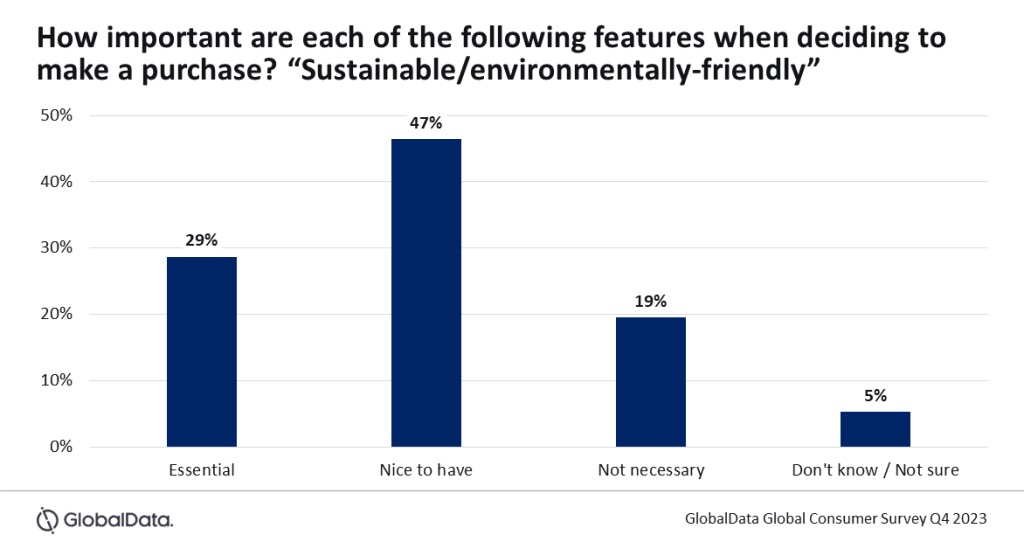
A separate study by GlobalData found that more than three quarters (76%) of consumers globally state that ‘sustainable/environmentally-friendly’ features are either ‘essential’ or ‘nice to have’ when deciding to make a product purchase.
To learn more about how to improve sustainability in your business, make sure you read www.sustainabilityonline.net.