Researchers at the UCLA Samueli School of Engineering in California have developed a generative AI system for creating images that uses considerably less energy and processing requirements than other current technologies.
The system generates images through light-based computation, or photonics, rather than digital computation, which considerably reduces the computational power required.
The system operates through a process that pairs a digital encoder with an optical decoder. Once the digital encoding is completed, the optical decoder produces images in a single pass. In comparison, conventional generative AI systems rely on hundreds or thousands of digital iterations to complete an image.
According to a UCLA study published in the Nature journal, the new system addresses one of AI‘s greatest bottlenecks – ‘balancing performance with efficiency’.
‘Generative AI at scale’
“Our work shows that optics can be harnessed to perform generative AI tasks at scale,” commented senior author Aydogan Ozcan, the Volgenau Professor of Engineering Innovation and professor of electrical and computer engineering and of bioengineering at UCLA Samueli. “By eliminating the need for heavy, iterative digital computation during image inference, optical generative models like ours open the door to snapshot, energy-efficient AI systems that could transform everyday technologies.”
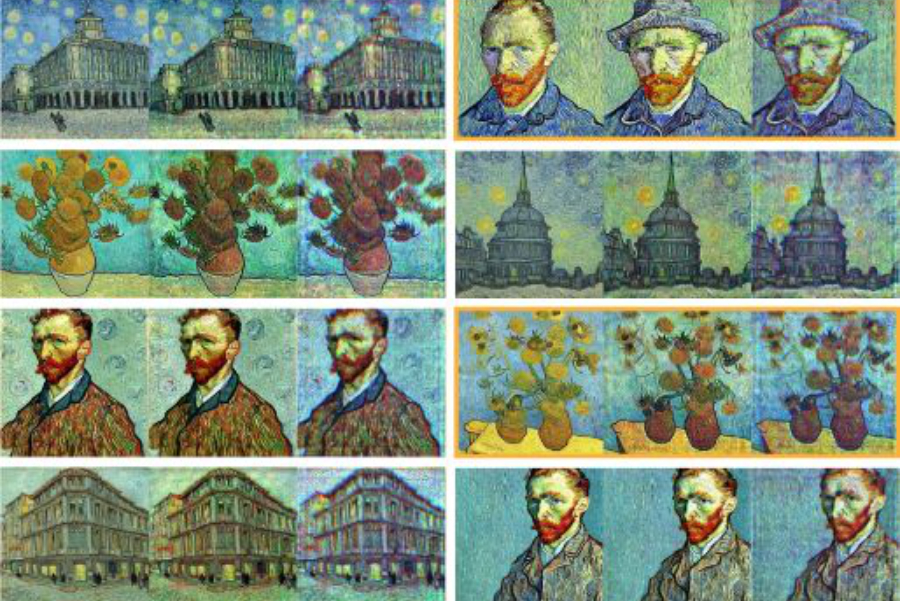
To validate their approach, the research team generated countless images, of items such as clothing, butterflies, and human faces, as well as images modelled on the work of Vincent van Gogh. These were then compared the results to those from a digital diffusion model that required one thousand computational steps per image. The optical model, meanwhile, produced results with comparable visual quality in a single computational step.
The optical generative model also incorporates a built-in privacy and security function, as images are encoded using specific wavelengths of light and can only be decoded with matching optical surfaces – providing a ‘key-lock’ mechanism for each image.
Broader applications
‘Broader implications for lowering the energy footprint and water waste of AI hold promise for sustainable deployment at scale,’ the researchers noted. ‘Potential applications extend across biomedical imaging, diagnostics, immersive media and edge computing applications that process data from the cloud on devices local to users.’
The study was led by Aydogan Ozcan, professor of electrical and computer engineering and bioengineering at UCLA Samueli. The lead author is postdoctoral researcher Shiqi Chen, while co-authors include Yuhang Li, Yuntian Wang, and Hanlong Chen. The project received support from UCLA Samueli’s V. M. Watanabe Excellence in Research Award. Read more here.