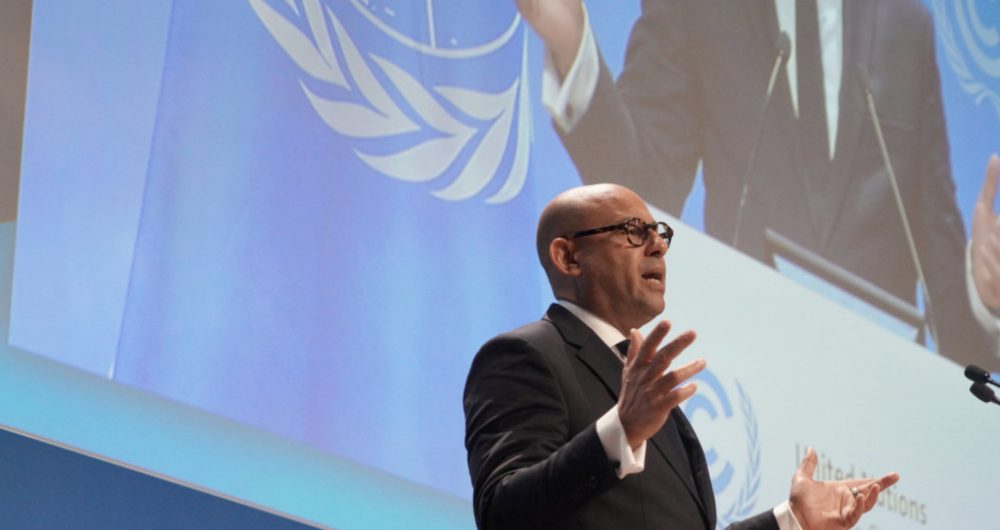
UN Climate Change Executive Secretary Simon Stiell has said that we cannot afford to take “rest-stops or detours at this half-way point in humanity’s climate journey”, with the threat of exceeding the 1.5-degree threshold increasing all the time.
Stiell was commenting at the opening of the June UN Climate Meetings, in Bonn, Germany, an event that will emphasise the need to transition from planning to implementing the Paris Agreement, and look ahead to the COP29 UN Climate Change Conference, taking place in Baku, Azerbaijan, in November of this year.
Some 6,000 participants are expected to take place in the climate meetings, formally called the 60th sessions of the Subsidiary Bodies (SB60), which run until 13 June.
Financing sustainability
Stiell urged for progress on finance, calling it essential for climate change action, and emphasised the importance of moving from drafts to real options for a new collective finance goal. He highlighted the need for more climate finance, global financial reforms, and innovative sources of finance.
“Getting these markets to work can unlock more funding for national climate plans and adaptation,” he said. “That’s why we’re convening Parties and stakeholders during these meetings, to build consensus on a way forward at COP29.”
He discussed the significance of the new round of Nationally Determined Contributions (NDCs 3.0), which should be “bolder – with more ambition – and should speak to closing the implementation gap, building on what has already been achieved”
The UN is providing tools to assist with this process, including the upcoming NDC 3.0 Navigator.
Stiell also addressed the importance of transparency under the Paris Agreement and urged parties to submit their Biennial Transparency Reports (BTRs) this year. These reports will help build a stronger evidence base for ambition and signal opportunities and needs to donors and investors. The reporting tool will be available for use by all parties by June 30.
“We’re here to help you take that crucial first step, particularly through extensive capacity building and we will work with you to improve your reports over time,” he commented.
National Adaptation Plan
Elsewhere, on impacts and adaptation, Stiell emphasised that climate change impacts transcend political boundaries, damaging economies and societies.
He called for every party to develop a National Adaptation Plan (NAP) covering all sectors of the economy and society. To date, only 57 parties have put together a plan, and Stiell urged for an increase in this number by the next meeting in Baku and progress on implementing them by 2030.
“It’s time to re-envision NAPs, and turn our minds to how they can be improved,” Stiel explained. “One clear way is by designing them with a clear view of unlocking much more adaptation finance and support.
Renewed Purpose
Stiell concluded by acknowledging the challenges in climate action but encouraged renewed purpose, highlighting the progress made through international cooperation in reducing projected global heating and emphasised the need for faster climate action in the second half of humanity’s climate journey.
“We absolutely cannot afford to stumble in the next ten days, or for global climate progress to stall this year and beyond,” he concluded. “This requires trust and respect for each other. Full adherence to the code of conduct is essential, with no exceptions.
“Respectful disagreements are part of this process, but they must not be its defining feature or its outcome. I urge you to come together, and to overcome differences. This is not a moment for trying to try, but for finding solutions and forging pathways forward.” Read Steill’s comments here.