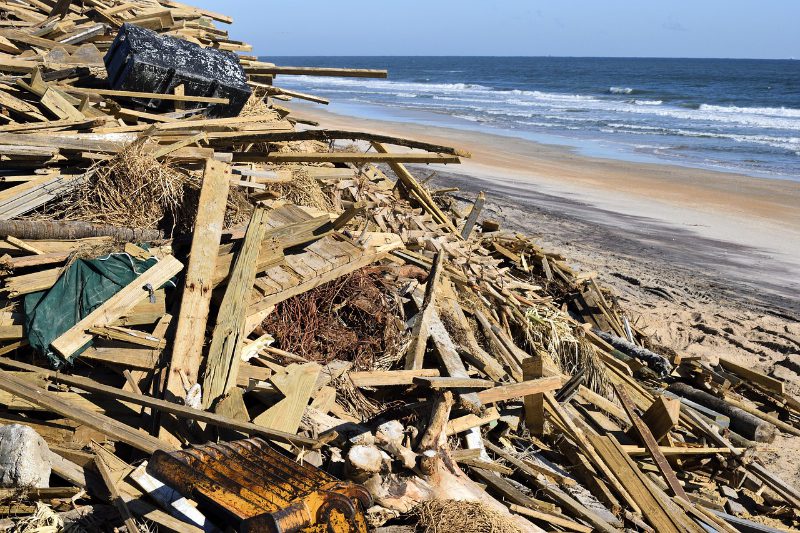
The World Bank Group has announced a funding extension to countries struggling to rebuild from disasters, enabling small, vulnerable states to postpone loan and interest repayments after a catastrophic event takes place.
In a statement during COP29 in Baku, World Bank president Ajay Banga said that by “significantly expanding the scope to cover all catastrophes, we are helping vulnerable countries to access more meaningful support quickly. In times of crisis, leaders need a reliable partner that has their back. The World Bank wants to be that partner.”
All natural disasters
The World Bank’s Climate Resilient Debt Clause (CRDC) now covers all natural disasters, including including droughts, floods and health emergencies such as pandemics – an expansion from the previous eligibility guidelines, which covered two types of natural disasters— tropical cyclones and earthquakes.
Under the terms of the CRDC, eligible countries are able to defer principal and/or interest repayments on IBRD and IDA loans for up to two years.
Out of 45 eligible countries, 14 have incorporated the CRDC into their agreements, with St. Vincent and the Grenadines already utilising it after Hurricane Beryl. According to the World Bank, the CRDC offers deferment at no extra cost to borrowers, with any administrative fees drawn from concessional resources.
The CRDC complements the World Bank’s existing Crisis Preparedness Response Toolkit, which provides additional mechanisms for emergency financing, reinforcing the World Bank’s role in helping countries better withstand and recover from catastrophic events.
‘Aside from making the clause more relevant for countries that face a multitude of natural hazards, we have also simplified the process for clients to apply to delay repayments in the event of a catastrophe,’ the World Bank noted. Read more here.
Financial support
Separately, at COP29, multilateral development banks (MDBs), including the World Bank, issued a joint commitment to support countries in achieving their climate targets.
They estimate that by 2030, annual collective climate financing for low- and middle-income countries will total $120 billion, with $42 billion allocated specifically for adaptation. In addition, MDBs aim to mobilize an additional $65 billion annually from private sector investments to bolster these efforts. Read more here.