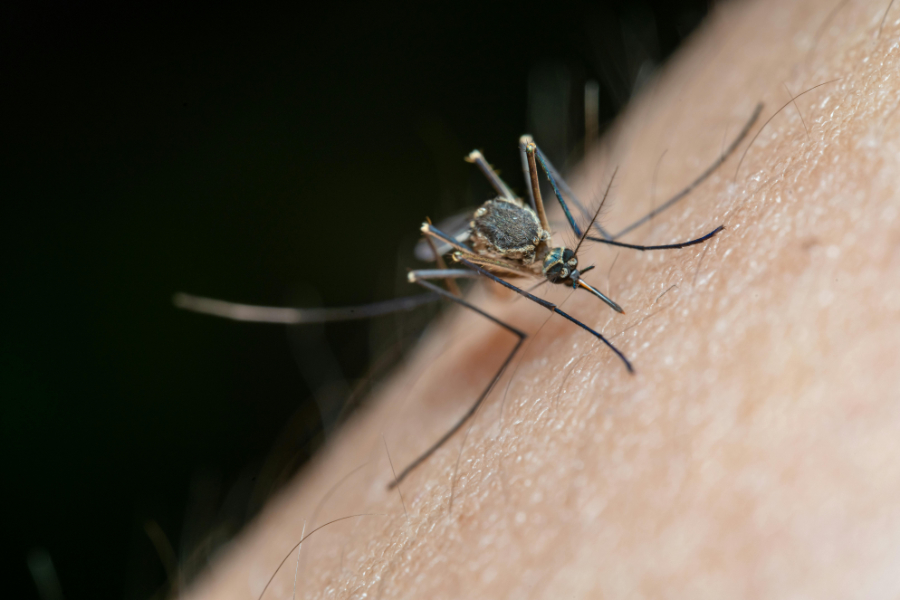
Climate change is contributing to the spread of tick- and mosquito-borne diseases and infections in Canada, according to a new study published in the Canadian Medical Association Journal (CMAJ).
As the study, which was led by Dr. Eleni Galanis, Infectious Diseases and Vaccine Programs Branch at the Public Health Agency of Canada (PHAC), found, medical professionals in Canada are having to prepare for a rise in climate change-related illnesses, linked to changing environmental conditions.
Increased risk
“Climate change can drive disease emergence by increasing survival and geographic distributions of pathogens, vectors, and animal reservoir hosts, as well as by affecting human behaviour,” Dr Galanis commented. “The risk from climate-sensitive diseases already common in Canada is increasing.”
According to the study, even tropical diseases such as dengue, chikungunya, or other mosquito-borne infections, could begin to spread as far north as Canada – the Asian tiger mosquito, a host for these diseases, has been detected in the southernmost part of Ontario.
‘New climate-sensitive diseases will likely emerge in Canada, and some may become endemic,’ the report noted. ‘If a new vector-borne disease establishes itself, scientists may advise governments on control of the abundance of vectors through landscaping and community pesticide use, while ongoing research investigates vaccines and novel methods of vector control, such as the use of genetically modified mosquitoes.’
Two related articles in CMAJ also pointed to the growing risk from insect-borne diseases – an increase in clinical cases of Rocky Mountain spotted fever and tick-borne spirochetosis, a rare and difficult-to-diagnose disease.
‘Substantial effects’
“People in Canada are observing the substantial effects of climate change on human health,” the authors said in the report.
“Physicians can prepare by familiarising themselves with potential climate-sensitive diseases in their regions and maintaining a high index of suspicion in the appropriate clinical context.” Read more here.
Read more: Hantavirus outbreak highlights importance of forest restoration, says IUCN