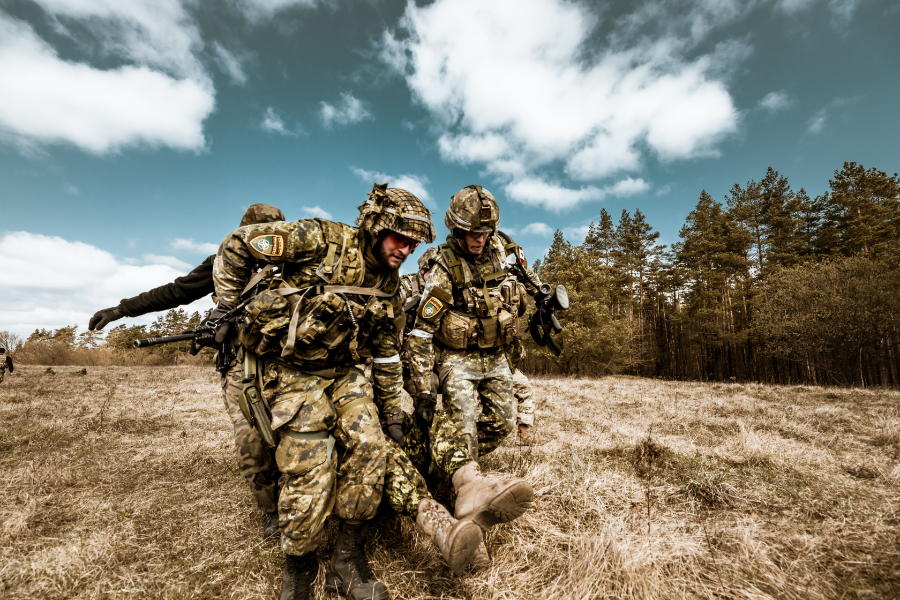
A new study exploring the military climate strategies of 26 nations has found that most are making ‘little progress’ on reducing emissions, with just two having targets aligned with achieving net zero by 2050.
The study, Military Climate Strategies: Are They Just Greenwash?, was published by Scientists for Global Responsibility (SGR) ahead of the 2026 NATO Summit, and found that just nine militaries have set near-term emissions reduction targets covering the period to 2035.
Of these, only four – Australia, Ireland, Slovenia and Switzerland – have near-term targets covering 100% of their core Scope 1 and 2 emissions, while the other five (Canada, France, Germany, Norway and the UK) have targets covering between 17% and 92% of core emissions.
Ireland and Slovenia are the only countries to have targets consistent with reaching net zero emissions by around 2050.
As the study noted, the countries that spend the most on their militaries – the US, China and Russia – do not currently have plans to reduce their military carbon emissions.
Green credentials
“In recent years, some militaries – and NATO – have been talking up their green credentials,” commented Dr Stuart Parkinson, report author and executive director of SGR.
“Our in-depth study shows that very few are making significant progress. Now, even that limited progress that is being undermined by huge rearmament programmes, not least within NATO. As this summer’s extreme weather shows the climate crisis is getting rapidly worse.”
Areas in which militaries have had some success at reducing their emissions has been at military bases, where building energy efficiency improvements and onsite renewable energy projects have been undertaken.
However, as it noted, most the emissions reduction activity to date has relied on civilian actions – such as the decarbonisation of national electricity grids – or temporary reductions in military activity and base closure programmes.
NATO members
Some 20 of the 26 countries assessed in the report are NATO members, with the researchers noting that a new spending target – 5% of GDP on military and security activities – could make emissions reductions more difficult. As they noted, the emission reduction commitments of NATO itself also has ‘numerous loopholes’.
“We cannot afford to allow militaries and their supply-chains to be exempt from serious action to reduce carbon emissions,” Parkinson added.
The 26 national militaries assessed in the study include USA, Germany, UK, France, Poland, Italy, Canada, Türkiye, Spain, Netherlands, Sweden, Norway, Denmark, Romania, Belgium, Greece, Portugal, Estonia, Luxembourg, Slovenia, Switzerland, Austria, Ireland, Japan, Australia and New Zealand. Read more here.