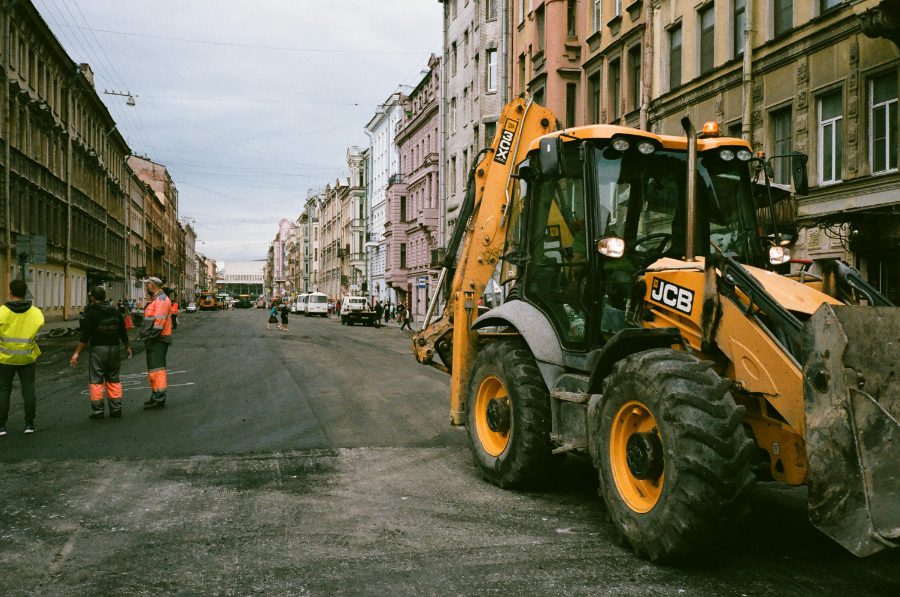
Turning agricultural byproducts into materials used in road construction is the topic of a study being undertaken by researchers at the University of Miami.
Led by Xianming Shi, chair of the civil and architectural engineering department, the study is exploring how farm waste can be turned into biochar to replace traditional materials used in asphalt production, and thereby lead to the construction of more sustainable transport solutions.
The three-year project is being backed by a $1 million grant from the U.S. Department of Agriculture.
Carbon neutrality
“This is an exciting opportunity, as this is likely the very first solution to truly move asphalt pavement toward net-zero — that is, carbon neutrality,” Shi commented. “In addition, we can clearly observe fewer toxic fumes being emitted from asphalt pavement during production.”
Asphalt is traditionally made from sand and rocks bound together by petroleum, however its production leads to harmful emissions, which can affect both workers and the surrounding community. According to the researchers, biochar, produced from agricultural waste such as wheat straw, poultry litter, and orchard trimmings, can be turned into an alternative material that can effectively sequester carbon in roadways, as well as create a potential additional revenue stream for farmers.
‘A bold approach’
“This project goes beyond engineers working together to decarbonise asphalt,” Shi said. “This is a bold approach that will essentially create a new market and green jobs; that is why we also consider the socioeconomic dimensions of this innovation.”
Shi’s team includes researchers from California State University-Chico, Washington State University, and the University of Georgia. The researchers plan to partner with two tribal communities to test the biochar-enhanced asphalt on local paving projects.
“We are transforming into a climate infrastructure engineering department,” Shi added. “We have faculty doing exciting research on the decarbonisation of the built environment—whether it’s roads, bridges, tunnels, ports, or buildings—especially looking at how we can reduce their carbon footprint.” Read more here.