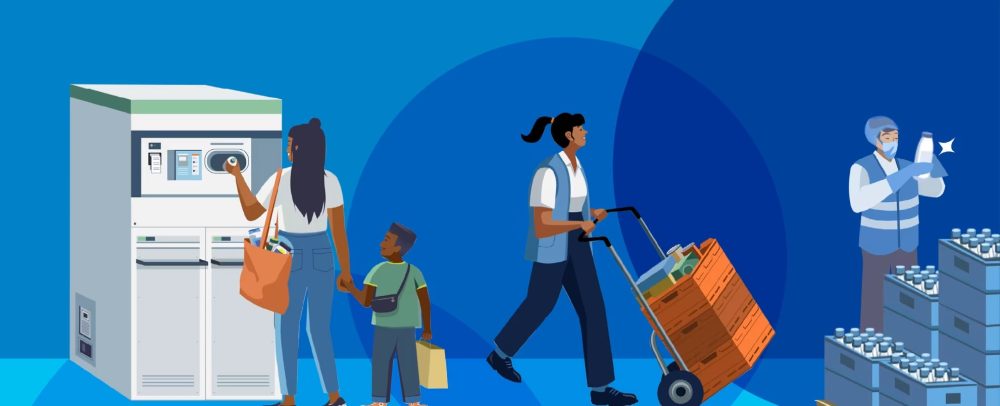
A scaling up of the use of returnable plastic packaging has the potential to lower greenhouse gas emissions and water use by 35% to 70% compared with single-use plastics, a study by the Ellen MacArthur Foundation has found.
The Scaling Returnable Packaging study states that the adoption of reusable plastic packaging for beverage, food cupboard, personal care, and fresh food items offers significant benefits, provided said solutions are designed collaboratively across the industry and operated at large scale.
The report was developed in collaboration with Systemiq and Eunomia, with contributions from over 60 organisations. These include the European Investment Bank, national governments, reuse experts, and major brands and retailers such as Danone, Nestlé, PepsiCo, The Coca-Cola Company, and Unilever.
Virgin plastic usage
The use of virgin plastic in packaging is unlikely to decrease below today’s levels before 2050, the Ellen MacArthur Foundation‘s recent Global Commitment Five Years In paper found.
That report identified the scaling of reusable packaging as one of the ‘key hurdles’ to overcome if the world is to ‘reverse the tide’ when it comes to plastic waste and pollution.
The report also acknowledged that over the past five years, there has been some momentum within the industry, with existing pilot programs representing a positive step. However, there is a call for actions to go further and faster to make meaningful progress
A ‘reuse revolution’
The Foundation is urging leaders in the private, public, and finance sectors to adopt a new strategy for fostering a ‘reuse revolution’. This involves promoting shared infrastructure, standardising packaging, and fostering collaborative efforts to achieve high return rates.
More information can be found here.