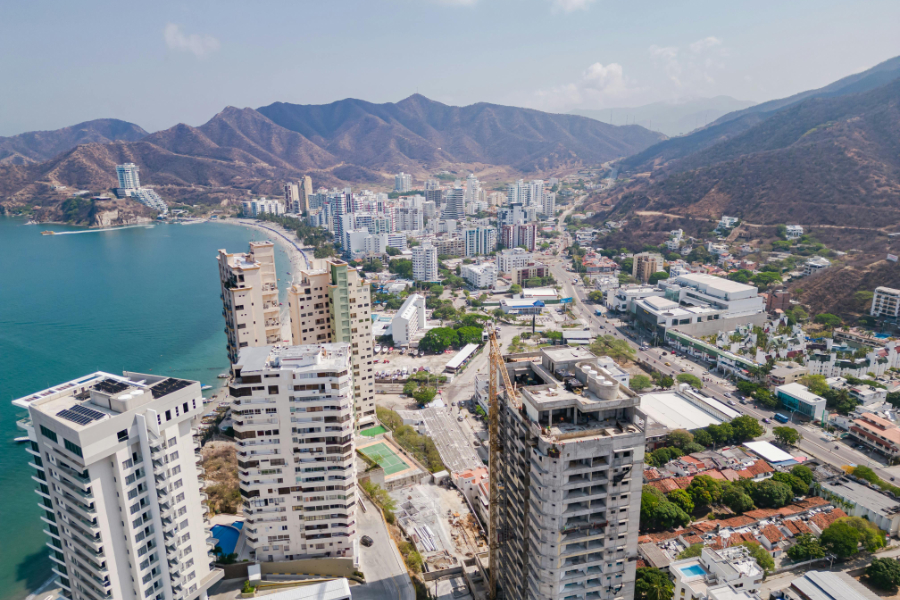
Cities are “ready to lead” the global transition away from fossil fuels, Caterina Sarfatti, C40 Cities‘ managing director for political strategy and advocacy, has told the First Conference on Transitioning Away from Fossil Fuels, taking place in Santa Marta, Colombia.
City leaders and national governments are among those in attendance at the conference, which is co-hosted by Colombia and Netherlands, and focuses on the level to which the transition away from fossil fuels can lessen exposure to price shocks, supply disruptions and broader financial risks.
‘Delivering real benefits’
“Across the world, cities are showing that transitioning away from fossil fuels is not only possible, but it is already happening and delivering real benefits for people,” Sarfatti commented. “At a time when households are facing rising energy bills, supply shocks, and the growing impacts of climate change, our toxic dependence on fossil fuels is exposing communities to instability and risk.
“From lower energy costs to cleaner air and more resilient communities, this transition is improving lives today while securing our future. And cities are where this transition moves from words to facts.”
The conference follows an earlier meeting this month, in which more than 25 cities from around the world joined the governments of Colombia and the Netherlands in a virtual dialogue co-convened by C40 Cities and ICLEI, to showcase the transition in action at a local level.
A key role
As C40 Cities noted, cities play a key role in the transition, with urban centres accounting for 75% of global energy-related emissions. Across its member cities, per capita emissions have declined for four consecutive years, indicating the role that cities can play in driving sustained progress.
In addition, C40 mayor have pledged to halve fossil fuel use in cities by 2030, a process that represents a ‘critical contribution’ to the global target of tripling renewable energy capacity by the end of the decade.
“The transition away from fossil fuels is not only necessary, it is an opportunity to build a more just and resilient future,” commented Irene Vélez Torres, Minister of Environment and Sustainable Development, Colombia. “But this transformation cannot be achieved by national governments alone.
“Cities and regions are essential to this effort. They are where people live, where inequalities are felt most deeply, and where the impacts of climate change are already being experienced every day. That is why we must work together to accelerate this transition in a way that delivers a better future for those who matter most: people. This is about moving forward. All together.” Read more here.