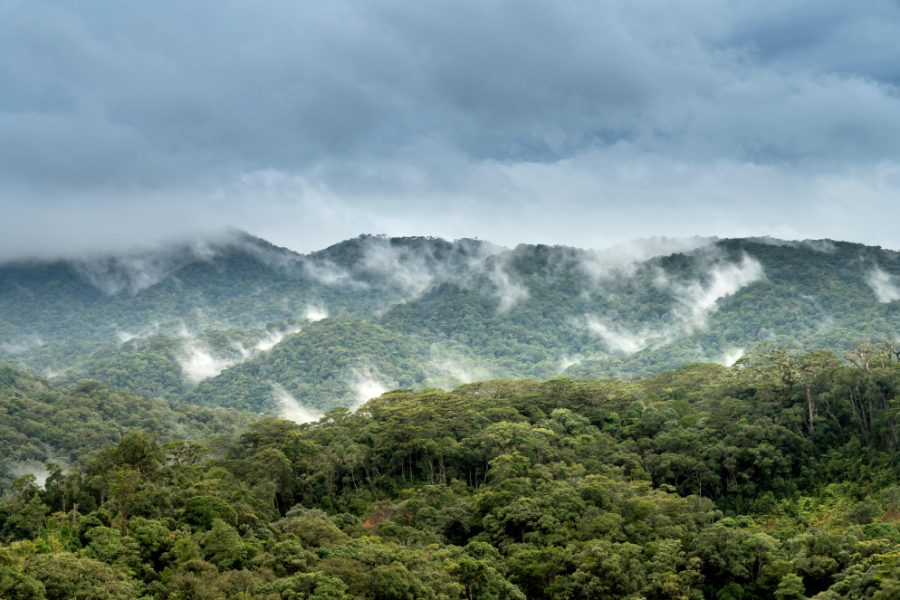
The COP17 biodiversity conference kicks off in Armenia this week, against a backdrop of sluggish progress towards the Kunming-Montreal Global Biodiversity Framework (GBF), which aims to protect 30% of land and sea by 2030.
The 17th meeting of the Conference of the Parties (COP) to the Convention on Biological Diversity (CBD), to give it its full name, takes place in Yerevan from 19 to 30 October, and is also likely to set the scene for the forthcoming COP31 climate change conference in Türkiye next month.
‘The COP of proof’
“Yerevan should be the COP of proof, not only of promises,” Teresa Ribera, executive vice-president for Clean, Just and Competitive Transition at the European Commission, commented ahead of COP17.
“Healthy ecosystems are indispensable for climate resilience, water security, food security and long-term prosperity. Protecting and restoring biodiversity is not a cost. It is an investment in our future, our economies and the next generations. Now it’s time to turn the ambition of the Kunming-Montreal Global Biodiversity framework into delivery.”
The Commission will take part in a number of sessions during COP17, and is also set to launch a new initiative: Friends of Credits for Nature and Biodiversity.
‘Far off track’
Elsewhere, An Lambrechts, head of the Greenpeace delegation to COP17, said that while 2030 is approaching fast, the evidence suggests that governments are “far off track” in terms of delivering the GBF’s 30×30 targets.
“The systems that sustain life on Earth are under threat, and decisions made at COP17 must deliver a clear course correction to protect our planet’s ecosystems,” she said. “This COP can’t become a mere entry in a vast log of destruction.
“Governments need to agree on concrete actions that tackle the drivers of biodiversity loss, increase finance and redirect money flows to where they are needed. But decisions in Yerevan will only matter if governments follow through at home. They cannot continue promising to protect nature while supporting its destruction through harmful subsidies and incoherent policies. Any more delay is a threat to our survival on the planet.”
‘A mad dash’
Conservation International’s executive director and chief external affairs officer Patricia Zurita added that the lack of progress on the GBF to date should act as a springboard for accelerated action as the end of the decade approaches.
“The deadline is looming,” she said. “The road from COP17 will be a sprint for countries to turn ambition into action – a mad dash to make good on a bold promise to conserve nearly a third of the planet. COP17 offers us the opportunity to accelerate what works and put us back on track.
“Funding is the number one barrier to delivering this framework. Every year, we fall at least $700 billion short in funding for biodiversity and nature. All players must contribute – countries, businesses and people who have the resources to help must step up. We call on countries to contribute to global funds to ensure funding flows where it is needed most.”
‘Measurable results’
Elsewhere, Razan Al Mubarak, president of the International Union for Conservation of Nature (IUCN), noted that COP17 represents the “first global review of collective progress” on the GBF, with collective action needed.
“Progress is real, but it is uneven and far too slow,” she said. “Unless implementation is rapidly accelerated, the 2030 targets and the mission of the Framework will not be achieved.
“Today, we must therefore go beyond reaffirming ambition. We must send a political signal that implementation will now move at the speed and scale that science, communities, and future generations require. […] Let us make COP17 the moment when the world shifts from commitments to coordinated delivery, to systemic change, and to measurable results.”
The Kunming-Montreal Global Biodiversity Framework, agreed in 2022, sets 23 targets for 2030 and four longer-term goals for 2050. The framework seeks to tackle the main drivers of biodiversity loss, as well as establish financing mechanisms for biodiversity, encourage more sustainable production and consumption and address the impact of businesses on nature. Read more here.