While countries around the world are increasingly moving from climate adaptation planning towards implementation, greater access to finance, technical capacity and stronger institutions will be needed to turn national priorities into action, according to UN Climate Change.
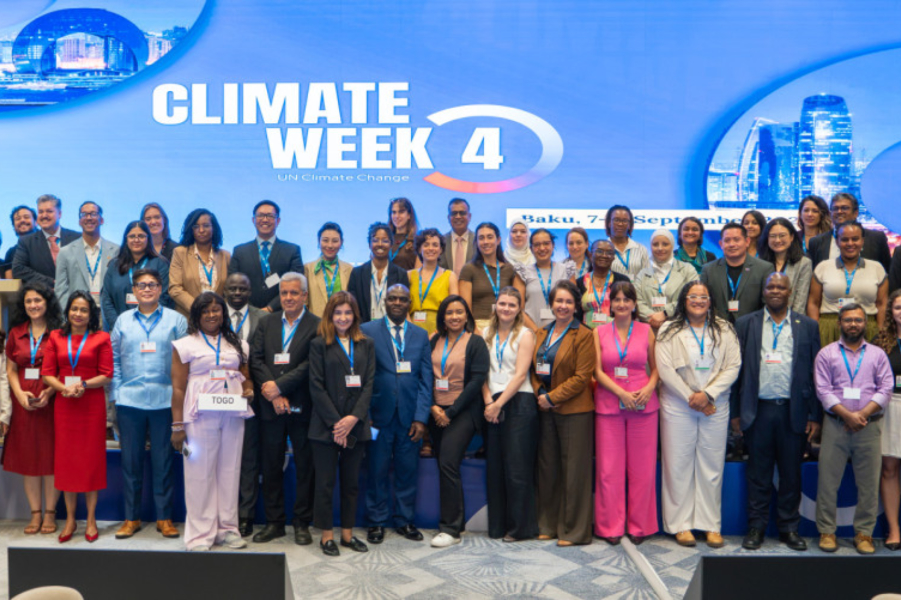
These findings were among those highlighted at the 2026 Adaptation Forum, convened by the UNFCCC Adaptation Committee in Baku in September, which brought together governments, international organisations, climate funds, development banks, researchers and civil society to examine methods for scaling adaptation action.
As the Committee noted, of the 198 Parties covered by its portal on the state of adaptation action, 88 have submitted national adaptation plans, while 128 have reported other national adaptation plans or strategies. A further 93 have reported plans or strategies supporting local action or cooperation across borders.
‘Practical challenge’
‘With planning increasingly in place, Forum participants examined the practical challenge of implementation: how countries can act on identified priorities, strengthen the institutions and capacities needed for delivery, and connect support with action on the ground,’ UNFCCC noted.
As an example, Senegal highlighted three gaps between nationally identified adaptation needs and available support: adequate and predictable finance, sustained technical and institutional capacity, and support reaching vulnerable communities at local level.
Participants also examined how adaptation programmes can be designed around local circumstances rather than simply replicated across different locations. The United Nations University highlighted the need to strengthen capabilities to adapt approaches to national and local contexts.
Elsewhere, the Forum also acknowledged a shift from tracking what ‘has been done’ when it comes to adaptation action, towards ‘understanding what it is achieving’, with monitoring, evaluation and learning all coming into focus.
According to the UNFCCC, 31% of Parties report having a monitoring, evaluation and learning system in place, while another 32% are establishing one. Almost 30% report information on adaptation outcomes and effectiveness.
The forum also considered how countries can better anticipate emerging and interacting risks. The IGAD Climate Prediction and Applications Centre highlighted dynamic risk assessment and multi-hazard early warning systems covering drought, floods, heat, pests and agricultural impacts.
Integrated programmes
The UNFCCC said the discussions pointed towards more integrated adaptation programmes supported by coherent institutions, finance and capacity-building. Strengthening monitoring, evaluation and learning will also be important in determining which measures are effective and adjusting them as climate risks and conditions change.
‘Taken together, the 2026 Adaptation Forum pointed to several areas that can help strengthen adaptation implementation including moving beyond individual interventions towards more integrated and programmatic approaches, supported by coherent institutions, finance, capacity and other support aligned with national and local priorities, stronger monitoring, evaluation and learning, and the ability to anticipate evolving risks,’ it noted.
‘Foresight, scenario planning and anticipatory approaches were also highlighted as ways to inform adaptation decisions under changing and uncertain conditions.’ Read more here. Main photo: UNFCCC Adaptation Committee