Researchers at UCLA and the Universidad Adolfo Ibañez in Santiago, Chile, have found that the duration of heatwaves is accelerating at a rate faster than global warming.
In a study published in the Nature Geoscience journal, the researchers found that heatwaves are getting hotter and longer due to climate change, with the most prolonged heatwaves – some of which can last for weeks – increasing in frequency at the fastest rate.
Fraction of a degree
The researchers developed an equation that captures how each day’s temperature affects the next, and discovers that each fraction of a degree of additional warming has a disproportionately large effect on the duration of heatwaves.
“Each fraction of a degree of warming will have more impact than the last,” commented senior author and UCLA climate scientist David Neelin. “The acceleration means that if the rate of warming stays the same, the rate of our adaptation has to happen quicker and quicker, especially for the most extreme heatwaves, which are changing the fastest.”
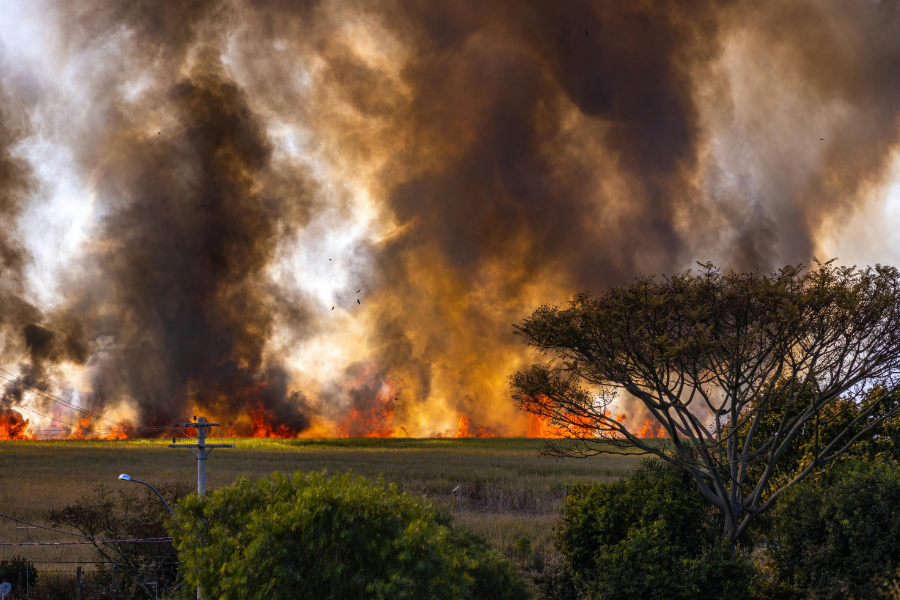
Heatwaves have impacted many regions so far this summer – in June, a heat dome brought record temperatures to various parts of the US, while extreme heat led to the closure of the Eiffel Tower in Paris and the Acropolis in Athens.
According to the study, tropical regions, where climate variability is generally lower, are expected to experience the most severe impacts from prolonged heatwaves. The research projected that heatwaves in equatorial Africa lasting more than 35 days are likely to happen 60 times more often in the near future (2020 to 2044) compared with the recent past (1990 to 2014).
Increase in frequency
“We found that the longest and rarest heatwaves in each region – those lasting for weeks – are the ones that show the greatest increases in frequency,” added lead author Cristian Martinez-Villalobos, an assistant professor of engineering and science at the Universidad Adolfo Ibáñez. “By taking into account the natural variation of temperatures at each location, we find that recent observed trends of heatwave durations already follow a similar pattern of acceleration predicted by climate models.”
Neelin added that cuts to climate science budgets in the US threaten to undermine the ability of scientists to track future heatwave development.
“We’ll have much less ability to adapt to climate change at the very time when we need to accelerate adaptation planning,” he said. Read more here.